Beyond Kota Kinabalu — Day Trips & Excursions
East Coast — Sandakan
Sabah's second-largest city is 6 hours by road or 45 minutes by flight from KK. Once the capital of British North Borneo, Sandakan is now the wildlife capital of Sabah. Sepilok Orangutan Rehabilitation Centre (RM30 local / RM90 international) has feeding sessions at 10am and 3pm daily. Nearby, the Rainforest Discovery Centre (RM15/RM30) has a 347m canopy walkway at 25m height.
Labuk Bay Proboscis Monkey Sanctuary (RM60) offers close-range viewing at four feeding sessions daily. The Sun Bear Conservation Centre (BSBCC) is a short drive from Sepilok. Gomantong Caves (RM30) is famous for bird's nest harvesting, with 2 million bats emerging at dusk. The Kinabatangan River (560km, Sabah's longest) offers wildlife cruises from RM120-150/person — expect orangutans, pygmy elephants, hornbills, and crocodiles.
Semporna & Tawau
Semporna is the gateway to world-class diving — Sipadan, Mabul, Kapalai, and Bohey Dulang (RM130 locals / RM250 international for the stunning twin lagoons hike). The town itself is a functional base, but the Regatta Lepa festival (late April/early May) brings colorful traditional boat parades and Bajau culture to life. Bajau Laut (Sea Gypsies) stilt villages are visible from the waterfront.
Tawau, Sabah's third-largest city, is the southern gateway. Teck Guan Cocoa Village showcases Sabah's cocoa heritage with processing tours and tastings. Tawau Hills Park (280 sq km) has hot springs, waterfalls, and the world's tallest tropical tree (Shorea faguetiana at 100.8m). The Nunukan border crossing connects to Kalimantan, Indonesia.
North — Kudat & Tip of Borneo
About 2 hours 45 minutes north of KK, Kudat district is home to the Tip of Borneo (Tanjung Simpang Mengayau) — the northernmost point of Borneo where the South China Sea meets the Sulu Sea. Rungus Longhouses offer overnight cultural stays (RM60-80/night) with traditional beadwork and gong music. Bavanggazo Cultural Village is a restored traditional Rungus longhouse complex.
The beaches here — Kalampunian and Kelambu — are pristine and far less crowded than KK. Kudat offers an authentic, less-touristy side of Sabah that rewards travelers willing to venture beyond the usual circuit.
Highlands — Kundasang & Ranau
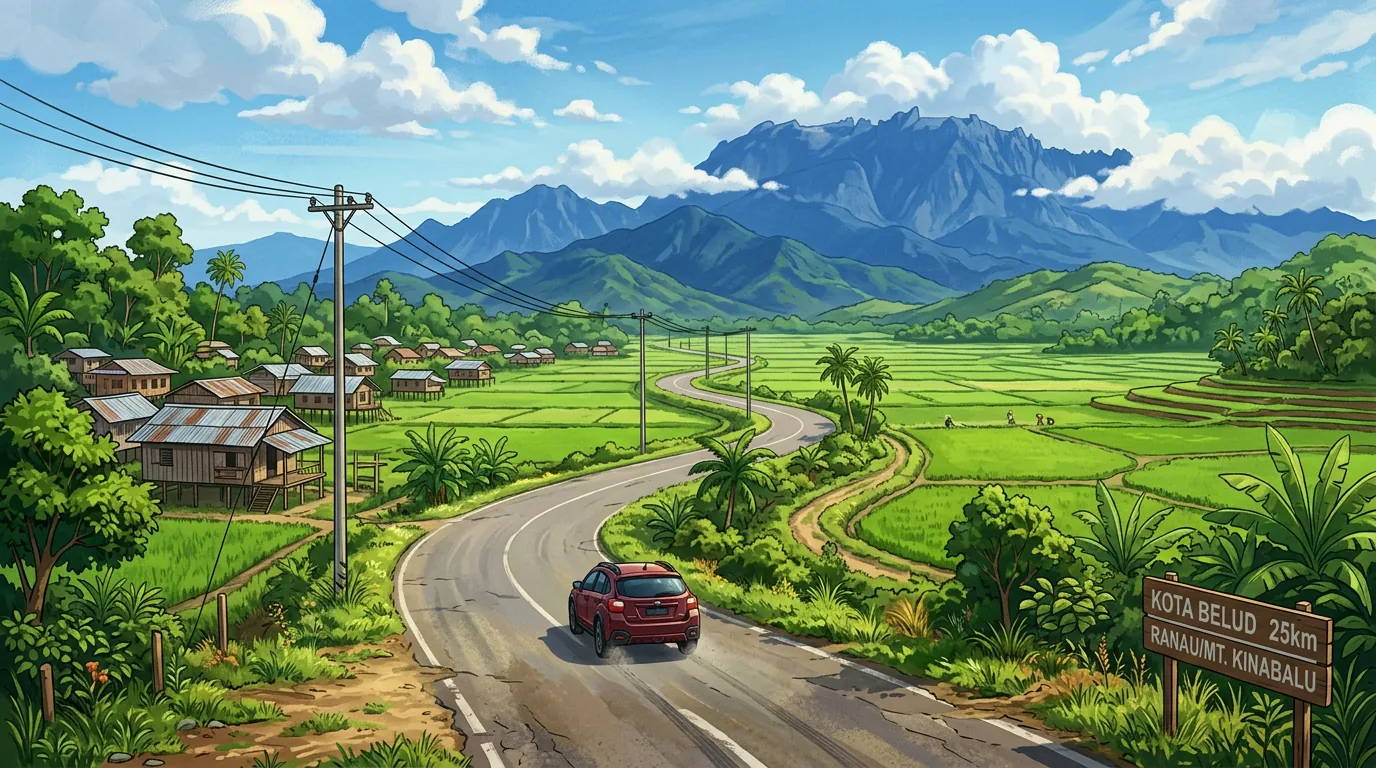
Just 2 hours from KK at 1,500m+ elevation, Kundasang and Ranau offer cool temperatures (13-25°C) and highland scenery. Desa Dairy Farm ("Little New Zealand of Sabah", RM5 entry) is popular for families. Kundasang War Memorial honours WWII POWs with botanical gardens. Mesilau Nature Resort serves as a highland retreat near Mount Kinabalu.
The area is known for vegetable farms, strawberry picking, and cool-climate produce. Note: Poring Hot Springs (part of Kinabalu Park) with its canopy walk is temporarily closed from July 30, 2025 — check the latest status before planning a visit.
Interior — Keningau & Tenom
The interior towns of Keningau (2 hours from KK) and Tenom (1 hour further) reveal rural Sabah. The North Borneo Railway heritage steam train runs the scenic KK-Tenom route. Tenom Agricultural Park (600 acres) has an orchid centre and insect museum. The Murut Cultural Centre and Antanom Heritage Village showcase indigenous Murut heritage — the last ethnic group in Sabah to renounce headhunting.
Tenom is Sabah's coffee heartland, growing both Arabica and Robusta. The area offers rice paddies, riverside villages, and an unhurried pace that contrasts sharply with the coast.
For Sandakan and Lahad Datu, flying saves 5-6 hours each way. For Kundasang, Kudat, and Tenom, driving is part of the experience — scenic routes with stops along the way. Budget flights within Sabah start from RM80-150 one way.
Lahad Datu — Deep Rainforest
The gateway to Sabah's most pristine jungle experiences. Danum Valley Conservation Area (438 sq km, 82km gravel road from Lahad Datu) protects 130-million-year-old primary rainforest. Borneo Rainforest Lodge (5-star eco-lodge, from RM3,925 for 4D3N) offers pygmy elephants, orangutans, and clouded leopards in their natural habitat. Tabin Wildlife Reserve (122,539 hectares) is more accessible, with mud volcanoes and 300+ bird species.