Wildlife Photography in Sabah — Where to Shoot
Key Wildlife Locations
Sepilok Orangutan Rehabilitation Centre
Foreign entry: RM30 adult / RM15 child (Malaysian: RM5/RM2), camera fee RM10. Feeding sessions at 10am and 3pm daily. Arrive 15 minutes early for the best viewing positions. Open 9-11am and 2-3:30pm year-round in the Kabili-Sepilok Forest Reserve.
Kinabatangan River
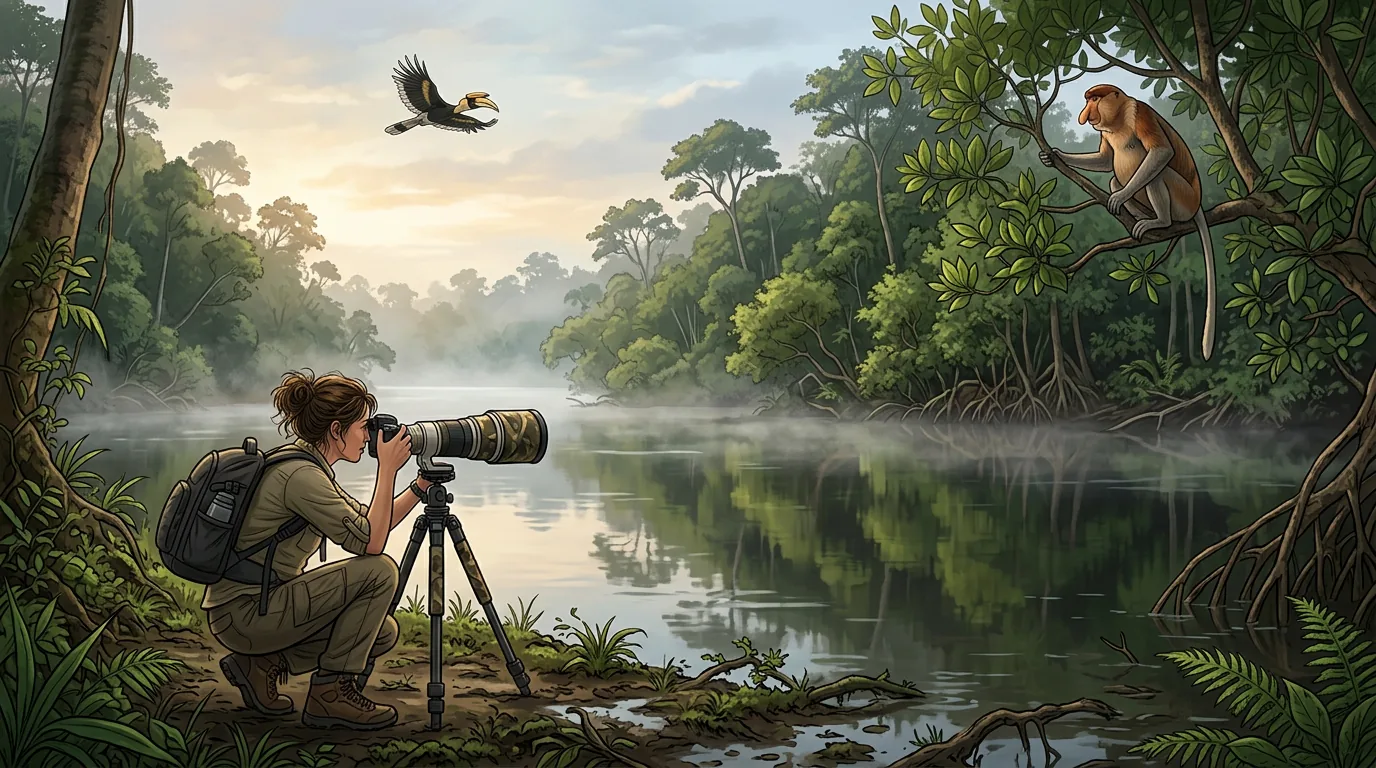
Sabah's 560km river near Sandakan is the premier multi-species wildlife corridor. Dawn cruises at 6am and afternoon cruises at 3-4pm (2-2.5 hours each), with some night cruises available. Multi-day stays dramatically increase sighting odds. May to September is the best season as animals congregate at riverbanks during drier conditions. Budget homestays from RM120/person for 3D2N; Sukau Rainforest Lodge for luxury.
Danum Valley & Tabin
Danum Valley (438 sq km of undisturbed lowland dipterocarp forest) is extremely restricted — pre-arranged only. Tabin Wildlife Reserve (50km from Lahad Datu) is more accessible with dawn drives from RM100/person. Both offer pygmy elephants, orangutans, and 300+ bird species. Danum has clouded leopards and is the best option for pristine primary rainforest photography.
Labuk Bay & Sun Bear Centre
Labuk Bay Proboscis Monkey Sanctuary (RM60 foreign) has four feeding platforms daily — close-range shots without long telephoto. Sun Bear Conservation Centre (RM50 foreign, RM1,000 for 500mm+ cameras) is best visited in the morning when bears are most active.
Photography Settings & Equipment
Rainforest shooting requires fast glass — f/2.8 is ideal, f/4 is barely workable. Shoot in manual exposure mode; aperture and shutter priority are unreliable under the canopy. Expect ISO 1600+ in shade, often pushing to 3200-6400. The 70-200mm f/2.8 is the most versatile wildlife lens for Borneo's low light. For Deramakot night safaris, a 150-600mm provides necessary reach. A tripod is essential for macro and low-light work.
Waterproofing is critical — humidity is constant and sudden rain common. Bring silica gel packets and rain covers. For marine wildlife photography (whale sharks, turtles at Sipadan), underwater housing is required. Never use flash with any wildlife, especially tarsiers — they are extremely stressed by artificial light.
Flash photography causes severe stress to wildlife, particularly nocturnal species like tarsiers. It is prohibited at most wildlife centres and sanctuaries. Use high-ISO settings and fast lenses instead. Follow your guide's instructions on viewing distances at all times.
Best Times for Wildlife
Sepilok feeding sessions: 10am and 3pm daily, year-round. Labuk Bay: 9:30am/2:30pm (Platform A) and 11:30am/4:30pm (Platform B). Sun bears: morning. Golden hour photography: 6-8am sunrise, 5-7pm sunset. Dry season (March-October) concentrates animals at riverbanks, making them easier to spot.
April to August is best for orangutans (fruiting season). August to September is peak for birds when fig trees fruit. Night safaris at Deramakot are the best chance for clouded leopards, civets, slow lorises, and tarsiers. Sabah has 600+ bird species with 50+ Borneo endemics — Kinabalu Park alone has 300+ species including 17 endemics.
Ethics & Drone Regulations
Never use flash, touch wildlife, feed animals, or chase/corner subjects. Maintain safe viewing distances and follow guides strictly. Never buy ivory, turtle shells, or exotic wood. Avoid elephant rides, wildlife selfies, and captive animal exploitation. Report unethical facilities to Sabah Wildlife Department.
Drones require a CAAM permit (RM250/drone, valid 3 months, apply 14+ working days before flight). Camera drones need additional JUPEM approval. Drones are completely prohibited in all national parks, marine parks, and wildlife sanctuaries without special written permission from the Sabah Parks Board and the Chief Minister's office.