Kaamatan Activities 2026: Sumazau, Sugandoi & More
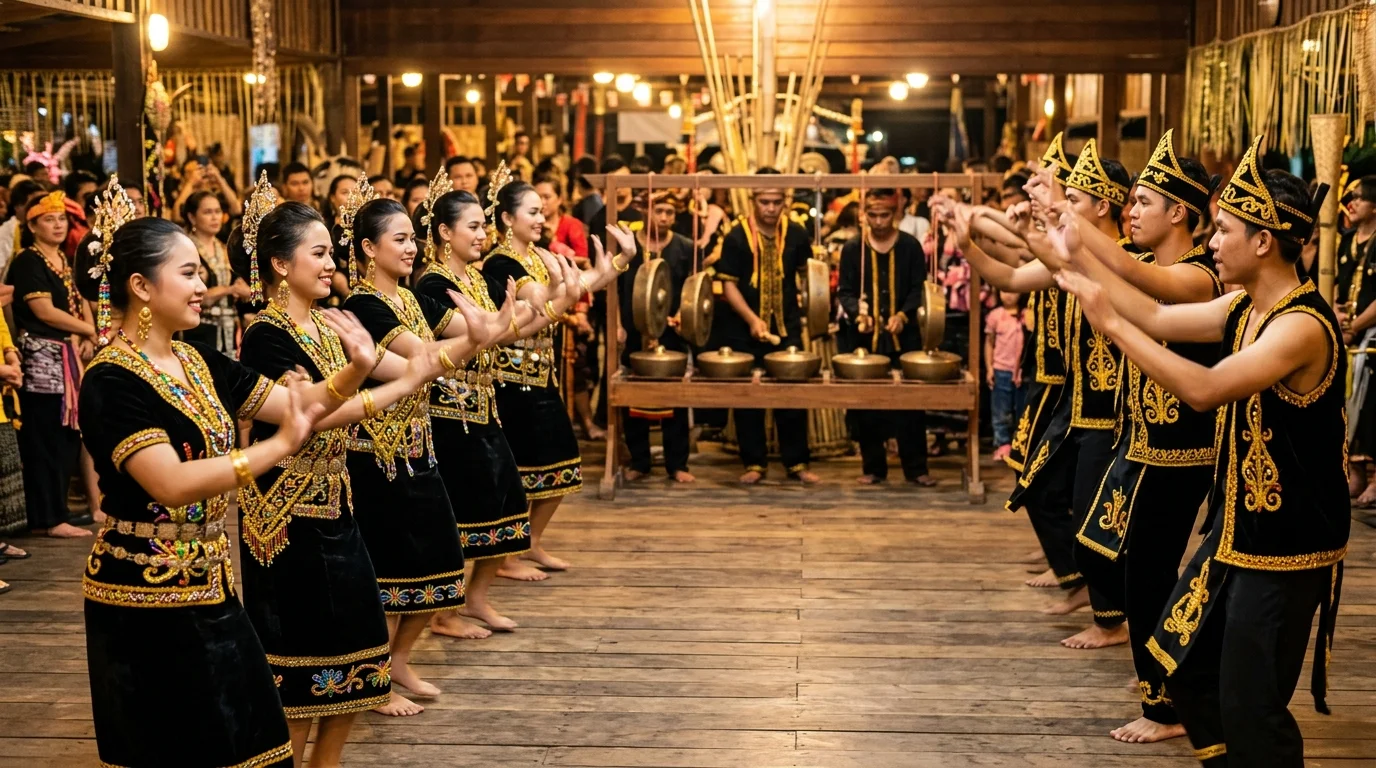
What events happen during Kaamatan?
Kaamatan runs throughout May across Sabah's 27 districts with local celebrations (May 1-29), plus the main State Festival at KDCA (May 24-31). Major events include: Unduk Ngadau cultural pageant (May 31), Sugandoi singing competition, Sumazau and Magunatip traditional dances, Orang Kuat Sabah strongman competition, and over 200 food stalls. Visitors can try traditional games like blowpipe contests, arm wrestling, tug of war, and bamboo stilt walking. Everything happens at KDCA during the State Festival.
What events happen during Kaamatan?
Kaamatan is not a single weekend—it's a full month of celebration spread across all of Sabah. The festival begins May 1 in outlying districts and crescendos at the State Festival at KDCA (Kadazandusun Cultural Association) from May 24-31. Think of it as 27 district parties building toward one enormous state celebration.
District Celebrations (May 1-29): Each of Sabah's 27 districts holds its own Kaamatan celebration. Tambunan celebrates May 1, Tuaran May 6, Ranau May 10, Papar May 17, Penampang May 18, and others follow. These are community-level events—smaller than the State Festival, but deeply local and authentic. District celebrations feature local performers, community feasts, and shorter versions of state-level competitions (district Unduk Ngadau pageants, local singing contests). If you're staying in a specific district, you can experience genuine community celebration by timing your visit to that district's dates.
State Festival at KDCA (May 24-31): This is the main event. Over 8 days, KDCA hosts: the Unduk Ngadau State Finals (May 31), Sugandoi state singing finals, full performances of traditional dances (Sumazau, Magunatip, and others), Orang Kuat Sabah strongman competition, over 200 food stalls, 15+ exhibition booths, craft demonstrations, and open participation in traditional games. The grounds open daily at 10 AM and run until 10 PM. This is where all 27 district champions converge and where the most concentrated cultural experience happens.
What You Can't Miss:
- Unduk Ngadau State Finals (May 31): The cultural pageant celebrating the Huminodun legend. For 2026, 52 confirmed finalists in traditional Sinuangga costume compete under a new format (pre-judging May 30, top 25 advance, then top 7, then winner) on tradition, poise, and cultural knowledge. Draws 3,000-5,000 spectators.
- Sumazau Dance: The icon of Kaamatan. Pairs perform the eagle-wing dance daily; visitors can join open sessions.
- Sugandoi Competition: Vocal talent show running across multiple days. District heats precede state finals with 20+ competitors.
- Magunatip Bamboo Pole Dance: The Murut tradition where dancers jump through moving bamboo poles while music accelerates.
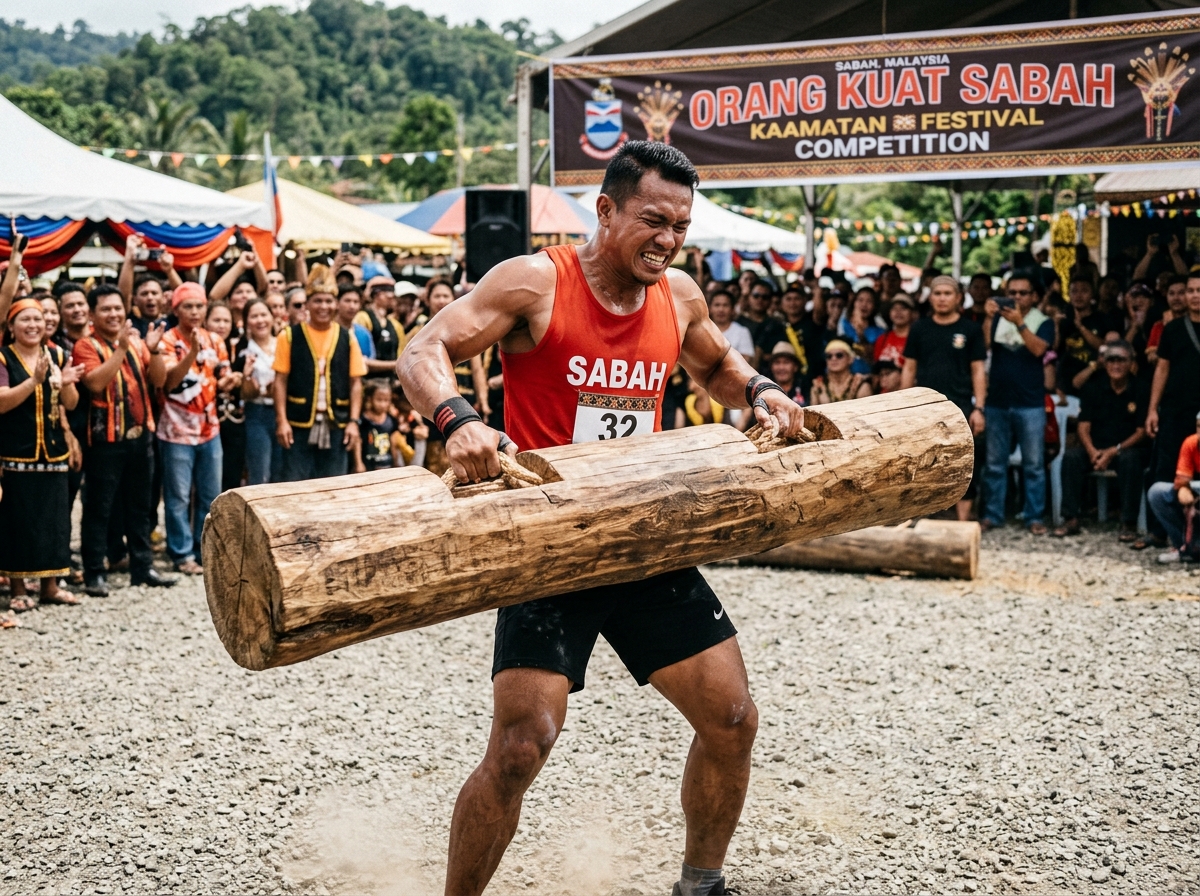
- Orang Kuat Sabah: Strongman competition featuring feats of strength and traditional contests.
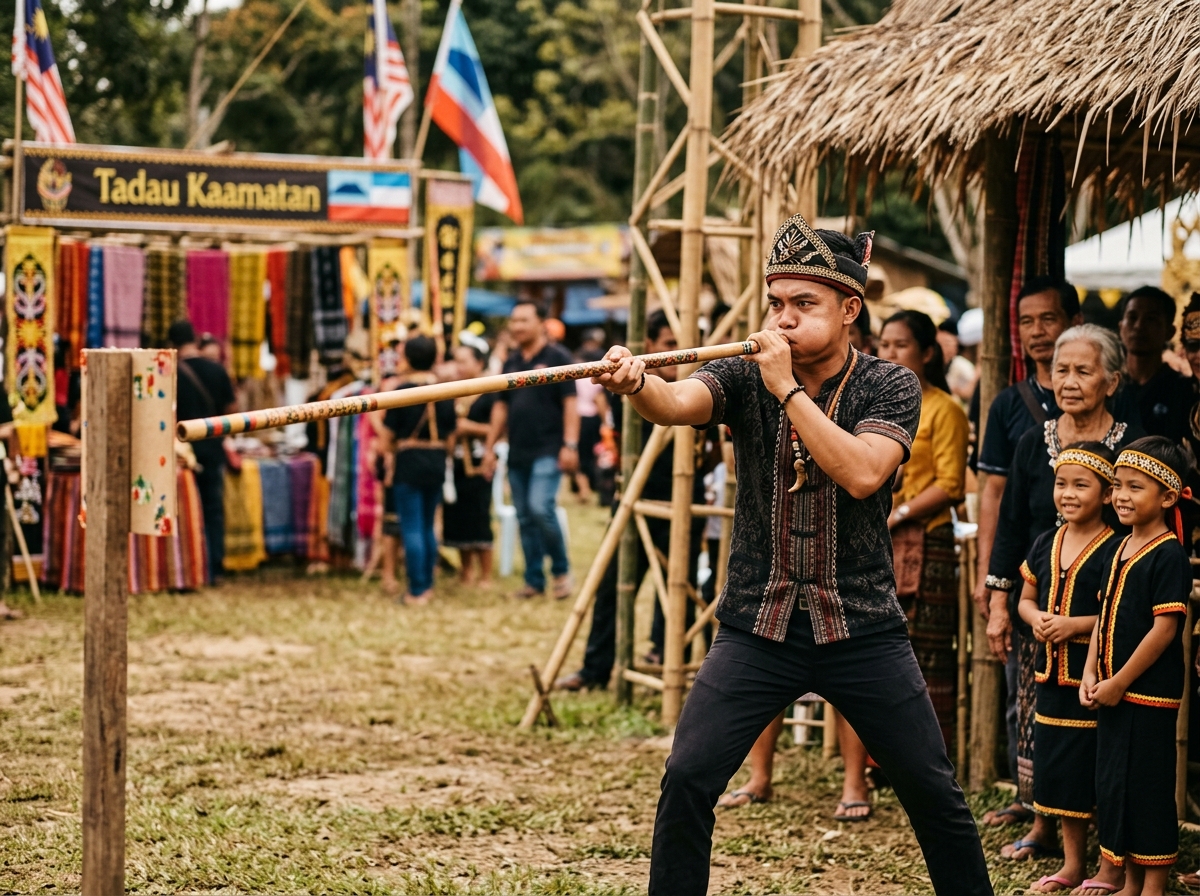
- Traditional Games: Blowpipe shooting, arm wrestling, tug of war, bamboo stilt walking, and children's games—many open to visitor participation.
The festival is free to roam (entrance fee RM5-10), though some events have separate ticketing for premium seating. Food and craft purchases are à la carte.
What is the Sumazau dance?
Sumazau is the iconic dance of Kaamatan, performed by pairs of male and female dancers. The movements imitate an eagle soaring and spreading its wings over rice fields, a blessing for a bountiful harvest. The dance is ancient, deeply spiritual, and the most visible symbol of Kadazan Dusun culture. With 390 monthly searches on Google Malaysia, Sumazau is the most-searched Kaamatan activity—and deservedly so.
The Origin: Sumazau is believed to represent the spirit of the harvest and the balance between male and female roles in agriculture. The eagle motif comes from Sabah's landscape: eagles circle rice fields in the dry season, and Kadazan Dusun mythology ties the eagle to protection and abundance. Every movement of Sumazau honors this connection.
How It's Performed: Sumazau is always danced in pairs—one male, one female. The female dancer leads, moving slowly and gracefully, while the male dancer mirrors her movements slightly behind. The most distinctive feature is the arm movements:
- Arm Position: Both dancers hold their arms at shoulder height, elbows bent at roughly 90 degrees, with wrists relaxed.
- Wrist Flapping: The wrists flutter and flap continuously, mimicking the feather movements of an eagle in flight. This is not a rigid motion—it's fluid and rhythmic.
- Hip Movement: The hips sway gently side-to-side while the feet step in a deliberate, synchronized pattern. The movement is slow and meditative, not fast or energetic.
- Male Signal: At key moments, the male dancer lets out a distinctive "heeeeee!" or "hoo-hee!" call—a sharp, high-pitched vocalization that signals transitions and adds drama to the performance.
The Music: Sumazau is traditionally accompanied by gongs (particularly the large tagung gong), drums, and sometimes bamboo instruments. The rhythm is steady and hypnotic, typically slow (around 60 BPM), allowing the arm movements to be graceful and deliberate. Modern performances may use recorded music, but traditional live gong accompaniment is preferred and carries more cultural weight.
Male and Female Dynamics: The female dancer is the "lead" in the sense that she sets the pace and direction, but both dancers move in perfect synchronization. The male dancer is not submissive—he's protective and mirroring, embodying the male role in agriculture and harvest protection. This balance of leadership and support is intentional and reflects Kadazan Dusun gender dynamics in agriculture.
Can Visitors Learn and Participate? Yes. During Kaamatan at KDCA, there are open Sumazau sessions where visitors can join local performers and learn the basic steps. These are informal teaching moments; locals are patient and welcoming. You won't perform at the level of trained dancers, but you'll understand the movements and the cultural meaning. Wear comfortable clothing and follow the lead of experienced dancers. The experience is humbling and memorable.
Where to See It: Sumazau performances happen daily at KDCA during May 24-31, typically in morning and afternoon slots (10 AM, 2 PM, 6 PM, though times vary). The main performance pavilion is your best bet for high-energy shows. For learning opportunities, ask at the festival information booth for visitor-friendly sessions.
What is Sugandoi?
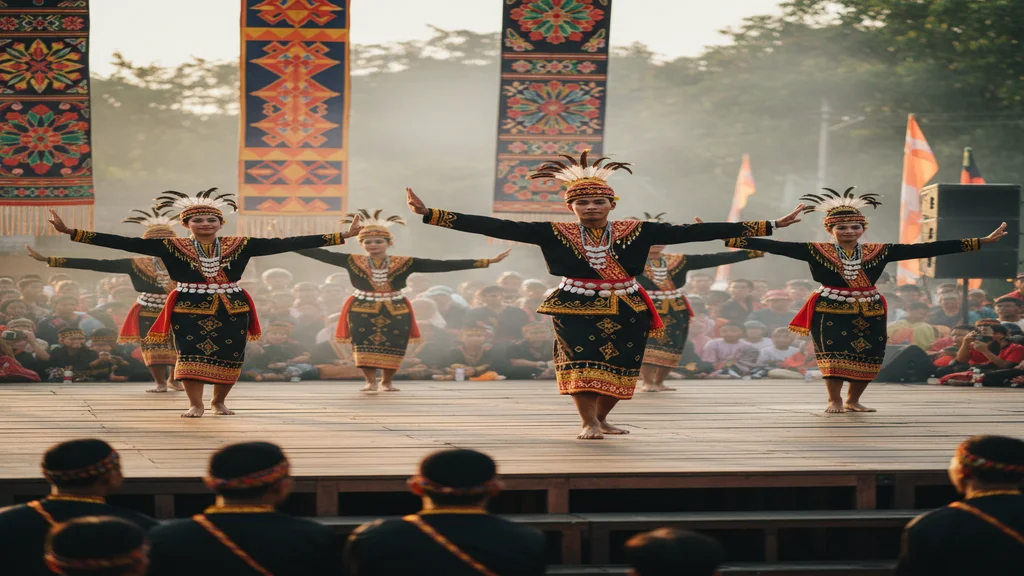
Sugandoi is a Kadazan Dusun vocal talent competition where singers perform both traditional and contemporary Kadazan songs. It's the singing counterpart to Unduk Ngadau—a showcase of indigenous musical talent and cultural pride. Sugandoi runs throughout Kaamatan, with district heats in April-May and State Finals at KDCA (typically May 27-29). It attracts 20-40 competitors and draws enthusiastic crowds of supporters.
How Sugandoi Works: Competitors are divided into categories (usually: traditional Kadazan songs, contemporary Kadazan songs, and sometimes a youth category). Each competitor performs one or two songs, typically 3-4 minutes long. Judges evaluate vocal technique, emotional connection, cultural authenticity (for traditional songs), and stage presence. Winners advance through district level to State Finals, where top singers from across Sabah compete for the state title.
The 2025 State Winner: Kimberley Myra Terence from Beluran won the 2025 Sugandoi State Finals, solidifying her place as the year's cultural singing ambassador. Her victory illustrates what judges look for: a voice that honors tradition while bringing personal artistry to the performance.
Traditional vs. Contemporary Songs: Sugandoi celebrates both. Traditional Kadazan songs (like "Sumandak" or "Pigi Limomou") are folk melodies passed down through generations—slower, more contemplative, and deeply tied to harvest and cultural stories. Contemporary Kadazan songs are modern compositions that use Kadazan language and themes but with contemporary music production—faster, more energetic, and appealing to younger audiences. Many performers do both to show range and respect for tradition.
What to Expect as a Spectator: Sugandoi performances are emotional and intimate. Unlike pageants with elaborate staging, Sugandoi is about the voice. You'll hear incredible vocal control, traditional instruments (gongs, drums, traditional flutes), and lyrics sung in Kadazan Dusun that often speak of harvest, family, love, and cultural pride. Spectators are vocal—they cheer, ululate (the high-pitched "ulululululu" cry), and show genuine support for performers. The atmosphere is celebratory, not formal.
Where and When to Watch: Sugandoi semifinals and finals happen at KDCA May 27-29 (typically evening performances, 6-9 PM). Check the official schedule on KDCA's Facebook page for exact times and stage locations. Admission is free with general KDCA entrance fee.
Can You Compete? Sugandoi is open to Kadazan Dusun competitors (citizenship and heritage requirements apply). Registration typically happens in April; contact KDCA for entry forms and deadlines. For visitors without Kadazan heritage, you're welcome to attend as a spectator and enjoy the cultural performances.
What is Magunatip?
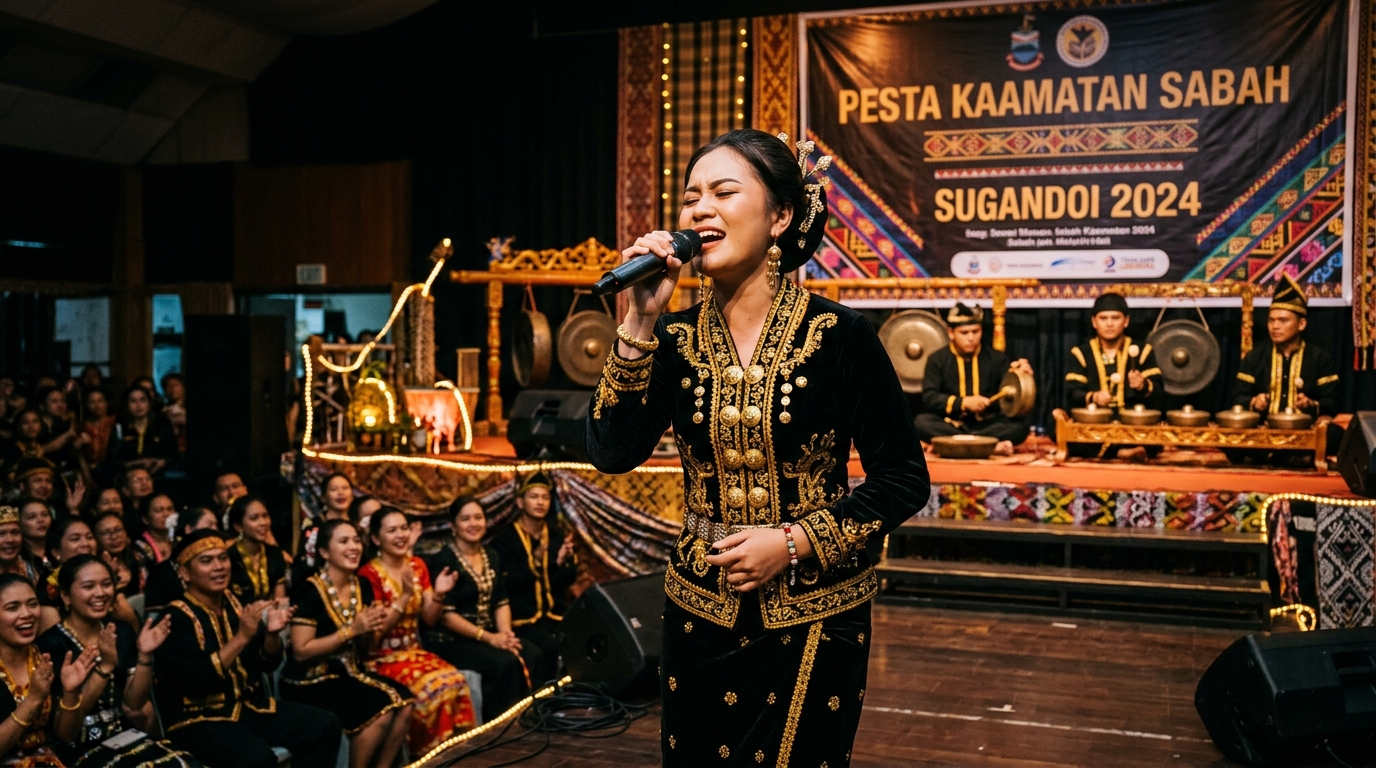
Magunatip is the traditional Murut bamboo pole dance. Dancers jump, hop, and skip between pairs of bamboo poles that are rhythmically struck together on the ground and each other. As the music tempo increases, the poles move faster, and the challenge intensifies—dancers must time their jumps perfectly to avoid having their ankles (or worse) caught between the poles. It's visually stunning, physically demanding, and deeply rooted in Murut cultural tradition. Magunatip is one of the most popular spectator events at Kaamatan.
How the Bamboo Poles Work: Two pairs of poles lie horizontally on the ground (four poles total). Two people control each pair, clapping the poles together rhythmically—first striking the ground, then clapping the poles against each other. The rhythm is steady and meditative at first, maybe 1 clap per second. A dancer steps into the middle and must jump in and out of the poles, coordinating their movements to avoid being trapped when the poles clap together.
What makes Magunatip challenging is the acceleration. As the music tempo increases, the poles move faster—from a comfortable 1 clap/second to 2-3 claps/second or faster. Experienced dancers can maintain perfect rhythm and footwork even at high speed, making it look effortless. First-timers often get caught and exit laughing, but that's part of the fun.
The Music and Rhythm: Magunatip is accompanied by traditional Murut drums and sometimes gongs. The rhythm is hypnotic and builds momentum. Unlike Sumazau (which is slow and meditative), Magunatip is energetic and playful, often generating laughter and cheers from spectators.
Visitor Participation: Yes, visitors can absolutely try Magunatip. There are open sessions at KDCA where spectators can step in, and it's encouraged. You don't need to be expert—the handlers adjust the tempo for beginners. Most visitors try once, get caught or laugh at themselves, and do it again. It's a joyful, low-stakes activity.
Tips for Not Getting Your Ankles Caught:
- Watch the rhythm for 30 seconds before entering—count the beat and anticipate the pattern.
- Start at slow tempo. Ask the handlers to keep it slow while you learn the footwork.
- Jump—don't step. The key is vertical movement, not horizontal. Jump straight up and over the poles.
- Keep your feet close together. Wide stances make it harder to jump quickly.
- Watch the poles, not the spectators. Your eyes should track the gap.
- If you feel unbalanced, exit calmly. The handlers can pause the poles anytime.
- Have fun. Getting caught is expected and laughed about. No judgment.
Where to Find It at KDCA: Magunatip performances and open sessions happen daily at KDCA, typically in a dedicated pavilion or open area. Check the festival map or ask at the information booth for the exact location and times. Peak times are mid-morning (10-11 AM) and late afternoon (4-5 PM).
What is Orang Kuat Sabah?
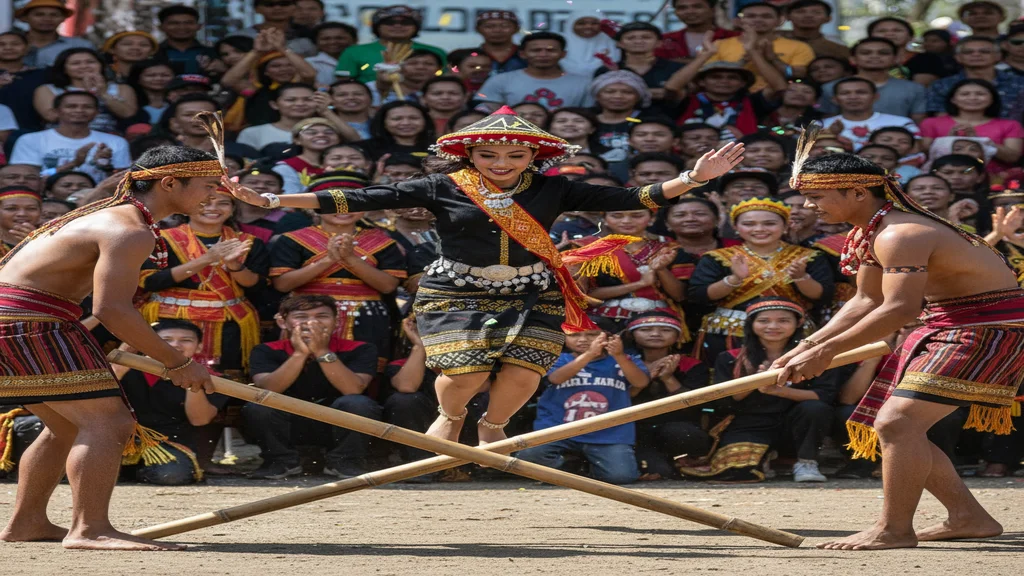
Orang Kuat Sabah (meaning "Strong Man of Sabah") is Kaamatan's strongman competition. Competitors demonstrate feats of strength through events like lifting heavy objects, arm wrestling, stone carrying, and traditional strength tests. It's less popular than Sugandoi or Unduk Ngadau in online searches (10/month), but it's an authentic part of Kaamatan culture and draws intense spectator enthusiasm.
Competition Events: Typical Orang Kuat Sabah competitions include: stone lifting (large boulders must be lifted to shoulder height), log or pole carrying (distance and speed), traditional Sabahan strength games, and arm wrestling brackets. Some competitions add "tribal strength" challenges unique to Sabah—these vary year to year based on KDCA's design. The events test practical strength (what would matter in agricultural or hunting contexts historically) rather than pure bodybuilding aesthetics.
Past Champions: Winners typically have agricultural or martial arts backgrounds, reflecting the practical nature of the competition. Historical champions come from across Sabah, representing different districts. The title "Orang Kuat Sabah" carries cultural respect—you're recognized as embodying strength in service of your community.
Where and When to Watch: Orang Kuat Sabah competitions are held at KDCA during the State Festival (May 24-31), typically in mid-afternoon (2-4 PM) on the main grounds or a designated strength pavilion. Check the festival schedule or ask at the information booth for exact dates and times—the schedule varies yearly.
Spectator Experience: Watching Orang Kuat Sabah is energetic. Competitors are celebrated, spectators cheer loudly, and there's a carnival atmosphere around the strength competitions. You'll see genuine athletic display and cultural pride. It's free to watch with general KDCA admission.
Can You Compete? Orang Kuat Sabah is open to male competitors from Sabah (heritage requirements may apply). Registration happens in April; contact KDCA for details. The competition is not restricted to a specific age or weight class, though there may be divisions based on previous competitions' structure.
What traditional games can I try?
Beyond the major performances, Kaamatan offers a range of traditional games that visitors can actively participate in. These are fun, low-stakes, and a genuine way to engage with Kadazan Dusun culture. Most are located in the "games pavilion" or scattered around the KDCA grounds.
Blowpipe Contest (Sumpit): Competitors use traditional bamboo blowpipes to shoot darts at targets. It's harder than it looks—precision, breath control, and aim are essential. Visitors can try in open divisions. Expect RM2-5 entry fee for a few shots. Locals will offer tips; watch an expert first to understand technique.
Arm Wrestling: Simple, direct, and surprisingly fun. Open divisions for visitors are common. Usually held in a tournament bracket format; sign up at the games pavilion. No entry fee; prizes are small (RM5-20) or bragging rights. Great for friendly competition with locals.
Tug of War: Team-based and inclusive. Visitors can form mixed teams with locals. Typically organized in heats and finals throughout the festival. It's one of the most accessible games for people of varying fitness levels. No special skill required, just teamwork and enthusiasm.
Bamboo Stilt Walking (Bangkong): Balance and coordination challenge where you walk on tall bamboo stilts. Sounds harder than it actually is once you understand the technique. Visitors can attempt in open sessions; handlers guide you through the basics. Good for photos and laughs. Ages 8-60 can try.
Tapak (Hopscotch-like game): A traditional Sabahan ground game using stones and a drawn court. Rules are simple; locals will explain and invite you to play. Casual, non-competitive version is often played for fun. Low physical demand.
Batu Seremban (Jacks): A traditional game using small stones and hand coordination. You'll see locals playing casually around the festival grounds; ask to join and learn. It's leisurely, social, and great for conversation.
Momolositik (Slingshot): Traditional slingshot used for hunting small game, now used as a target sport. Visitors can try in open sessions. Accuracy and timing are key. Safe, supervised environment at KDCA.
Participation Tips: Ask at the festival information booth for a games schedule and location map. Wear comfortable shoes (you may be walking or standing on uneven ground). Bring small cash (RM10-20 in coins) for entry fees and small prizes. Most games are free or very cheap (RM1-5). Don't be shy—locals welcome visitors to participate. If you lose or struggle, that's the point—have fun with it.
What's the district celebrations schedule?
Kaamatan is celebrated across all 27 districts in Sabah, with each district holding its own celebration at a specific date throughout May. District celebrations are smaller than the State Festival, but they offer authentic, community-level cultural experiences. Below is a reference table of approximate 2025 dates (note: these dates shift yearly, so verify with KDCA or local district offices before planning).
| District | State/Region | Approximate Date (2025) | Main Venue |
|---|---|---|---|
| Tambunan | Interior Sabah | May 1-2 | Tambunan Town Center |
| Tuaran | West Coast | May 6-7 | Tuaran Community Hall |
| Ranau | Interior Sabah | May 10-11 | Ranau Town Square |
| Papar | West Coast | May 17-18 | Papar Sports Complex |
| Penampang | West Coast | May 18-19 | Penampang Civic Hall |
| Kota Belud | West Coast | May 20-21 | Kota Belud Community Center |
| Kunak | East Coast | May 12-13 | Kunak District Office Complex |
| Sandakan | East Coast | May 13-14 | Sandakan Civic Center |
| Tawau | Southeast | May 14-15 | Tawau Town Square |
| Semporna | Southeast | May 15-16 | Semporna District Center |
| Tenom | Interior Sabah | May 21-22 | Tenom Town Hall |
| Beaufort | Southwest | May 22-23 | Beaufort Community Hall |
| Kuching-Sarawak | Sarawak* | May 25-26 | Kuching Civic Center* |
* Note: Sarawak also celebrates Gawai (a similar Dayak harvest festival) with Kaamatan celebrations in major towns like Kuching, but dates may align differently.
Important Reminders:
- These dates shift yearly. Always verify current dates with KDCA (kdca.org.my or Facebook) or your local district office.
- District celebrations are smaller than the State Festival and may have limited food stalls and attractions. Plan accordingly if traveling to a district.
- Some district celebrations are primarily for residents; check if visitors are welcome.
- The State Festival at KDCA (May 24-31) is the most comprehensive celebration and easiest for tourists to access.
Why Visit a District Celebration? If you're genuinely interested in experiencing local Kadazan Dusun community culture (not just tourist attractions), district celebrations are more authentic. You'll see locals celebrating with family, taste home-cooked food, participate in smaller-scale performances, and have direct conversation with community members. The downside is less infrastructure (fewer food stalls, fewer facilities) and less accommodation nearby. District celebrations are best for travelers with their own transport and flexible schedules.
What should I photograph at Kaamatan?
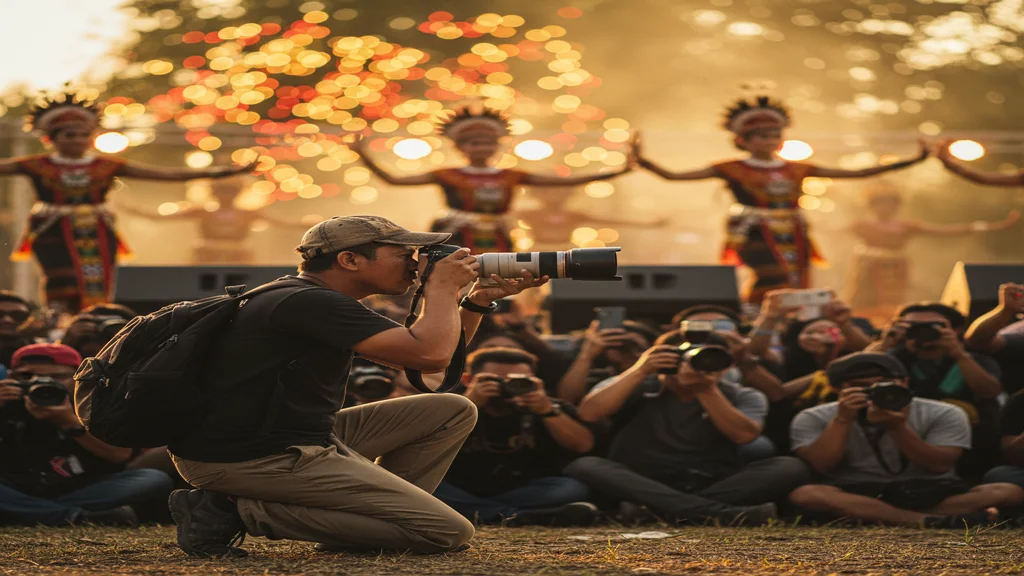
Kaamatan is visually stunning, and you'll want to capture it. Here's a guide to the best photo subjects, etiquette, timing, and gear recommendations to help you bring home the best images.
Best Photo Subjects:
- Sumazau Dancers in Traditional Costume: The beaded breastplates (dusung), brass coils, traditional headdresses (singki), and woven sarongs are incredible details. Close-ups of arm movements and wrist flapping are striking. Wide shots show the grace and synchronization. Shoot from multiple angles.
- Unduk Ngadau Contestants: The pageant is a photographer's dream. Contestants wear elaborate Sinuangga with ornate beading and jewelry. Formal lighting on stage makes for sharp, colorful images. Get permission before taking close-ups.
- Magunatip Dancers Jumping Bamboo Poles: Action shots of feet mid-jump are dynamic and fun. The blur of motion, the focus on precision—these tell the story. Shoot in burst mode to catch the peak moment.
- Food Stalls and Dishes: Traditional dishes like hinava, linopot, and bambangan are colorful and photogenic. Golden-hour light makes food stalls glow. Ask vendors before photographing food; some will pose their best dishes for you.
- Crowd and Spectator Moments: Faces of spectators cheering, children watching performers, elderly locals enjoying food—these are emotional and authentic. Respect privacy; ask before photographing individuals, especially children.
- Landscape Shots: KDCA grounds with Kinabalu mountain in the distance (on clear days), sunset over the festival grounds, crowds at the main pavilion—wide shots capture the scale and energy of the event.
- Detail Shots: Close-ups of traditional jewelry, gong details, leaf-wrapped linopot parcels, intricate beadwork—these showcase the craftsmanship and cultural depth.
Photography Etiquette:
- Ask Permission: Before photographing individuals (especially children, elderly locals, or during sacred rituals), ask first. Most people are happy to have their photo taken if you ask respectfully. A smile and "boleh ambil gambar?" (Can I take a photo?) in Malay goes a long way.
- Respect Sacred Moments: Some rituals at KDCA are ceremonial and sacred. If an event is marked as "no photography" or if locals ask you not to photograph, respect that. Not every moment needs to be captured.
- Don't Obstruct Performances: Move to the side of performances, not in front. Other spectators and performers should not be blocked by your photography. Be aware of your position.
- Be Respectful During Pauses: During quiet moments or rest periods, approach people for photos. Don't interrupt live performances or formal ceremonies.
- Credit Locals: If you publish photos (on social media or blogs), consider tagging or crediting the location (KDCA, Kaamatan) and the community. This acknowledges the cultural significance of what you've captured.
Timing and Lighting:
- Golden Hour (6-7 AM and 4-6 PM): Warm, soft light is flattering for portraits and detail shots. Sunset light over the festival grounds is stunning. Avoid harsh midday sun (11 AM-3 PM) for portraits—shadows are too dark and light is too bright.
- Overcast Days: Paradoxically, overcast days are great for event photography. Even lighting reduces harsh shadows and makes colors more vibrant. Cloudy days are actually ideal for Kaamatan.
- Evening Performances (6-9 PM): Stage lighting for evening Unduk Ngadau and Sugandoi performances is dramatic. Bring a camera that handles low light well (high ISO tolerance). Tripods may be restricted on crowded grounds; stabilize yourself instead.
- Early Morning (8-10 AM): Fewer crowds, softer light, and better for candid moments of daily festival life. Food stall vendors are setting up; this is a great time for documentary-style photography.
Gear Recommendations:
- Camera: Any camera works—smartphone, mirrorless, DSLR. Smartphones are convenient and capable; mirrorless/DSLRs offer more control. Bring a backup battery.
- Lenses: A versatile zoom lens (24-70mm equivalent) covers most situations. A wide-angle lens (14-24mm) is great for landscape and crowd shots. A 85-100mm prime lens is ideal for portraits and detail work.
- Stabilization: A tripod is helpful for evening shots and low-light situations, but may be impractical in crowds. Consider a monopod or image stabilization (optical or electronic).
- Weather Protection: Sabah is tropical; bring a small weather-protective bag or rain cover. May is rainy season—be prepared for sudden showers. UV filter on your lens protects the lens and reduces glare.
- Backup Storage: Bring extra SD cards and batteries. Festival photography generates hundreds of images. A portable external hard drive allows you to back up images overnight.
Photo Ideas to Aim For:
- Close-up of Unduk Ngadau contestant's face (with permission)—the emotion and beauty of the moment.
- Wide shot of the whole Sumazau performance, showing multiple dancer pairs on stage.
- Action shot of Magunatip dancer mid-jump with bamboo poles in motion.
- Food photography: hinava plate with lime juice glistening, linopot wrapped in green leaf, colorful bambangan jars.
- Spectator moments: elderly Kadazan woman cheering, children's faces as they watch performers, families eating together.
- Sunset over KDCA grounds with festival lights just coming on.
- Detail shots: gong being played, beaded jewelry on a contestant, traditional headdress (singki) up close.
- Night shot of the illuminated pavilion during evening performances.
Photography at Kaamatan is about capturing both the spectacle (performances, costumes, crowds) and the intimacy (reactions, food, small moments of connection). Aim for a mix of both, and you'll have a rich, memorable visual record of the festival.
FAQ
Q Can non-Kadazan Dusun people participate in activities at Kaamatan?
Q What time do activities happen at KDCA during Kaamatan?
Q Is there an entrance fee to watch activities at KDCA?
Q Can I learn these dances and games if I come to Kaamatan?
Q Are Kaamatan activities accessible for people with mobility challenges?
Q What is the best day to visit KDCA for the most activities?
Sources & References 8 sources
Last verified: 2026-04-27