Huminodun: The Legend Behind Kaamatan | SabahGuide
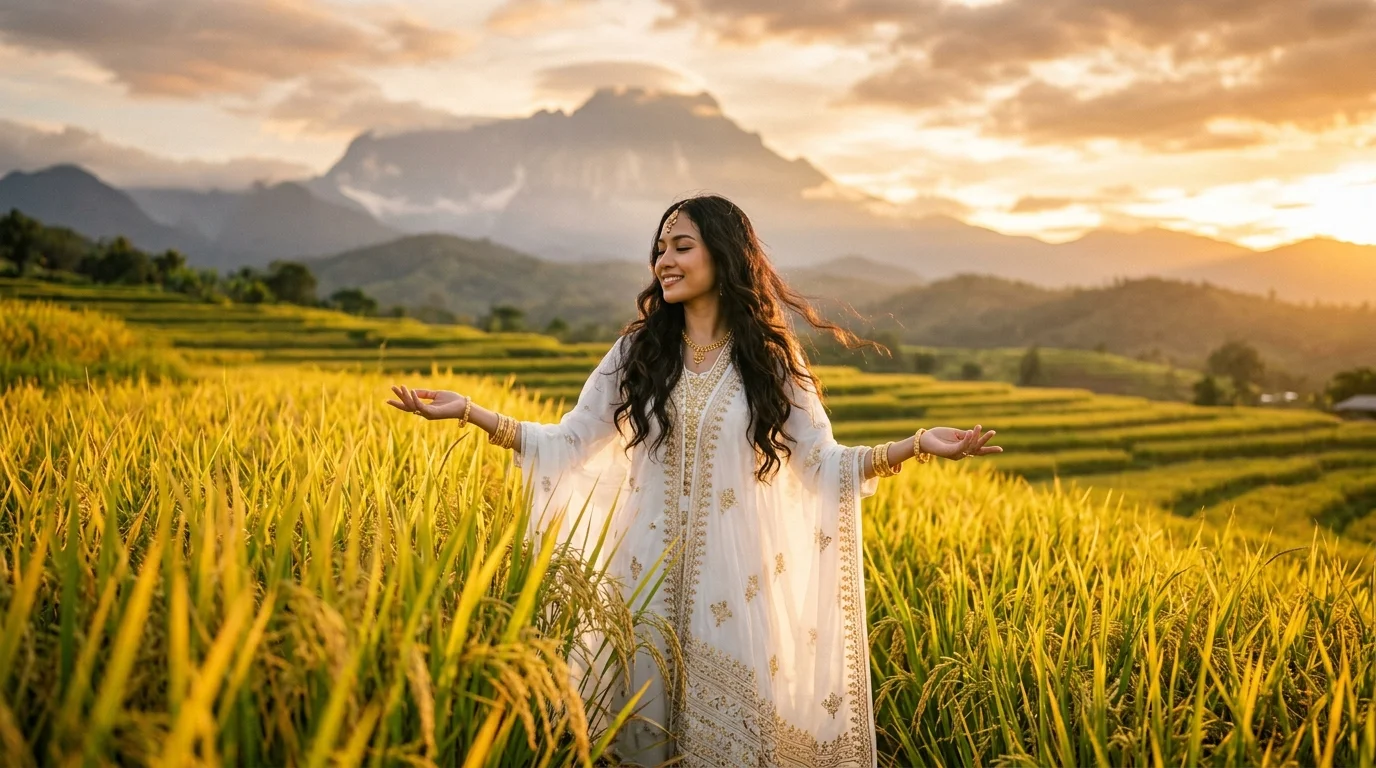
Who is Huminodun and why does she matter?
Huminodun is the legendary maiden in Kadazan-Dusun mythology whose sacrifice gave rise to rice and all edible plants. She is the daughter of Kinoingan (the supreme deity) and the central figure of Kaamatan, the harvest festival. Her story teaches that life comes through sacrifice, and that rice—the staple of Kadazan culture—is sacred because it contains her spirit (Bambarayon). Without Huminodun, there would be no Kaamatan, no bobolian priestesses, and no spiritual connection between the Kadazan-Dusun people and the land.
Who is Huminodun?
According to Kadazan-Dusun oral tradition, Huminodun was a beautiful and compassionate maiden, the daughter of Kinoingan (the supreme creator deity) and granddaughter of the beings who emerged from the sacred Nunuk Ragang tree. She is remembered not as a historical figure, but as a spiritual embodiment of sacrifice, generosity, and the life-giving power of the earth.
The Huminodun story exists in several versions across different Kadazan and Dusun subgroups, each with regional variations. But the core narrative is consistent: Huminodun chose to give her body to the land so that her people would never starve. In doing so, she transformed death into abundance, and her sacrifice became the foundation of Kadazan spiritual life. Every rice harvest, every Kaamatan celebration, every bobolian priestess calling the spirit of Bambarayon—all trace back to Huminodun's choice.
What makes Huminodun significant is not just the story itself, but what it reveals about Kadazan values. The story teaches that the highest form of love is sacrifice, that the natural world is alive with spirit, and that gratitude and ritual are essential to survival. She is revered not as a goddess, but as a sacred ancestor whose spirit continues to animate the rice fields and the lives of her people.
Today, Huminodun is celebrated during Kaamatan through the Unduk Ngadau pageant (where a young woman is chosen to embody her), through the Magavau ceremony (where bobolian priestesses call her spirit), and through the careful handling and reverence shown to rice in every Kadazan household. To understand Kaamatan, you must first understand Huminodun.
What is the Nunuk Ragang creation story?
Nunuk Ragang is the sacred banyan tree that stands at the Tampias River, on the border between Ranau and Tambunan districts in the interior of Sabah. According to Kadazan-Dusun creation mythology, this is where all life began. The story teaches that from beneath this ancient tree, a large rock split open, and from it emerged two divine children: Kinoingan (female, the creator) and Suminundu (male). These two beings would go on to populate the earth and become the spiritual parents of the Kadazan-Dusun people.
The Nunuk Ragang story is tied to historical settlement records that suggest a Kadazan community flourished near the tree for at least 328 years, from approximately 1415 to 1743—a continuous presence in the region for over three centuries. This archaeological and oral-historical convergence is rare; most origin stories are purely mythological, but Nunuk Ragang appears to have roots in actual settlement patterns and cultural memory.
The banyan tree itself is ancient, with a trunk so massive that multiple people holding hands cannot encircle it. The site sits along the Tampias River, in a lush jungle setting. For Kadazan-Dusun people, it is the most sacred geographical location in their spiritual landscape—the womb of their civilization. Pilgrimages to Nunuk Ragang are spiritual acts; many Kadazan families visit at least once in their lifetime to honor their ancestors and their origins.
Kinoingan, who emerged from beneath the tree, became the supreme deity (also called Imaom or the Creator). She is associated with the sun, fertility, and the harvest. Suminundu, her brother, represents the protective male principle. Together, they had children, including Ponompulan and Ponompuan (also called Huminodun), whose story forms the basis of Kaamatan mythology. The Nunuk Ragang tree thus stands as the spiritual root of the entire Kadazan creation narrative.
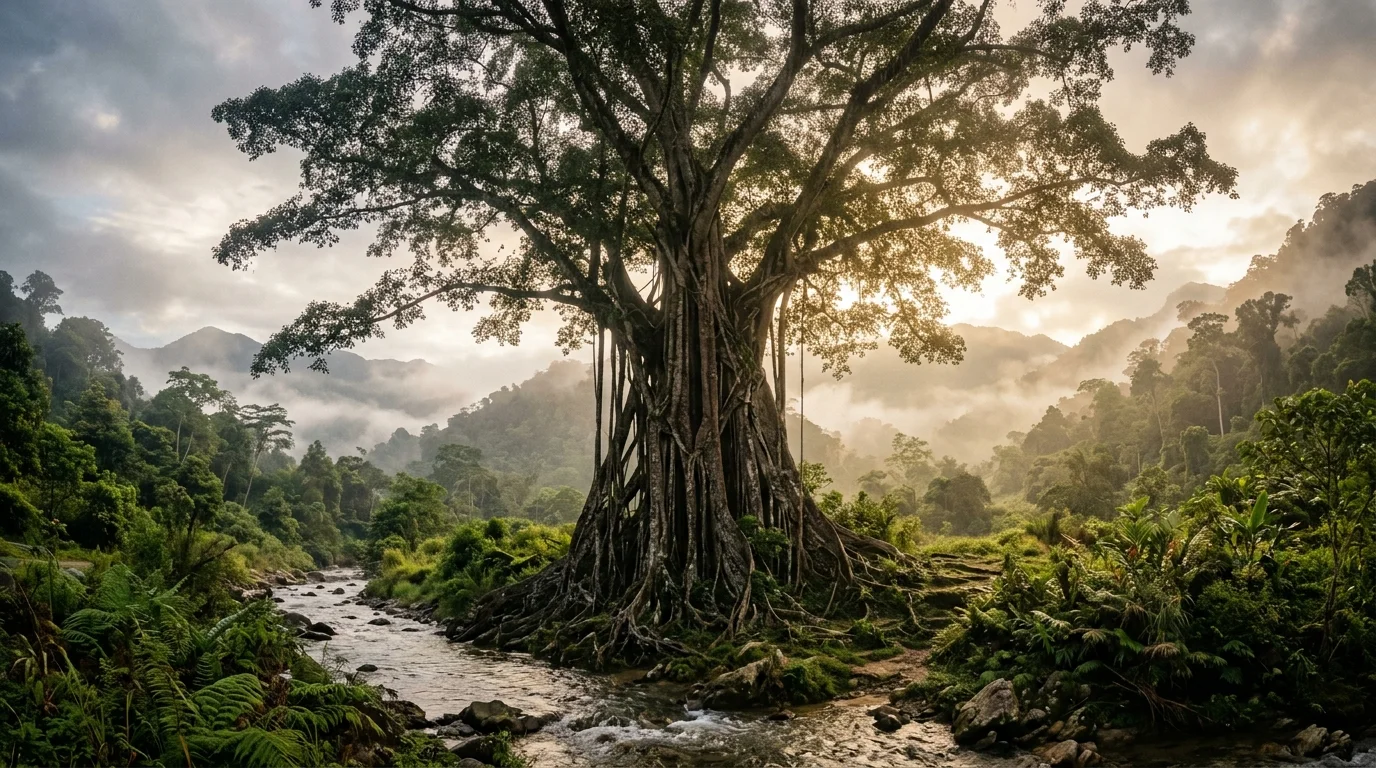
📖 Illustrated: The sacred Nunuk Ragang banyan tree — birthplace of Kadazan-Dusun civilization
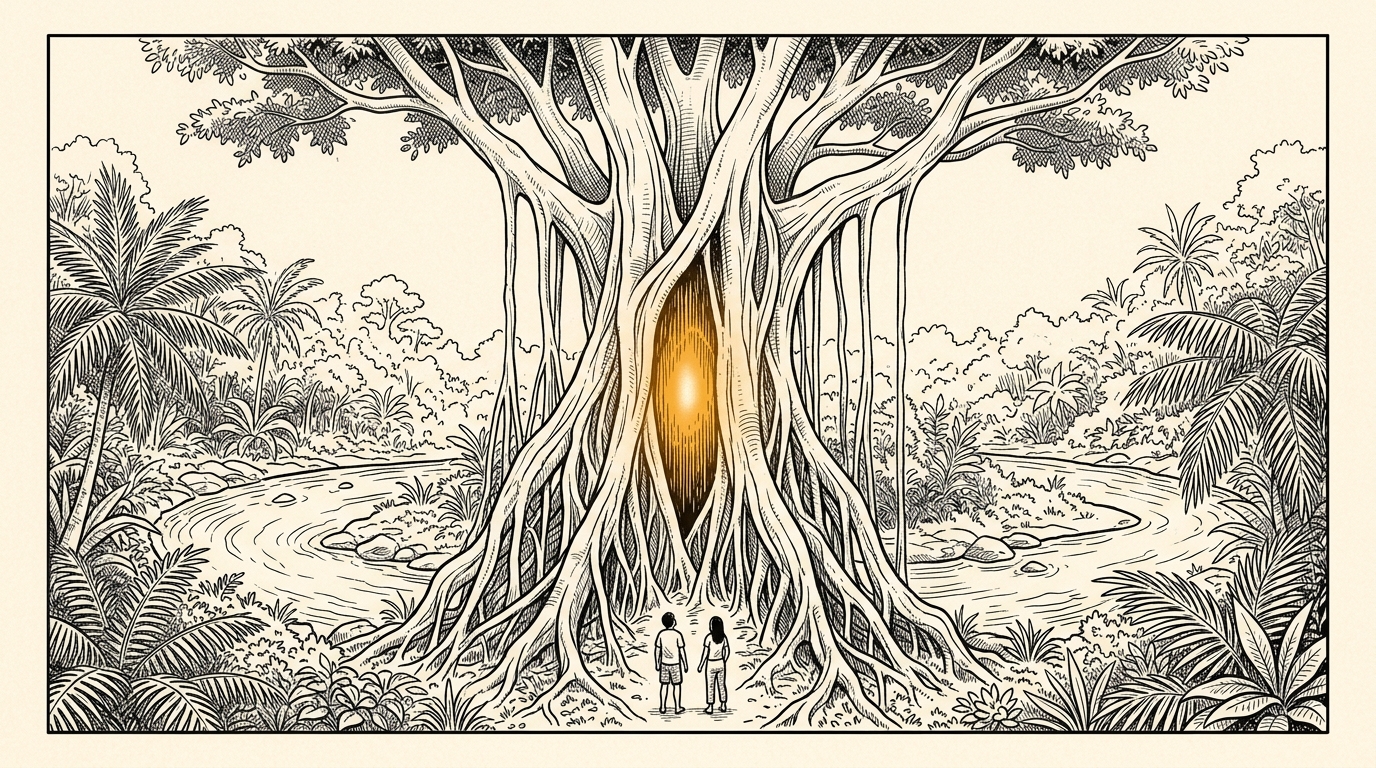
What happened to Huminodun?
The Huminodun narrative unfolds as a tragedy that became a blessing. According to the oral tradition, Kinoingan and Suminundu had two children: Ponompulan (the son) and Ponompuan, also called Huminodun (the daughter). The story teaches that Ponompulan became corrupted, leading mankind astray and committing acts that brought curse and famine upon the land. As punishment, Kinoingan banished him to Kolungkud, the underworld—a place of darkness and separation from the living world.
With Ponompulan gone, the land fell into famine. Rice would not grow. Animals disappeared from the hunt. Children cried from hunger. The people faced certain death. In this moment of desperation, Huminodun stepped forward and made an extraordinary choice: she offered her own body as a sacrifice to restore abundance to the land.
The Sacred Words: According to the most widely recorded version, as Huminodun prepared to give her life, she spoke words that would define Kadazan spirituality forever. She said: "My flesh will give rise to rice. My head will become the coconut. My bones will transform into tapioca. My toes will become ginger. My teeth will turn into maize. My knees will give rise to yams." With these words, she gave herself to the earth.
The sacrifice worked. Where her body was buried, rice grew abundantly. The other crops emerged as promised. The famine ended. The people were saved. But Huminodun's spirit did not vanish—it entered the rice itself, becoming Bambarayon, the rice spirit. From that moment on, rice was no longer merely food; it became sacred, animated by the spirit of the maiden who loved her people enough to die for them.
The Resurrection: In some versions of the story, seven of the tallest rice stalks that grew from Huminodun's sacrifice were selected and placed in seven sacred jars. From these stalks, seven maidens emerged who resembled the sun in beauty and radiance. These maidens are understood as reincarnations or spiritual manifestations of Huminodun, carrying forward her grace and compassion. This element of the story connects directly to the Unduk Ngadau pageant, where a young woman is chosen each year to embody Huminodun and represent her spirit at the Kaamatan festival.
The Huminodun story is not a tale of sorrow—it is a story of redemption through sacrifice, and the teaching that the highest love is the willingness to give everything for others. In Kadazan belief, Huminodun's sacrifice was not an ending but a transformation, and her presence continues through the rice, through the ceremonies, and through the women chosen to carry her memory.
📖 The Story of Huminodun — Illustrated
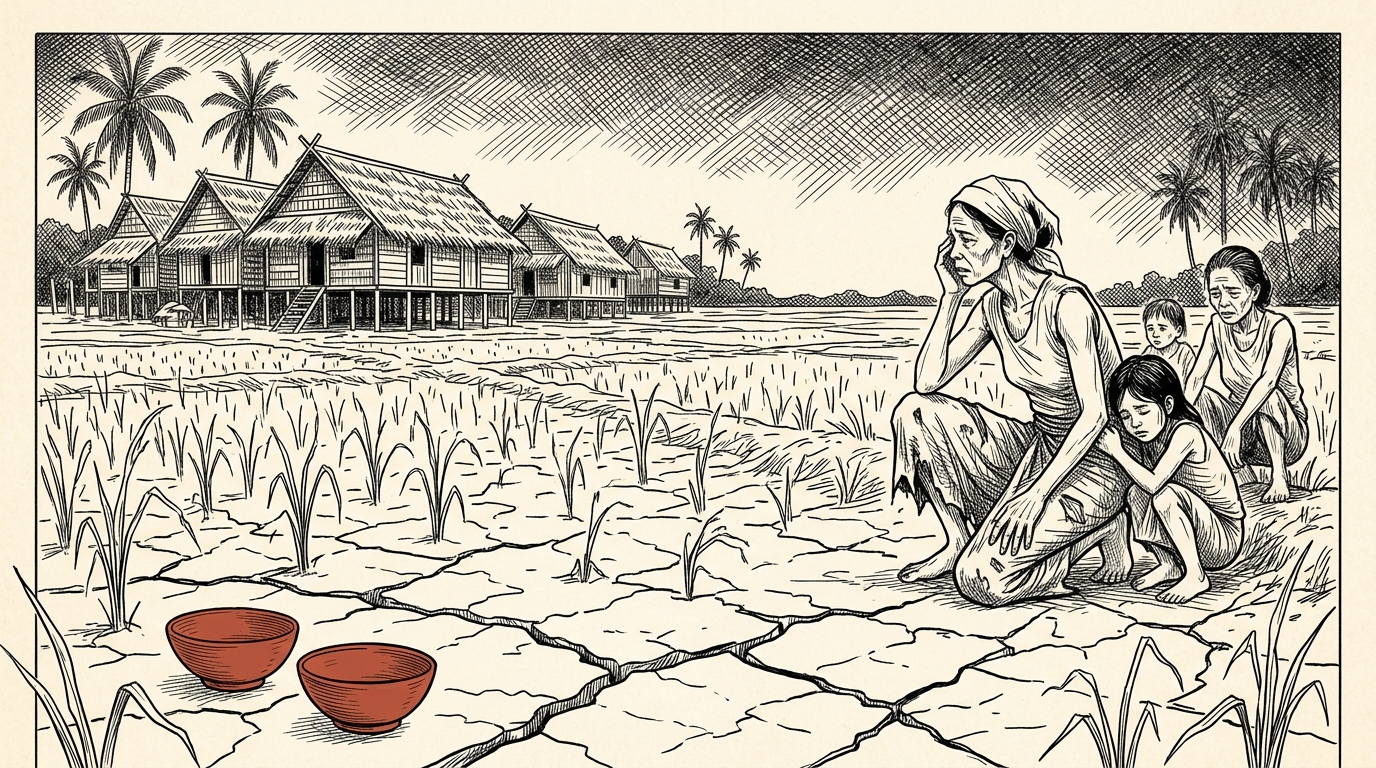
The famine. Rice would not grow. Children cried from hunger.
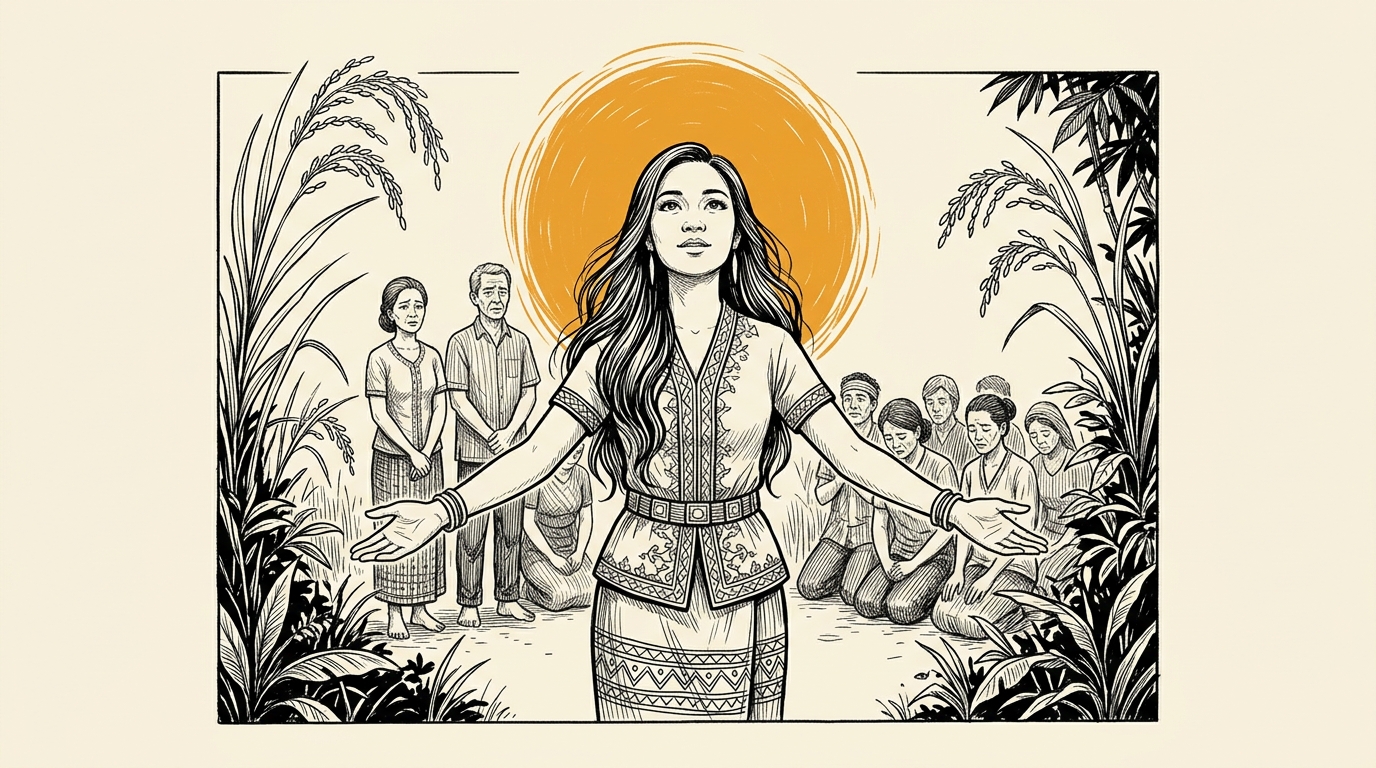
Huminodun stepped forward. "My flesh will give rise to rice."
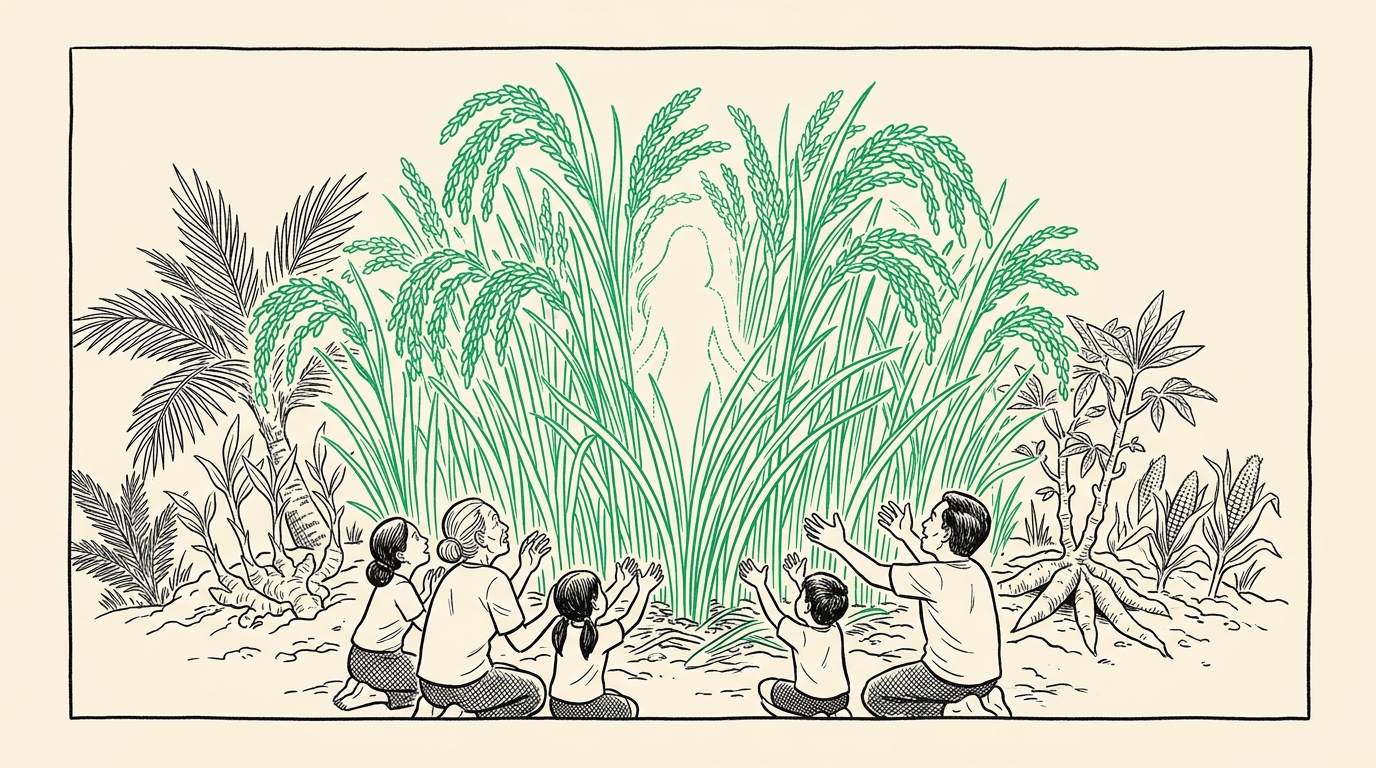
Where she lay, rice grew. The famine ended. The people were saved.
What is Bambarayon?
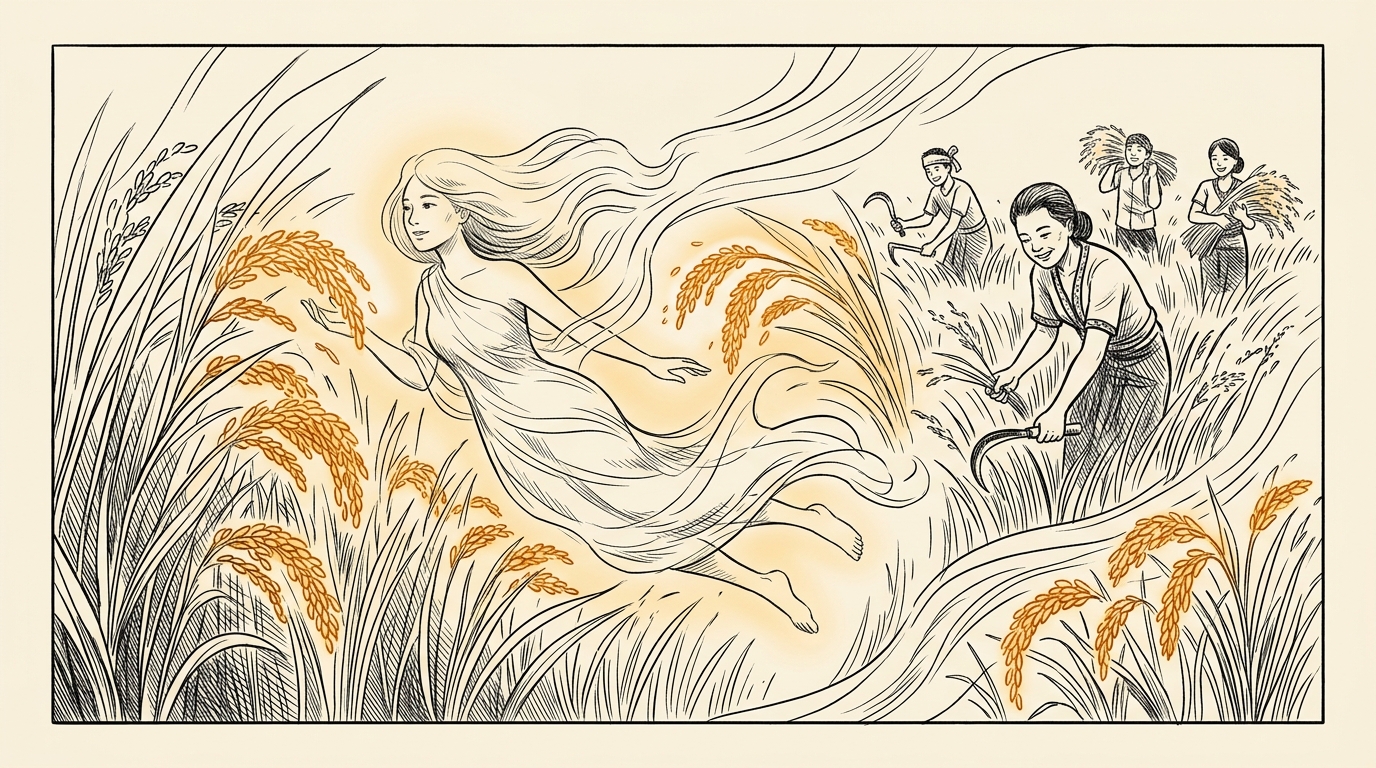
Bambarayon is the spirit of rice in Kadazan-Dusun spirituality. According to belief, Huminodun's spirit entered the rice when her body was transformed into crops, making Bambarayon the living presence of the maiden in every grain. Bambarayon is not a separate deity, but rather Huminodun herself, continuing to nourish and protect her people through the harvest.
The concept of Bambarayon reflects a deeply spiritual understanding of rice that goes far beyond seeing it as mere sustenance. In Kadazan households, rice is treated with reverence. It is never wasted, never disrespected, and must be handled with gratitude. Spilling rice is seen as an offense to Huminodun's spirit. Similarly, when storing rice, families perform small rituals to honor Bambarayon and ensure the household remains blessed. Rice is the physical manifestation of Huminodun's ongoing love for her people.
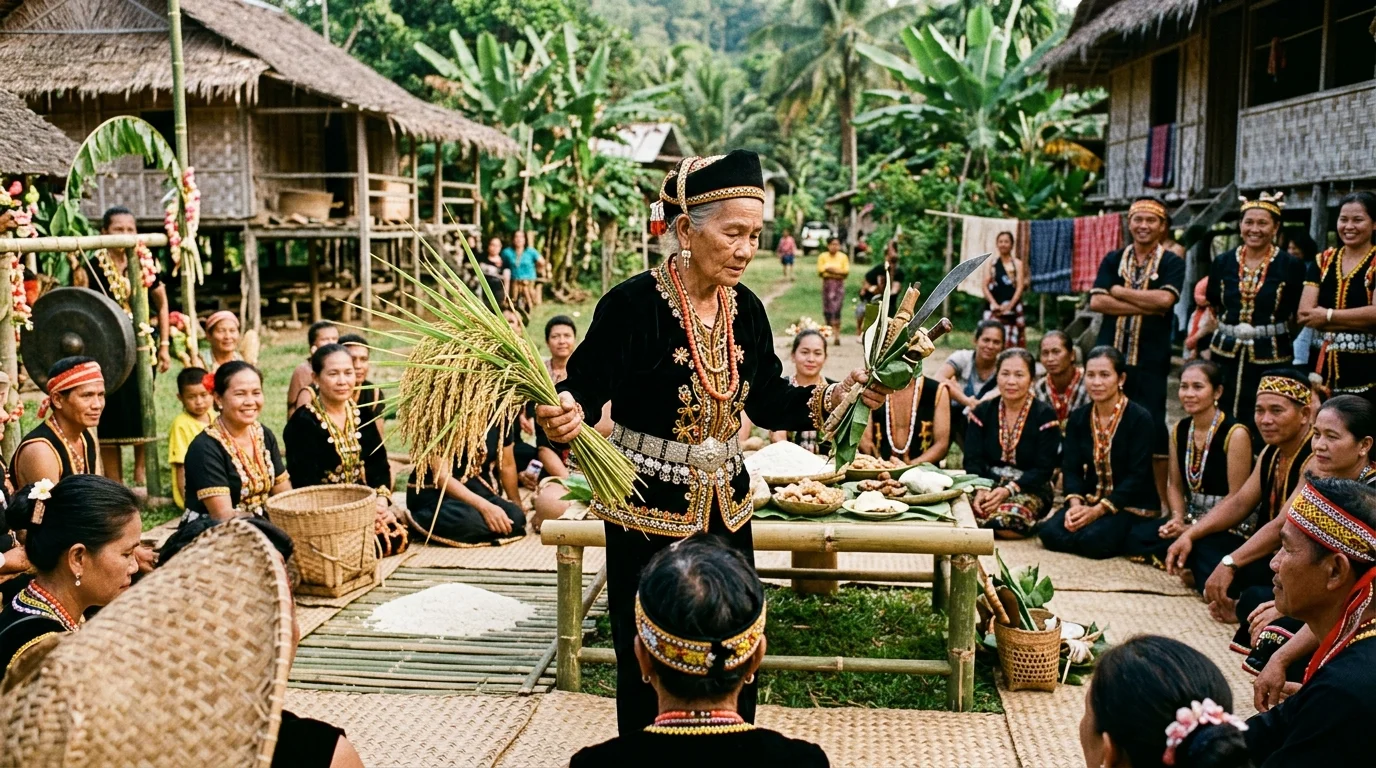
During Kaamatan, the Magavau ceremony is specifically designed to call Bambarayon home. Bobolian priestesses perform rituals and chants (rinait) in ancient Kadazan language to invite the rice spirit to return to the village after the harvest. This is not a harvest celebration in the Western sense—it is a spiritual reunion with an ancestor who gave everything. Families prepare the finest foods, gather together, and welcome Bambarayon as an honored guest and beloved family member.
The reverence for Bambarayon teaches a spiritual ecology: humans are not separate from nature, but embedded in a web of reciprocal relationships. Huminodun gave her body so humans could live. Humans, in turn, must honor that sacrifice through gratitude, ritual, and respect for the land. To understand Bambarayon is to understand why rice is sacred in Kadazan culture, and why Kaamatan is far more than a festival—it is a spiritual obligation to remember the one who died to sustain us.
| Spiritual Entity | Role | Significance in Kaamatan |
|---|---|---|
| Huminodun | The sacred maiden; made the ultimate sacrifice | Central to the festival's meaning; honored through Unduk Ngadau pageant and ceremonies |
| Bambarayon | The spirit of rice; Huminodun's continued presence | Called home through Magavau ceremony; present in every grain harvested |
| Kinoingan | Supreme creator deity; Huminodun's mother | Presides over the harvest and the land; acknowledged in all major ceremonies |
| Bobolian | Priestesses who mediate between spiritual and physical worlds | Perform Magavau ceremonies and maintain spiritual practices; keepers of oral tradition |
📖 Illustrated: Bambarayon — Huminodun's spirit lives in the rice, glowing within the golden grain heads at harvest time
What is the Magavau ceremony?
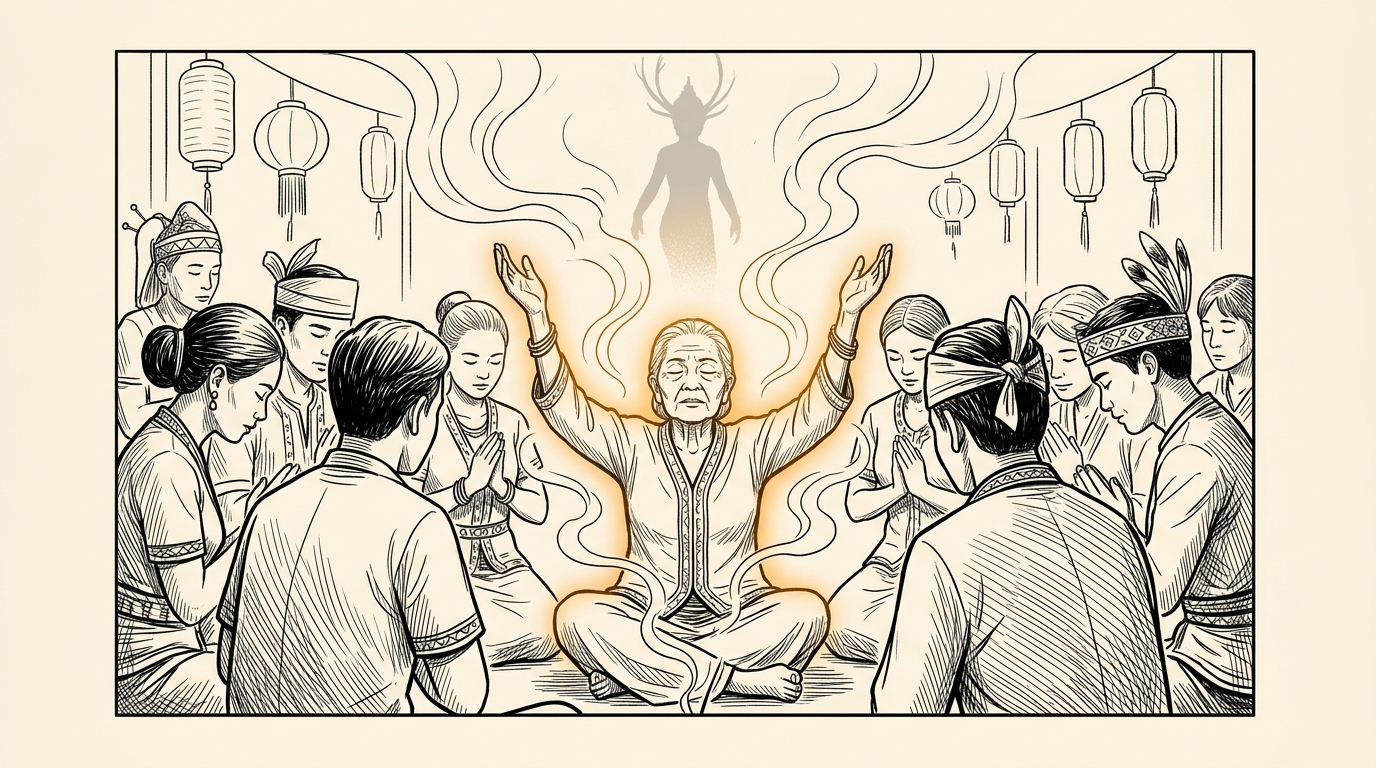
Magavau (also spelled Magavau or Mogavau) is the most sacred ritual of Kaamatan. It is a ceremony performed by bobolian priestesses to call Bambarayon (the rice spirit of Huminodun) home from the fields to the village. The ritual is conducted at the KDCA (Kadazandusun Cultural Association) during the Kaamatan festival, usually in late afternoon, and is also performed in villages across Sabah on a smaller, more intimate scale.
How the ceremony unfolds: The bobolian priestess begins by preparing sacred space, often marked with offerings of rice, flowers, and incense. She enters a circle of community members (bobohizan) who sit in ritual formation. As evening approaches, she begins to chant in ancient Kadazan language—these chants are called rinait, and they are invitations to Bambarayon. The chants use specific syllables and rhythmic patterns passed down through oral tradition for generations. Many younger Kadazan people no longer understand the words, but the elders do; the chants carry weight precisely because they are ancient and largely incomprehensible to the modern ear.
The trance state: As the rinait chants continue, the bobolian enters an altered state of consciousness. Her body may sway, her eyes may close or roll back, and she may speak in a different voice or manner. This is not theatrical performance—it is understood as genuine spiritual communication, a moment when the boundary between the physical and spiritual worlds becomes permeable. During this trance, Bambarayon is believed to speak through the bobolian, blessing the community and the harvest.
Sacred fragrance: The word "tavau" means fragrance in Kadazan, and fragrance is central to Magavau. Smoke from burning incense (often blessed rice straw or local herbs) fills the air. The scent is understood as a pathway for Bambarayon to follow home. Some versions include the use of fragrant oils or specially prepared herbal smoke. The sensory experience—the chants, the smell, the gathering of family—creates a deeply moving atmosphere that blurs the line between ritual and genuine spiritual encounter.
At KDCA during Kaamatan: Public Magavau ceremonies at KDCA are performed in the afternoon or evening, typically in the main pavilion. Visitors are welcome to attend quietly. Families often bring small offerings of rice, flowers, or incense. Photography is usually discouraged during the actual trance portion to respect the spiritual nature of the ritual. The ceremony can last 30 minutes to over an hour. After the bobolian completes the ritual, families gather for feasting—Magavau is both a sacred ceremony and a joyful family reunion.
Why it matters: Magavau represents the core of Kadazan-Dusun spirituality: the acknowledgment that humans are not alone, that the invisible world is as real as the visible one, and that maintaining relationship with ancestors and spirits is essential to life. It also represents cultural preservation—as fewer young people learn the language and traditions, every Magavau ceremony becomes an act of resistance against cultural extinction. To witness Magavau is to witness a living spiritual tradition thousands of years old.
📖 Illustrated: The Magavau ceremony — a Bobolian priestess calls Bambarayon home through sacred chants and fragrant incense smoke
Who are the Bobolians?
Bobolians are spiritual leaders and priestesses in Kadazan-Dusun culture. The term "bobolian" (plural: bobolians or bobolizan) refers to someone who has been called to serve as a medium between the physical and spiritual worlds. Bobolians are predominantly female, though historically there are records of male practitioners as well. They are the keepers of oral tradition, the performers of sacred ceremonies, and the counselors to families in spiritual matters.
How someone becomes a bobolian: In traditional understanding, a person does not choose to become a bobolian—they are called by Kinoingan (the deity) or by their ancestors. The calling often comes through a vision, illness, or deep spiritual experience. Once called, the person undergoes years of training under an established bobolian, learning the ancient Kadazan language (which many speak only for ritual purposes), memorizing hundreds of lines of rinait chants, understanding the symbolism of offerings and incense, and developing the spiritual discipline required to enter trance states safely. Training is entirely oral; there are no written texts. Knowledge passes directly from teacher to student, mouth to ear, generation to generation.
The crisis of transmission: This oral transmission system is breaking down. Fewer than 50 active bobolians are believed to exist in Sabah today, most over age 60. Young Kadazan-Dusun people increasingly leave villages for cities, pursue other careers, and lose fluency in the ancient language used in rinait chants. Many families no longer have a bobolian to perform ceremonies at major life events (births, deaths, harvests). The knowledge of how to enter trance safely, how to invoke Bambarayon, how to read spiritual signs—all of this risks being lost within a generation.
Preservation efforts: KDCA (Kadazandusun Cultural Association) and various cultural centers now document bobolian knowledge through interviews, recordings, and written transcriptions. Some universities in Sabah have created programs to teach young Kadazan-Dusun people about their own spirituality and cultural practices. A few bobolians have begun training younger community members, breaking the traditional family-lineage transmission to ensure the knowledge survives. However, the decline continues—each bobolian who passes away takes decades of specialized knowledge with them.
The role of bobolians today: Bobolians still perform Magavau ceremonies at Kaamatan, preside over family rituals in villages, and serve as cultural ambassadors during cultural events. They are not priests in the Western sense (they do not represent an organized religion), but rather spiritual practitioners rooted in Kadazan shamanic tradition. Their authority comes not from an institution but from their connection to Kinoingan and the ancestral spirits, recognized by their community.
To understand the urgency of preserving bobolian traditions is to understand that when a bobolian dies without transmitting their knowledge, an entire library of spiritual understanding—chants, rituals, symbolic knowledge—dies with them. Each bobolian is irreplaceable.
Who is Kinoingan?
Kinoingan is the supreme creator deity in Kadazan-Dusun mythology. The name translates approximately to "the maker" or "the creator." Kinoingan emerged from beneath the sacred Nunuk Ragang tree at the beginning of creation, along with her brother Suminundu. While Suminundu represents the protective male principle, Kinoingan is the active creative force—associated with the sun, fertility, the growth of crops, and the continuity of life.
Kinoingan as mother and creator: Kinoingan is understood as a mother figure—not maternal in a gentle sense, but as the generative source of all life. She is the mother of Huminodun, whose sacrifice gives the world rice and abundance. She is invoked during planting season to bless the fields, and thanked during harvest for the year's yield. Kinoingan does not exist in a distant heaven, separated from creation; rather, she is immanent in the natural world—in the sun that ripens the rice, in the rain that falls on the fields, in the cycle of seasons.
Kinoingan and moral order: Kinoingan is also understood as a force of justice and moral order. In the Huminodun story, it is Kinoingan who punishes Ponompulan's corruption by banishing him to the underworld. She is not forgiving or passive; she is a deity who demands respect for natural law and punishes violations. This reflects a Kadazan understanding of the divine as both generous (bestowing abundance through Huminodun's sacrifice) and stern (enforcing moral consequences).
Kinoingan in contemporary Kadazan life: While many Kadazan-Dusun people are nominally Christian or Muslim today, Kinoingan remains a cultural and spiritual figure. References to Kinoingan appear in poetry, songs, and cultural ceremonies. The invocation of Kinoingan at Kaamatan is not seen as conflicting with monotheistic religions by most practitioners; rather, Kinoingan is understood as existing within a broader spiritual framework that coexists with formal religious practice. To honor Kinoingan is to honor one's ancestors and the spiritual foundations of Kadazan identity.
Can I visit Nunuk Ragang today?
Yes, you can visit Nunuk Ragang, though you should approach it with understanding and respect. The site is located in the interior of Sabah, near the borders of Ranau and Tambunan districts, along the Tampias River. It is not a developed tourist attraction with paved paths and visitor centers—it is a sacred site in a rainforest setting, accessible primarily to those who seek it deliberately.
How to get there: Nunuk Ragang is most easily reached from Ranau town (about 2.5 hours from Kota Kinabalu). You will need a car or to hire a driver; public transportation does not reach the site. From Ranau, the journey is another 30-45 minutes into the interior on rough roads. It is advisable to hire a local guide—both for navigation and to ensure respectful engagement with the site. Guides can be arranged through Ranau town tourism offices or through KDCA in Kota Kinabalu.
What to expect: The banyan tree itself is massive and ancient, with a trunk so large that multiple people holding hands cannot encircle it. The tree's roots spread dramatically, and the dense canopy creates a cathedral-like space beneath. A historical marker describes the site's significance. There are no facilities—no restrooms, no refreshments, no parking lot. The site is surrounded by rainforest, and the air is filled with the sounds of birds and insects.
Protocol for visiting: Nunuk Ragang is sacred to Kadazan-Dusun people. Approach with reverence, not as you would a tourist photo opportunity. Do not carve initials into the tree, do not leave trash, do not speak loudly or disruptively. Many visitors bring small offerings—flowers, incense, or rice—to place at the base of the tree as a sign of respect. If you encounter a ceremony or ritual in progress, observe quietly and ask permission before approaching. Photography is generally acceptable, but ask your guide about restrictions.
Best time to visit: The site is accessible year-round, but the dry season (February to April, and July to September) offers the easiest travel conditions. The area receives heavy rainfall during monsoon seasons, which can make roads difficult. Plan for a full-day trip from Kota Kinabalu (2.5-3 hours each way) or overnight in Ranau.
Why it matters to visit: For Kadazan-Dusun people, pilgrimage to Nunuk Ragang is a spiritual act, a reconnection with origins. For visitors, the site offers the rare opportunity to stand at the geographical heart of a living spiritual tradition—to see with your own eyes the ancient tree where creation is believed to have begun. The experience is moving precisely because it has not been commodified or developed. You are standing at a place that has held sacred meaning for centuries.
Why does Huminodun matter for Kaamatan?
Kaamatan makes no sense without Huminodun. Every element of the festival traces directly back to her story. To understand Kaamatan is to understand that this is not simply a harvest celebration—it is a ritual reenactment of remembrance, gratitude, and spiritual obligation to an ancestor who died to sustain us.
The rice is Huminodun: When a Kadazan family harvests rice during the season, they are harvesting the body of Huminodun. The spirit that animates the rice—Bambarayon—is her presence. This is why rice is handled with such care in Kadazan households. Spilling rice is not simply wasteful; it is disrespectful to the maiden whose sacrifice became the grain. Kaamatan exists because rice must be honored, and rice must be honored because of who gave it to us.
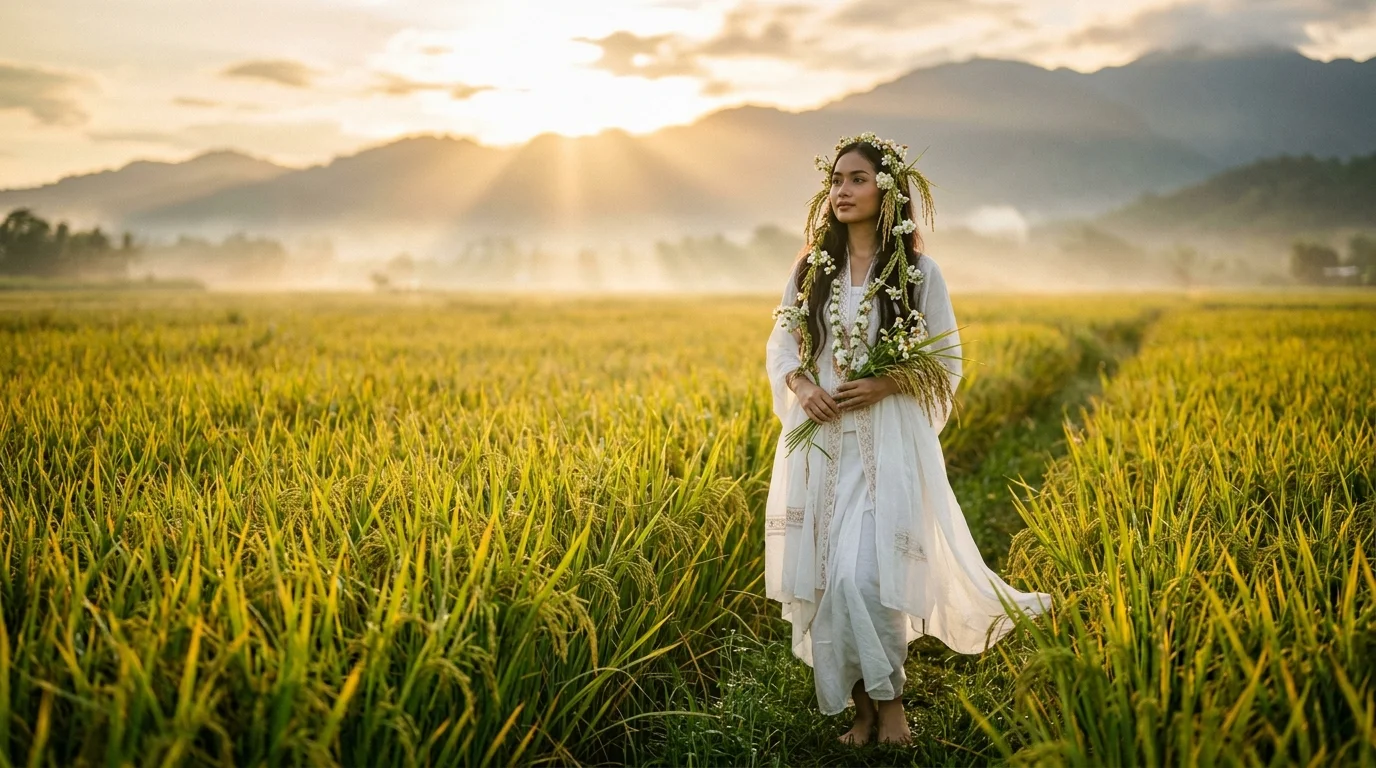
Unduk Ngadau celebrates her beauty and grace: The Unduk Ngadau pageant, one of Kaamatan's signature events, is a direct celebration of Huminodun. Each year, a young woman is crowned Unduk Ngadau—literally, "the descendent of Huminodun." She is chosen not only for physical beauty, but for embodying the qualities the legend teaches: grace, wisdom, cultural connection, and a willingness to serve her community. Throughout the festival, she presides over ceremonies, welcomes visitors, and carries forward Huminodun's spirit. The pageant is not a frivolous beauty competition; it is a spiritual honor, a way of saying that Huminodun's legacy lives through the women of each new generation.
Magavau calls her home: The Magavau ceremony performed during Kaamatan is specifically designed to welcome Bambarayon—Huminodun's spirit—back to the village after the fields have been cleared. Bobolian priestesses chant in ancient language, burning fragrant incense to create a pathway for her return. This is not mythological theater; for those who participate, Magavau is a genuine spiritual encounter with an ancestor. Families prepare feast foods and gather together to welcome her, to thank her, and to reaffirm their covenant with her: we honor your sacrifice, and we promise to never forget.
The entire festival is gratitude: Kaamatan is fundamentally an act of thanksgiving. In Western harvest festivals, we might thank abstract concepts like luck, weather, or hard work. In Kaamatan, Kadazan-Dusun people explicitly thank Huminodun—a real person (in spiritual terms), whose choice to die made their survival possible. Every song sung during Kaamatan, every food prepared, every ceremony performed is a way of saying: we remember you, we honor you, we will never forget that you chose us.
Connection to the land: Huminodun's sacrifice teaches that humans are not separate from nature, but woven into it. Her body became the crops. Her spirit lives in the rice. The bounty of Sabah's soil is not a resource to be exploited; it is a gift from an ancestor, to be used with gratitude and respect. This understanding shapes how Kadazan-Dusun people relate to farming, to the rainforest, to the rivers and mountains. Kaamatan perpetuates this relationship. To celebrate Kaamatan is to commit, each year, to treating the land as sacred—because Huminodun did.
FAQ
Q Is the Huminodun story real history or mythology?
Q Can I watch the Magavau ceremony at Kaamatan?
Q Are there still bobolians practicing today?
Q What's the connection between Huminodun and Unduk Ngadau?
Q Where can I learn more about Kadazan-Dusun mythology?
Sources & References 9 sources
Last verified: 2026-04-27
Official & Cultural Organizations
- KDCA — Kadazandusun Cultural Association Official cultural authority; publishes research and hosts events on Kadazan mythology and traditions
- Sabah Tourism Board — Kaamatan Official Kaamatan festival information and mythology context
- Sabah Museum — Ethnology Collections Museum exhibits on Kadazan-Dusun spiritual beliefs and cultural heritage
Scholarly & Cultural References
- Benedict Sandin — "Huminodun and Other Legends of the Dusun" Foundational ethnographic collection of Dusun oral traditions (available in Sabah libraries)
- MySabah — Huminodun Legend Comprehensive guide to the Huminodun myth and its cultural significance
- Sabah Eats & Culture — Kaamatan Mythology Food, ritual, and spiritual context of Kaamatan and the Huminodun story
- Wikipedia — Huminodun Encyclopedia entry with variants and scholarly analysis