Kaamatan Food Guide: 8 Must-Try Kadazan Dishes | SabahGuide
What is Kadazan Dusun food and what should I eat at Kaamatan?
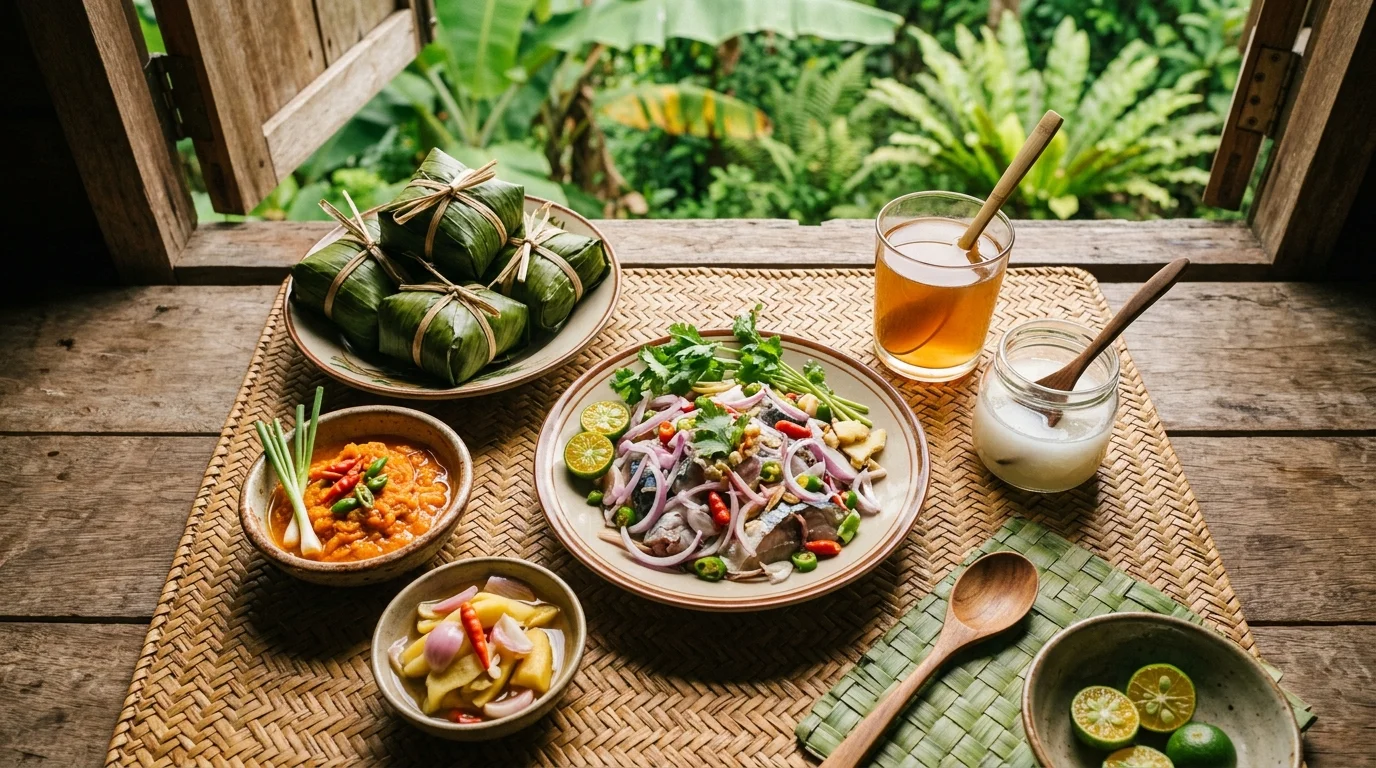
Kadazan Dusun food is the indigenous cuisine of Sabah built on wild jungle ingredients, fermentation, and rice. The must-try dishes are hinava (raw mackerel cured in lime), tuhau (wild ginger pickle), bambangan (wild mango), bosou (fermented fish), and linopot (sticky rice parcels). During Kaamatan at KDCA, 200+ food stalls serve these dishes for RM2-15 per plate, alongside tapai and lihing rice wines.
What is Kadazan Dusun food?
Kadazan Dusun food is the original cuisine of Sabah's indigenous Kadazan and Dusun peoples. It's built on three pillars: wild jungle ingredients, fermentation as a preservation method, and rice as the centerpiece of every meal. You won't find heavy spices or complex techniques here—instead, you'll find raw cured fish, sour pickled vegetables, and the kind of bold, pungent flavors that come from working with what the rainforest and rivers provide.
What makes Kadazan Dusun food unique is the reliance on foraged and hunted ingredients that simply don't exist in mainstream Malaysian cuisine. Tuhau (wild ginger), bambangan (wild Borneo mango), hinava (raw cured mackerel), and bosou (fermented fish) are not regional variations—they're completely local to Sabah. The fermentation culture is ancient; Kadazan families have preserved meat and fish in salt and rice for centuries, developing flavors that outsiders often find challenging at first taste but addictive once you understand them.
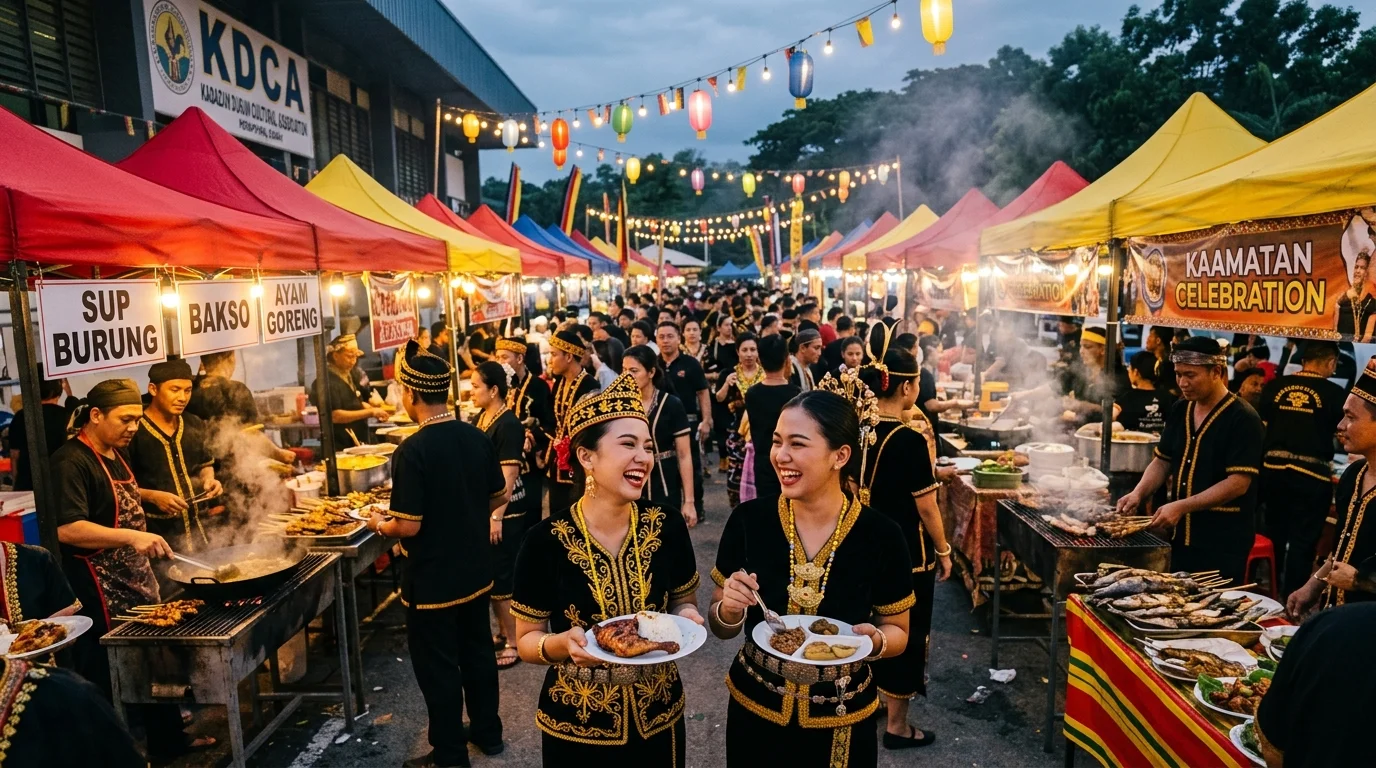
Kaamatan (also called Pesta Kaamatan) is the end-of-harvest festival celebrated by Kadazan and Dusun communities in May-June. It's the moment when these traditional foods go from family meals to public celebration. At KDCA (Kadazandusun Cultural Association) during the festival, you'll see over 200 food stalls serving everything from street-level dishes (RM3-8) to traditional family recipes that take days to prepare. Visitors often describe Kaamatan as the single best food and cultural experience in Sabah—a genuine living tradition, not a tourist show.
What is hinava and how is it made?
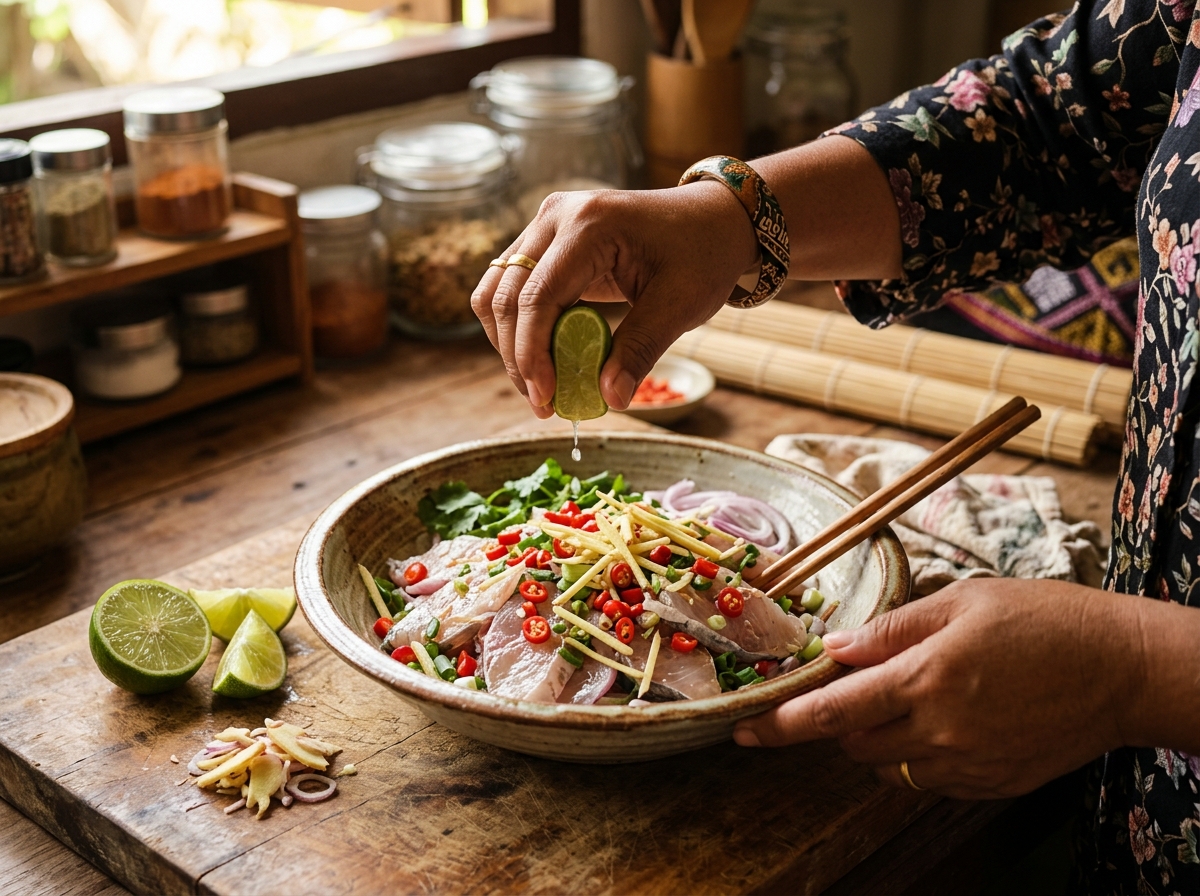
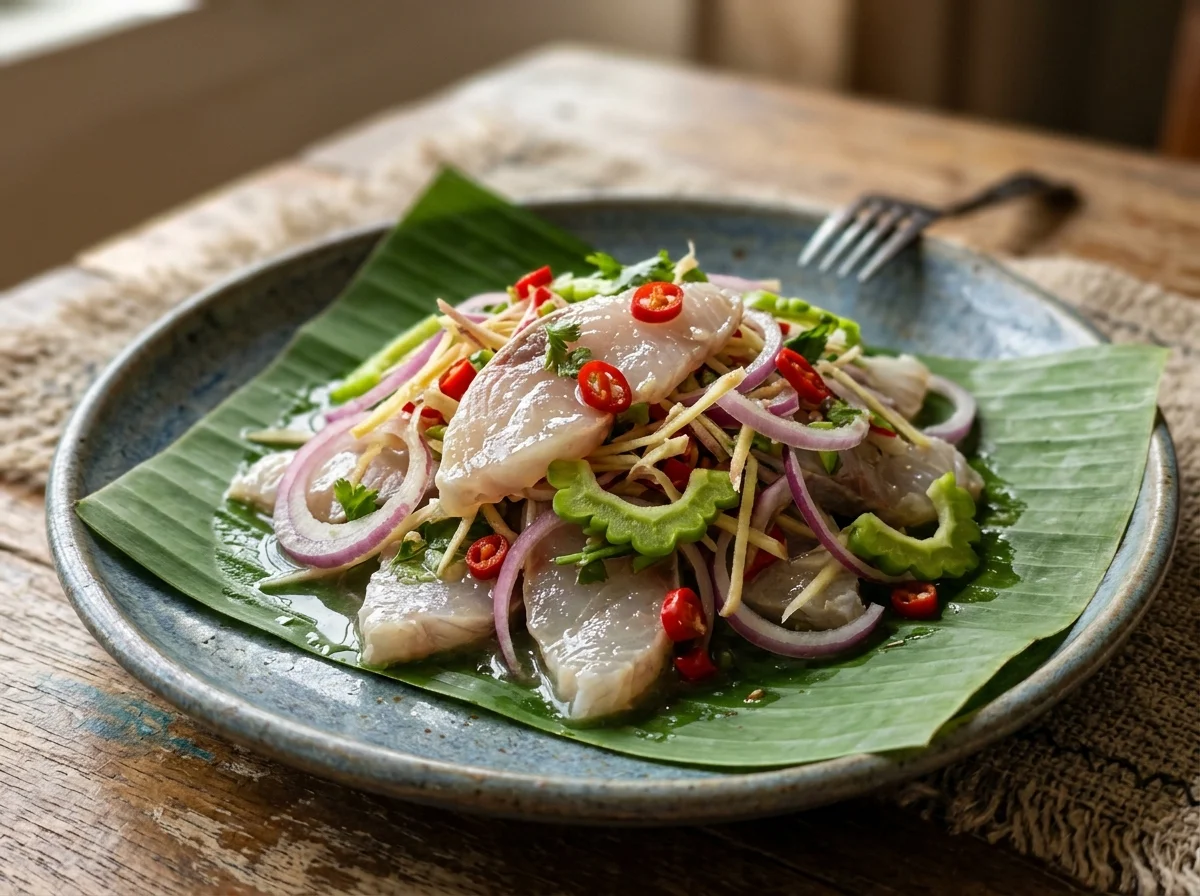
Hinava is raw mackerel (usually tenggiri, a local white-fleshed fish) cured in fresh lime juice, combined with sliced bird's eye chili, ginger, red onion, and bitter gourd (peria). The lime juice "cooks" the raw fish, breaking down the proteins and turning the flesh opaque and firm. It's served at room temperature as a starter, side dish, or part of a linopot (sticky rice parcel) meal. Taste is intensely sour, spicy, and umami—unforgettable.
How it's made: Fishmongers at tamu markets fillet fresh tenggiri that morning. Slices are placed in a bowl with generous lime juice (not lemon—locals insist the sourness matters), then mixed with finely sliced bird's eye chili, peeled ginger, thinly sliced red onion, and chopped bitter gourd. Salt and fish sauce are added to taste. The curing takes 30-60 minutes, and some vendors add a splash of coconut vinegar. Once served, you eat it immediately; it doesn't keep well. Temperature control is crucial—hinava must be kept cold and consumed fresh, especially at food stalls during Kaamatan.
Variations: The classic is fish (hinava ikan), but you'll also find hinava with freshwater fish, chicken (hinava ayam—rarer), or even prawns. Vegetarian versions use papaya or unripe mango instead of fish. Some stalls add cucumber; others skip the bitter gourd. The core principle remains: raw protein + citrus acid + chili + aromatic vegetables.
How locals eat it: Hinava is traditionally eaten as part of a larger spread with linopot (sticky rice), tuhau sambal, bambangan, and a glass of tapai. Many Kadazan families eat it for breakfast with rice, treating it as a protein-forward, acidic kick to start the day. At Kaamatan stalls, you can buy a hinava plate (RM6-10) and eat it standing up, the lime juice dripping down your fingers.
Where to try it: Every major food stall at KDCA during Kaamatan will serve hinava. At tamu markets (Kota Kinabalu Central Market, Gaya Street Sunday Market), you can buy fresh ingredients and watch vendors prepare it. For sit-down meals, restaurants in Kampung Likas and Kampung Serinsim (traditional villages near KK) serve authentic hinava. Expect to pay RM8-12 for a proper hinava plate outside Kaamatan.
What is tuhau?
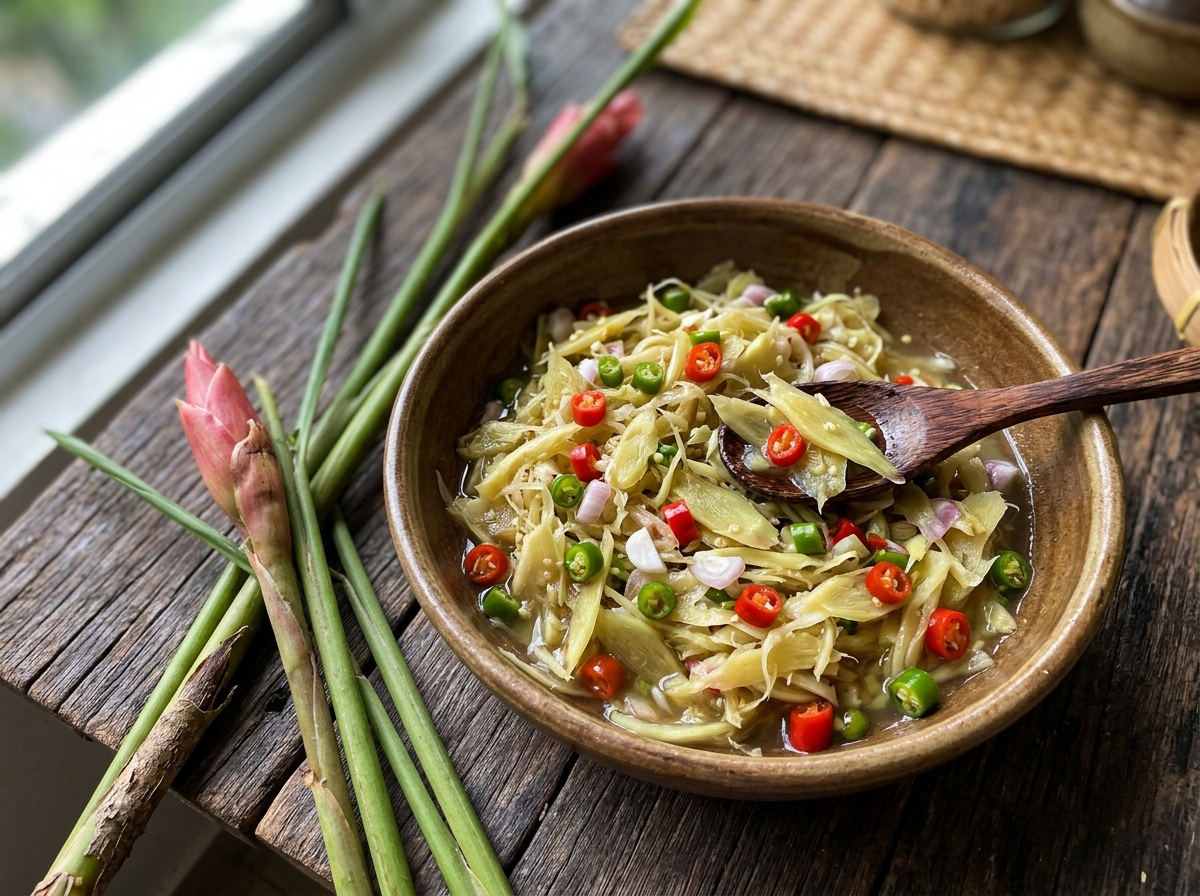
Tuhau is wild ginger (Etlingera coccinea, a species found only in Borneo). It has an intensely pungent, almost medicinal smell—somewhere between ginger and gasoline—and a flavor that's sour, slightly bitter, and impossibly aromatic. Locals eat it pickled with lime juice, vinegar, and chili (tuhau sambal). At tamu markets and Kaamatan, tuhau is consistently the #1 searched Kadazan food ingredient on Google Malaysia (8,100 searches/month), which tells you how iconic and polarizing it is.
The love-hate relationship: You'll either find tuhau absolutely fascinating or completely revolting. The smell is so strong that one bite of tuhau sambal will flavor your breath and hands for hours. Locals joke that "tuhau is an acquired taste"—and they're right. But once acquired, it becomes addictive. The flavor is bright, acidic, and completely unique; there's no substitute. Visitors often buy tuhau sambal as a souvenir specifically to challenge friends back home.
Where it grows and when: Tuhau grows wild in Sabah's rainforests, particularly in the interior regions and along river valleys. It's seasonal—peak harvest is April through June (overlapping perfectly with Kaamatan). At tamu markets during this season, you'll see fresh tuhau stalks bundled and sold by weight (RM3-5 per bundle). Outside season, tuhau is harder to find fresh, but sambal and pickled versions are available year-round.
How it's prepared: Fresh tuhau is sliced thinly, then mixed with lime juice or vinegar, bird's eye chili, salt, and sometimes a touch of sugar. Some vendors add sliced shallots and fresh turmeric. The mixture is served immediately or kept in jars as tuhau sambal, which keeps for weeks in the fridge. Traditional preparation takes no cooking—it's all about the freshness and the acid-curing.
Price and availability: During Kaamatan, fresh tuhau stalls at KDCA sell sambal portions (RM2-4 per small container) as a side dish. Bottled tuhau sambal (RM8-15 per jar) is available as a souvenir at gift shops and supermarkets in Kota Kinabalu. Expect to smell a tuhau stall before you see it—follow your nose.
What is bambangan?
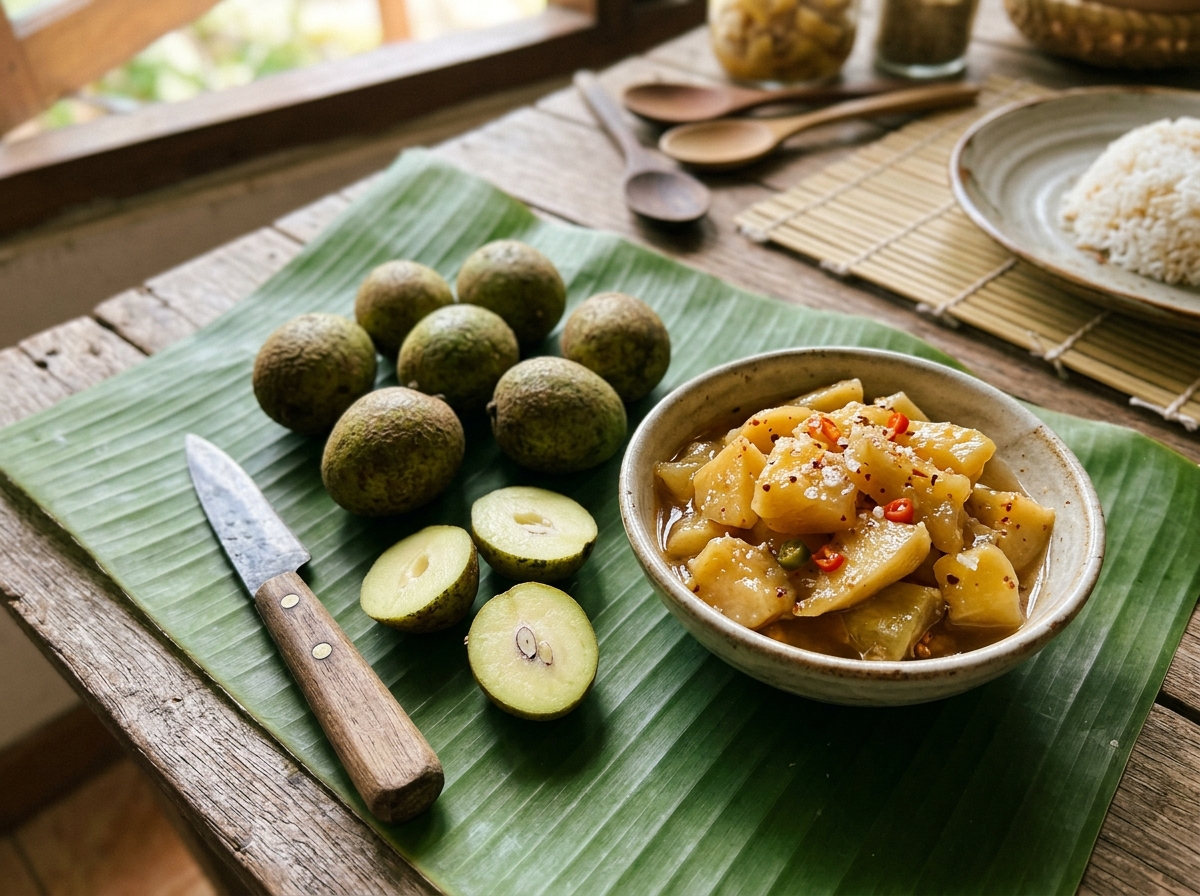
Bambangan is a wild mango native to Borneo, smaller and sourer than regular mango, with a slightly bitter, astringent finish. It's not eaten raw like regular mango; instead, it's pickled (jeruk bambangan), turned into a spicy sambal, or used as a souring agent in fish dishes. During Kaamatan, you'll see bambangan at nearly every food stall, often in a small saucer as a condiment or a light appetizer (RM1-3).
Taste and how to eat it: Raw bambangan is intensely sour, almost too acidic to eat whole. But pickled bambangan (jeruk bambangan) is balanced—salty, sour, and spicy. You eat it as a side dish, popping whole fruit in your mouth like you'd eat a small pickle. It pairs perfectly with fried fish or rich meat dishes, cutting through the fat and adding brightness. Some vendors mix pickled bambangan with lime juice and chili to make a condiment you dip into.
Seasonal availability: Bambangan season runs April-June, exactly when Kaamatan happens. This is no coincidence—Kaamatan celebrates the harvest of these ingredients. Outside season, fresh bambangan disappears, but bottled jeruk bambangan is available year-round at tamu markets and supermarkets (RM5-8 per bottle).
Preservation methods: Traditional families preserve bambangan by pickling it in salt, vinegar, and lime juice. Store-bought versions often add chili, turmeric, and sugar. Home-jarred bambangan, made by families and sold at Kaamatan stalls, is considered superior to commercial versions because it uses less added sugar. Some families also dry bambangan and powder it to use as a souring agent year-round.
Where to buy: At Kaamatan, bambangan is served as a free-standing dish (RM2-4 per portion) and also bundled into combination plates with hinava and other dishes. At tamu markets, buy fresh bambangan (RM3-6 per kilogram) or jarred jeruk bambangan year-round (RM5-8).
What is bosou?
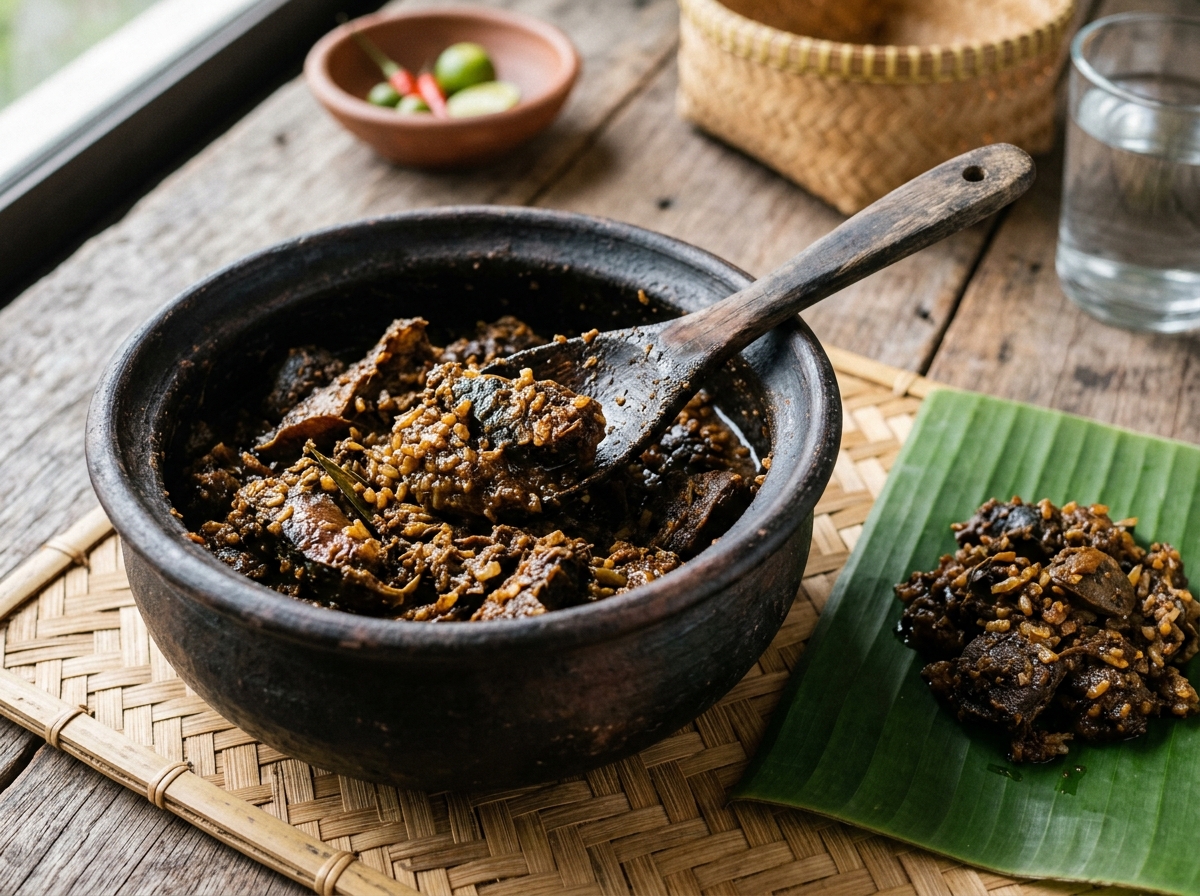
Bosou is fermented fish or meat preserved in salt and cooked rice. It's an ancient preservation method—fermentation was how Kadazan families stored protein through periods of scarcity. The result is intensely savory, with a strong pungent aroma that can be polarizing. Bosou ikan (fish) is more common than bosou daging (meat), and it's typically sliced thin and eaten as a condiment or mixed into rice.
How fermentation works: Raw fish or meat is mixed with cooked rice and salt (salt content is crucial—it prevents harmful bacteria while allowing beneficial fermentation). The mixture is left to ferment in a cool place for weeks or months. During this time, naturally occurring lactic acid bacteria break down the proteins, creating a distinctive tangy, umami-rich flavor. Some families add a bit of turmeric or aromatic leaves to the mix. The resulting paste is thick, pungent, and deeply flavored.
How long it takes: Traditional bosou fermentation takes 4-12 weeks depending on temperature and salt content. Faster fermentation (3-4 weeks) produces a milder flavor; longer fermentation creates a more aggressive taste. Commercial bosou, sold in jars at tamu markets, is often fermented for 6-8 weeks.
How it's eaten: Bosou is served in small portions (often just a tablespoon) as a side dish or mixed into hot rice where it acts like a seasoning. A little goes a long way because of its intense flavor. At Kaamatan stalls, you might find bosou in a combination plate for RM6-10, or sold separately (RM3-5 for a small container). Locals often eat bosou with boiled eggs and rice for a simple, protein-rich breakfast.
Bosou ikan vs. bosou daging: Fish bosou has a sharper, more acidic bite; meat bosou is richer and heavier. Fish bosou is far more common and slightly more palatable to first-timers. Both have a pungent aroma—if you can handle it, the flavor rewards you.
What is linopot?
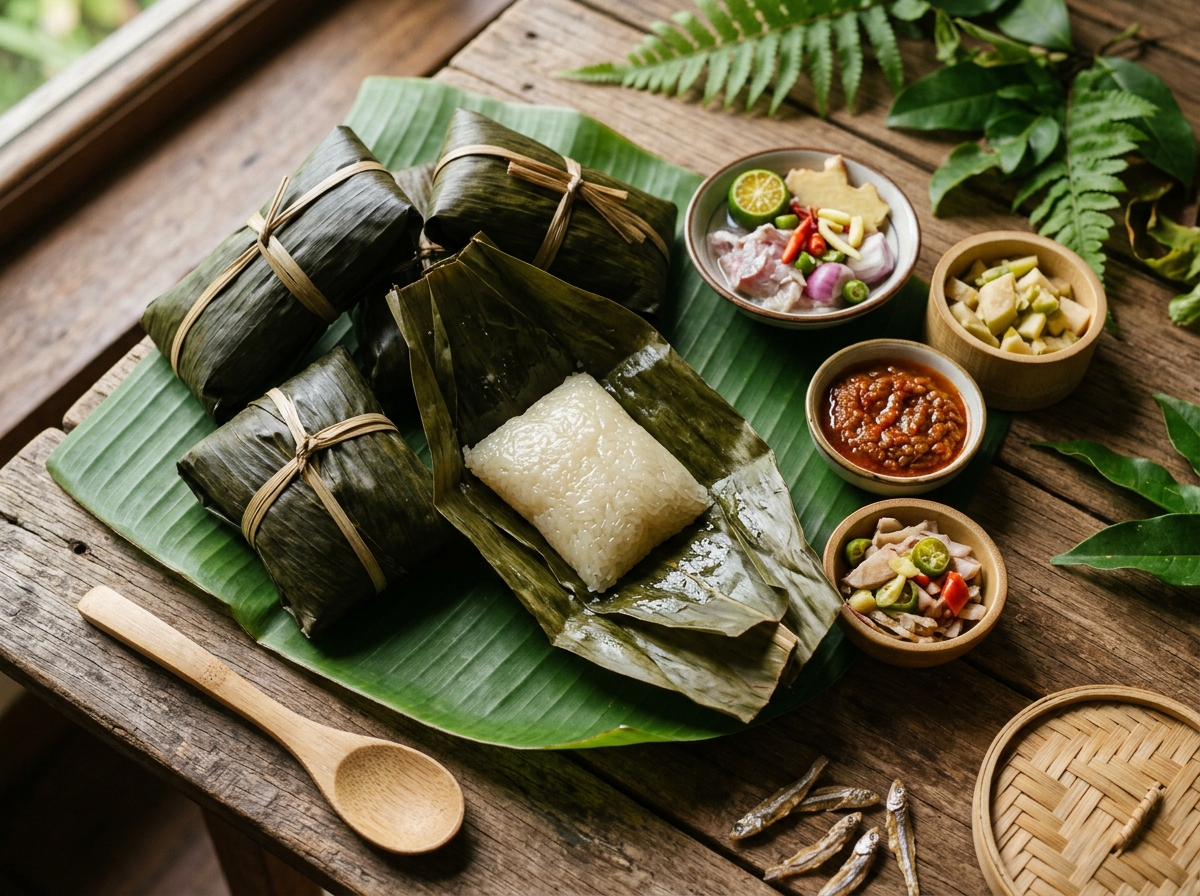
Linopot is sticky rice wrapped in daun isip (a large, waxy leaf similar to banana leaf) or nyirik leaves. It's the traditional Sabahan "packed lunch"—sturdy, portable, and able to be eaten cold. The rice is often infused with coconut milk and salt, making it rich and slightly sweet. Linopot is rarely eaten alone; it's the foundation of a traditional Kadazan meal, served alongside hinava, tuhau, bambangan, and losun (young bamboo shoots).
How it's made: Sticky rice is cooked with coconut milk, salt, and sometimes a touch of turmeric (which gives it a pale yellow tint). Once cooked and still warm, it's pressed into a ball or patty, then wrapped tightly in daun isip leaf. Traditional families fold linopot into a neat square parcel. It can be eaten immediately while the rice is warm, or eaten cold the next day—the texture stays soft and slightly chewy because of the leaf wrapping.
The linopot set meal concept: You don't order "linopot" at a Kaamatan stall—you order a linopot set (paket linopot), which includes: one parcel of linopot rice, a portion of hinava, tuhau sambal, pickled bambangan, losun, and sometimes a small side of nonsom (fermented condiment). The complete set costs RM10-15 and represents a balanced, traditional Kadazan meal. This is how locals eat it, and it's the way to experience the food properly.
Where to find it: Linopot is everywhere at Kaamatan—every traditional food stall will have stacks of fresh-wrapped parcels. Buy individual linopot (RM2-3) as a snack or as part of a set meal (RM10-15). At tamu markets, linopot is sold by vendors from 6 AM onward, fresh and still warm. Many visitors buy linopot as a portable breakfast or lunch while exploring the festival grounds.
What are tapai and lihing?
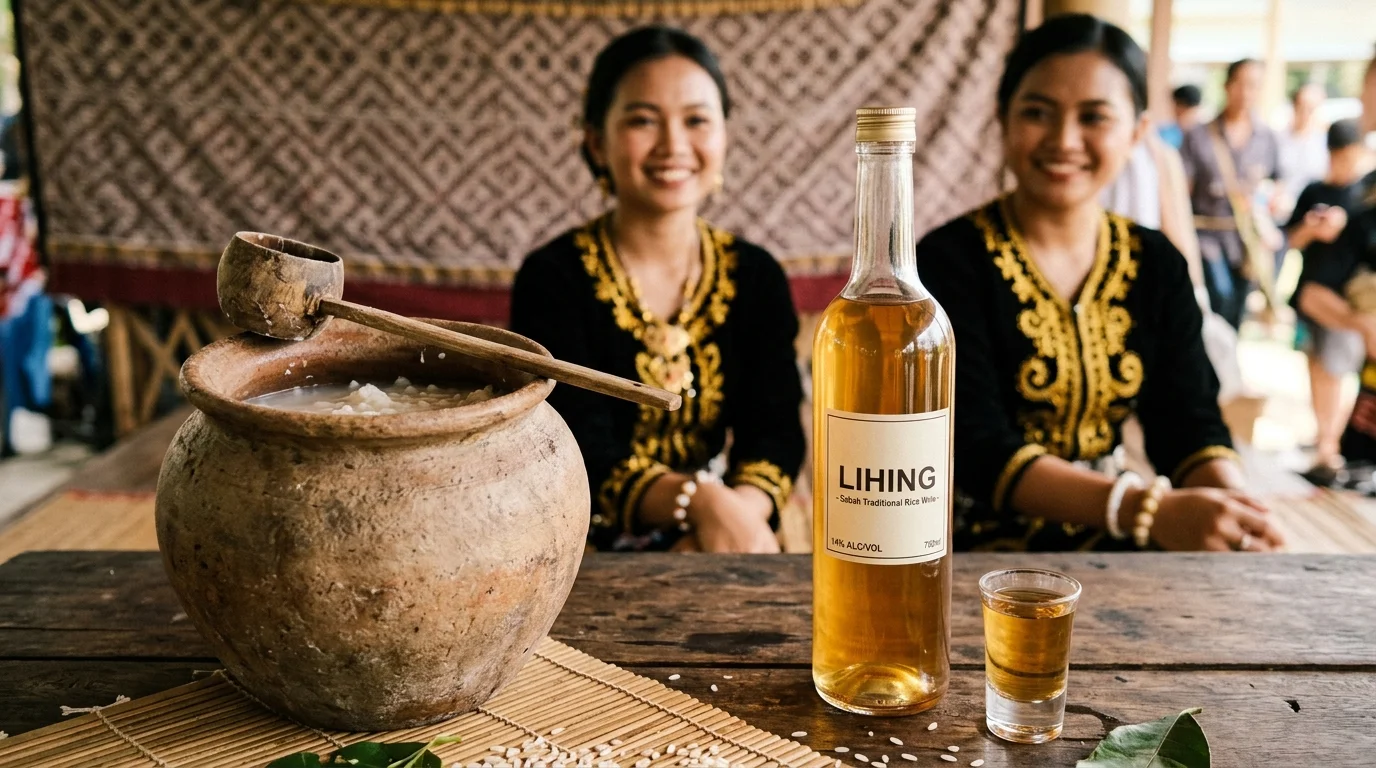
Tapai and lihing are both fermented rice wines, but they're distinct drinks with different flavors, strengths, and cultural roles. Tapai is the traditional, rustic version—cloudy, unfiltered, served straight from a large jar with a communal ladle. Lihing is the refined, bottled version—clearer, aged longer, and commercially packaged. Both are integral to Kaamatan celebrations and represent different expressions of Kadazan fermentation culture.
| Feature | Tapai | Lihing |
|---|---|---|
| Color | Cloudy white to pale brown, opaque | Clear amber to golden brown |
| Texture | Thick, sometimes grainy; sediment at bottom of jar | Smooth, refined, no visible particles |
| Alcohol content | 5-50% ABV (varies widely) | 10-15% ABV (consistent) |
| Flavor | Yeasty, slightly sweet, sometimes acidic or vinegary if old | Smooth, complex, hints of apple and honey |
| Fermentation time | 3-7 days (quick) to weeks/months (slow) | Several weeks minimum, often months |
| Preparation | Cooked glutinous rice + yeast starter (ragi) + water, left to ferment | Similar to tapai, but slower fermentation with more refined technique |
| Serving style | Communal jar with ladle; drunk in small cups, often warm | Bottled, served in small shot glasses or mixed drinks; served at room temperature |
| Cost | RM2-5 per cup (at Kaamatan) | RM15-30 per bottle (commercial); RM3-5 per cup at stalls |
| Shelf life | Days to weeks (best consumed fresh) | 6-12 months if sealed (improves with age) |
| Souvenir value | Rarely bought as souvenir; consumed immediately | Popular souvenir; bottles come gift-boxed |
| Availability | Primarily at Kaamatan and family celebrations; rarely commercial | Year-round at supermarkets, tamu markets, airport duty-free |
How they're made: Both tapai and lihing start with the same base: cooked glutinous rice, water, and ragi (a traditional yeast starter made from rice, spices, and fungi). The rice is left to ferment in a covered jar or container. As natural yeast ferments the rice sugars, alcohol develops. For tapai, fermentation is stopped early (3-7 days) to preserve sweetness and cloudiness. For lihing, fermentation continues longer (weeks to months), allowing the liquid to clarify and develop more complex flavors.
Why tapai is so strong: Tapai's alcohol content varies wildly (5-50%) because fermentation is unpredictable and uncontrolled. If fermentation continues for weeks in warm conditions, tapai becomes dangerously strong. This is why older tapai from older jars is stronger than fresh tapai. The local saying "tapai tiga jar, inda mandi tiga hari" (three jars of tapai, no shower for three days) reflects the drink's potency and its central role in Kaamatan celebrations.
How to drink responsibly: Tapai is meant to be sipped slowly, not shot. Drink it warm (many vendors reheat it), eat food while drinking, and never drink on an empty stomach. Most Kadazan families drink tapai as part of a meal or social gathering, not for the purpose of getting drunk. At Kaamatan, pace yourself—cups are small (100-150ml), but refills are free, and the alcohol sneaks up. A good rule: one cup per hour, with food and water between drinks.
Lihing as a souvenir: Lihing's consistent alcohol content (10-15%) and long shelf life make it the only traditional Kadazan rice wine you can reliably buy as a souvenir. Popular brands include Lihing Murut and locally distilled artisan versions sold at Kaamatan. Bottles are usually RM15-30 and come gift-boxed. However, remember: lihing cannot be brought on flights (it's classified as a liquid and falls under aviation alcohol restrictions), but you can buy it duty-free at Kota Kinabalu airport after security.
What other traditional dishes should I try?
Beyond hinava, tuhau, and the rice wines, Kadazan Dusun cuisine has a dozen other dishes worth trying. Here's a quick guide to the ones you'll encounter at Kaamatan and tamu markets:
- Pinasakan (Braised fish with takob akob): Fresh fish (usually mackerel or grouper) braised in a sour curry made from lime juice, turmeric, ginger, and takob akob (a type of wild forest herb with a strong medicinal taste). It's served as a soup-stew in a small bowl (RM4-8). Locals eat it with rice, soaking up the aromatic broth.
- Penyaram: Crispy fried rice pastries shaped like small tubes or coils. They're sweet, slightly salty, and incredibly addictive—think of them as the Kadazan version of a rice cracker. Vendors sell them in paper cones (RM2-3 for a large cone) as a snack at Kaamatan. They keep well, making them a good souvenir.
- Hinompuka: Steamed glutinous rice cake made from rice flour, coconut milk, and brown sugar, wrapped in bamboo leaves. The texture is dense and chewy; the flavor is lightly sweet. It's typically eaten as a snack or breakfast (RM2-4 per piece). Some vendors add pandan leaf for a subtle vanilla-like flavor.
- Butod (The adventurous one): Sago worms or bamboo worms, fried until crispy. They're a protein-rich delicacy with a nutty, crunchy texture. If you want to challenge yourself during Kaamatan, butod is the test—they're real, they're protein, and they're delicious if you can get past the "it's a bug" factor. Expect RM5-10 for a small portion. Locals recommend eating them warm, right off the pan.
- Losun: Young bamboo shoots blanched and served as a vegetable side. They have a subtle, grassy flavor and a tender-crisp texture. Losun is usually served plain with a squeeze of lime or as part of a linopot set meal. It's one of the few purely vegetable dishes in Kadazan cuisine.
- Nonsom: Fermented condiment made from fish paste, salt, and sometimes lime leaf. It has a dark color and pungent aroma similar to bosou. A small spoonful mixed into rice or eaten with a dab of chili creates an intensely flavored meal. It's rarely sold standalone but often appears as a free condiment at Kaamatan stalls (RM0-1 per spoonful, or free with a main dish).
- Tompis: Rice crackers made from glutinous rice, fried and sometimes seasoned with sugar and salt. They're crispy, light, and moreish—vendors often sell them in paper bags (RM3-5) as a snack or souvenir. Some families make tompis at home during Kaamatan; these handmade versions are fresher and more delicate than commercial ones.
What food will I find at KDCA during Kaamatan?
During Kaamatan (typically May 30-June 1, though dates vary yearly), KDCA hosts approximately 200-300 food stalls organized by region or food type. The atmosphere is chaotic, colorful, and genuinely celebratory—families cook using traditional methods, grandmothers preside over recipe stations they've perfected over decades, and the energy is unmistakably local.
What stalls serve: Every major dish mentioned above is available—hinava, linopot, tuhau, bambangan, bosou, pinasakan, penyaram, butod, and more. Individual stall quality varies; some are run by restaurants or community groups, others by family units. The family stalls tend to have the most authentic, labor-intensive dishes because they're cooked the way grandma makes them at home, scaled up for festival crowds.
Price ranges: Most Kaamatan food is very affordable. Individual portions and snacks run RM2-5. Complete dishes or set meals (linopot set, combination plates) are RM8-15. Alcohol (tapai, lihing) is RM2-5 per cup. Specialty items (butod, premium pinasakan) might reach RM15-20. There are no "premium" stalls or inflated Kaamatan prices—pricing is consistent and fair across the festival.
Areas to eat and what to queue for: KDCA spreads food stalls across multiple pavilions. The "traditional food" pavilion is the heart of it—here you'll find hinava, linopot, tuhau, and pinasakan concentrated in one zone. The "alcohol pavilion" (usually outdoors or semi-covered) has tapai stations and lihing vendors; this is where communal drinking happens, and the atmosphere is festive and social. Specialty stalls (butod, sago worms, premium meat dishes) are scattered throughout; ask locals or follow crowds to find standouts.
Tapai stations and communal drinking culture: Large earthenware jars of tapai are set up at central points, presided over by an older woman or man who ladles cups. You buy a cup (usually RM2-3 for a refill, first cup often included with food purchase), drink, and often stand around the jar socializing. This is quintessential Kaamatan—the communal, celebratory aspect of the festival. Locals joke that this is where business deals, wedding proposals, and family reconciliations happen. Non-Kadazan visitors are welcomed; just be respectful and remember to eat food while drinking.
Souvenir foods (what to bring home): Lihing bottles (RM15-30, duty-free available at airport), tuhau sambal in jars (RM8-15), bottled bambangan jeruk (RM5-8), commercial tapai in small sealed bottles (RM10-15, though homemade is better), penyaram crackers (RM5-10 for a large pack), tompis rice crackers (RM3-5), and small jars of nonsom or bosou (RM5-10). The most authentic souvenirs are family-made versions sold at stalls directly—jars labeled with someone's name or a handwritten label.
What to queue for: Locals will tell you to queue for the linopot from specific family stalls (the queues form because of reputation), pinasakan from established restaurants or community groups, and the butod from any vendor—availability is limited. For tapai, quality varies, but generally the oldest, most prominent jar (usually in a covered pavilion) has the best reputation. Ask locals: "Sini mesti coba?" (What should I definitely try here?). You'll get genuine recommendations, often with directions to specific stalls.
Is Kadazan food halal?
Most traditional Kadazan Dusun food is NOT halal-certified because it uses tapai and lihing (fermented alcoholic drinks) as core elements of the cuisine, and some dishes contain pork. However, many individual Kadazan dishes are naturally pork-free and alcohol-free, making them suitable for Muslim visitors—you just need to ask and verify.
Dishes that are naturally halal-friendly (without pork, without alcohol as a main ingredient):
- Hinava (made with fish, cured in lime juice—no alcohol)
- Bambangan (pickled wild mango—no alcohol, no meat)
- Linopot (sticky rice wrapped in leaves—no meat, though sometimes cooked with coconut milk)
- Losun (young bamboo shoots—purely vegetable)
- Pinasakan (braised fish—made without pork)
- Penyaram (fried rice pastry—usually made without meat)
- Most soups and vegetable sides
Dishes to avoid or verify: Bosou, tuhau, and nonsom (fermented condiments—contain alcohol from natural fermentation), butod (often cooked in lard or pork fat), and any dish labeled "daging" or meat-based without specification. Tapai and lihing are alcohol and obviously not halal. Some pinasakan recipes use pork instead of fish—always ask.
Guidance for Muslim visitors at Kaamatan: Before ordering, ask the vendor, "Ada daging babi?" (Does this contain pork?) and "Ada alcohol?" (Does this have alcohol?). Most Kadazan vendors are comfortable with these questions and will happily point you to dishes they can verify. For hinava, linopot, and vegetable dishes, the answer is almost always no—these are genuinely halal. For fermented items (bosou, nonsom), the answer is "contains fermented alcohol from fermentation process." Many Muslim visitors have no issue with fermentation products as they believe the alcohol content is negligible or transformed through fermentation, but this is a personal halal interpretation; check with your own understanding.
Safe strategy: Stick to hinava, linopot sets (without the alcohol), fresh bambangan, losun, and cooked fish dishes. Ask vendors to prepare dishes without tapai or lihing used as a cooking component. Most stalls are happy to accommodate, especially if you ask early in the process. Bringing snacks as backup is a practical option if you're uncomfortable with the uncertainty.
Alcohol and Islamic practice: Remember that Muslims attending Kaamatan may choose not to participate in the communal tapai drinking, and that's completely normal and respected. The festival is culturally and spiritually significant for Kadazan Muslims too; they celebrate Kaamatan as a harvest and family festival, not as an excuse to drink. Your choice to eat halal-friendly dishes and skip alcohol is expected and supported.
Frequently Asked Questions
Q Can vegetarians eat at Kaamatan food stalls?
Q Is tapai safe to drink?
Q Where can I buy tuhau outside Sabah?
Q What's the spiciest Kadazan dish?
Q Can I bring lihing on a flight?
Q What time do food stalls open at KDCA during Kaamatan?
Plan your Kaamatan food experience: Kaamatan dates are usually May 30-June 1 (confirmed annually). Check the official Kadazandusun Cultural Association (KDCA) website for exact dates and venue map before you go. Peak food crowds are lunch (12-2 PM) and early evening (6-8 PM). Arriving at 10-11 AM or 4-5 PM gives you shorter queues and fresher food.
Sources & References 8 sources
Last verified: 2026-04-27
Official Sources
Food & Culture References
- MySabah — Traditional Food of Sabah Comprehensive local food guide with preparation details
- MySabah — Tapai and Lihing Detailed comparison of Sabah rice wines
- Sabah Eats — Guide to Kaamatan Food-focused Kaamatan guide
- Wikipedia — Lihing Rice wine production and cultural context
- Wikipedia — Sabahan Cuisine Overview of Sabah food culture