Himpogot: The Kadazan-Dusun Silver Coin Belt
What is a himpogot?
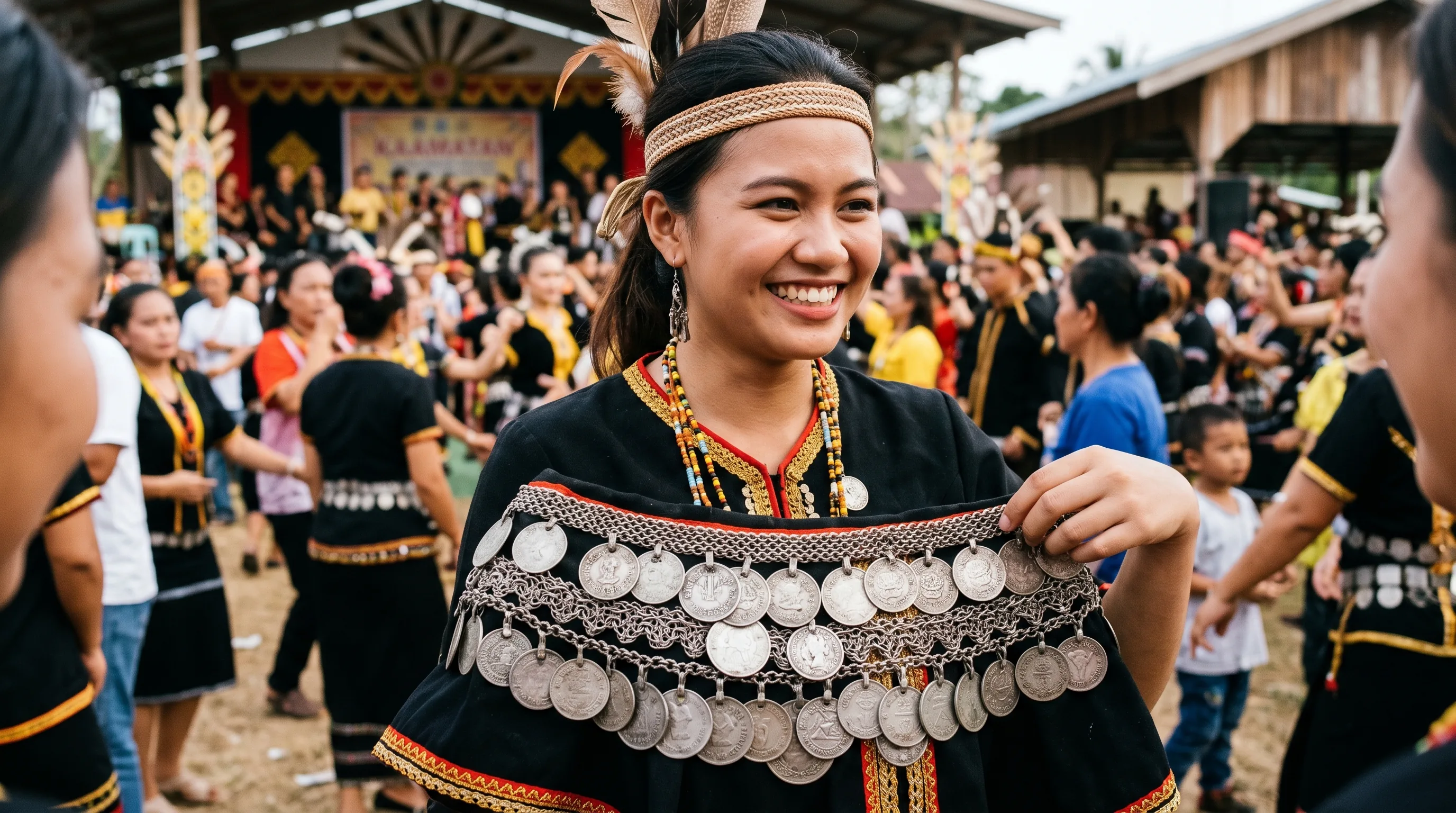
The himpogot is the Kadazan-Dusun silver coin belt worn by women, especially at the Kaamatan harvest festival. Made from silver coins (trade dollars), it is worn at the waist over the sinuangga costume, often together with the brass tangkong.
What is the himpogot
The himpogot is the silver belt of the Kadazan-Dusun, one of Sabah's largest indigenous communities. It is worn by women, most prominently during the Kaamatan harvest festival, the cultural high point of the Kadazan-Dusun year.
More than a piece of jewellery, the himpogot is a statement. Made from silver coins and worn at the waist over traditional dress, it is often described as a display of family wealth. It is an instantly recognisable part of Kadazan-Dusun women's traditional costume.
This page covers what the himpogot is made from, how it pairs with the tangkong, what affects its price, and how it is worn.
Made from silver coins
The National Department for Culture and Arts (JKKN) describes the waist ornament of the Sumazau dancer as the hinogot or himpogot, made from silver coins (trade dollars), together with a tangkong set made from brass (JKKN cultural mapping portal, checked 7 October 2026). The use of silver currency is central to both the appearance and the meaning of the belt: it literally wears wealth around the waist.
The coins are linked into a belt, keeping their character as recognisable silver coinage while becoming part of a single ornamental piece. Older belts tie Kadazan-Dusun craft to the coinage that circulated in Borneo in earlier times.
Belts made with genuine old silver coins are prized as heirlooms. Modern reproductions are widely used for performances, so ask the seller what the coins are made of before you buy.
Himpogot and tangkong
The himpogot is often worn together with the tangkong, a waist set made from brass. Bernama describes both as belts that are matched with necklaces and bracelets to complete Kadazan-Dusun traditional dress (Bernama, checked 7 October 2026).
A fuller belt represents more silver, which is part of why the himpogot reads as a sign of wealth. Worn at the waist, the set is visually striking and a centrepiece of formal Kadazan-Dusun dress.
What a himpogot costs
Prices for a himpogot vary widely depending on whether the coins are genuine old silver or modern reproductions. We could not confirm current market prices from a reliable source, so compare several sellers and ask what the coins are made of.
For a sense of scale, a tailor selling Sabah and Sarawak traditional clothing at a Kuala Lumpur fair told Bernama in 2025 that complete Sabah outfits sell for RM300 to RM2,000, depending on the jewellery and accessories, such as himpogot or tangkong belts, that go with them (Bernama, checked 7 October 2026).
Symbolism and how it is worn
The himpogot is often described as a display of family wealth and standing, and it is worn at the waist over traditional costume.
In dress terms, the himpogot is worn with the sinuangga, the Kadazan Penampang women's sleeveless black blouse with a U-shaped collar and red and gold embroidery, worn with a skirt called the tapi and a red sash, the husob, crossed over the shoulder (JKKN cultural mapping portal, checked 7 October 2026). The dark costume and the gleaming silver belt complement each other, completing the formal look most associated with Kaamatan.
Old coins and collectors
Beyond its place as a craft and costume piece, an old himpogot can have a second dimension of value. Where a belt uses genuine old silver coins, the coins themselves may interest coin collectors.
For families, though, an inherited himpogot is first a piece of Kadazan-Dusun heritage, passed down and worn at Kaamatan and other celebrations.