Sabah GDP 2026 — RM88.8B, Growth by Sector

We are working through the statistics in this section against their original sources. The headline figures above were re-checked on 17 August 2026. Detailed figures further down the page have not yet been individually verified, and some may be out of date or wrong.
If you spot something that looks wrong, please tell us — it genuinely helps.
Sabah’s GDP reached RM88.8 billion in 2025 (constant 2015 prices), growing 5.1% — the first year output rose back above its pre-pandemic level. Services dominate (52.1%), with mining & quarrying second (22.0%) and agriculture including palm oil third (~14%). Per capita GDP is RM31,125 (2025, current prices), about 53% of the national average — among the lowest in Malaysia — due to commodity export dependence and limited domestic value-added industries.
Sabah's growth has been uneven: a spike in 2017, near-stagnation in 2018–2019, a 9.1% contraction in 2020, then a slow recovery — output only rose back above its 2019 level in 2025, when growth reached 5.1%.
Source: DOSM GDP by State releases (constant 2015 prices), via OpenDOSM
What is GDP and why it matters for Sabah
Gross Domestic Product (GDP) is the total value of all goods and services produced within Sabah in a year. It is the primary measure of economic size and capacity. Sabah’s RM88.8 billion GDP (2025) ranks it 7th among Malaysia’s state economies — behind Selangor, Kuala Lumpur, Johor, Sarawak, Penang and Perak — and per capita GDP is just RM31,125, roughly 53% of the national average of RM59,167, far below Selangor or Penang.
This gap tells a crucial story: Sabah is resource-rich but income-poor. The state exports vast quantities of palm oil and petroleum, but much of the profit flows to federal entities (PETRONAS), multinational corporations, or is captured by a small elite. The bulk of Sabahans earn modest incomes in services, agriculture, or informal employment.
Sectoral breakdown and growth drivers
Sabah’s economy is organised into five main sectors. Understanding their relative size and growth trajectories is key to anticipating economic trends:
Services Sector (52.1% of GDP) — The Growth Engine
Services encompass government, retail and wholesale trade, hospitality, finance, transport, and telecommunications. It is Sabah’s largest sector and now the primary growth driver, expanding 4.5% in 2025 (2024: 4.2%). Within services, the standout is tourism: on DOSM’s latest satellite account (2024), tourism industries added RM13.7 billion in value — 12% of state GDP — with that value up 4.2% and tourism employment up 6.9%. Total visitor arrivals hit 3,793,709 in 2025, up 20.5% on 2024, of which 1,498,709 were international.
Government services (federal and state payroll, administration) remain large but are relatively stagnant — growth is constrained by budget cycles rather than economic dynamism. Retail trade is growing modestly as urbanisation continues and consumer incomes rise.
Agriculture Sector (~14% of GDP) — Volatile and Declining
Dominated by palm oil (roughly two-thirds of the agricultural share), with smaller contributions from cocoa, rubber, paddy/rice, timber, and aquaculture. Agriculture recovered 0.9% in 2025 after contracting 3.2% in 2024 on lower palm and cocoa volumes. Palm oil output has stabilised at ~4.8 million tonnes per year, but replanting of old palm plantations is lagging, and conversion to other crops is slow.
Cocoa production has fallen from 40,000 tonnes (2010s) to ~22,000 tonnes today, as trees age and farmers switch to the higher-margin palm oil. Paddy production remains around 100,000–120,000 tonnes annually, but Sabah imports ~70% of its rice — an ongoing food security concern.
Manufacturing Sector — Underdeveloped
Manufacturing is limited to palm oil processing mills, basic wood products, food and beverage processing, and non-metallic minerals. The sector grew 5.0% in 2025 (2024: 1.2%) — improving, but from a small base. Sabah lacks a robust industrial base, partly due to high logistics costs (cabotage policy) and competition with Peninsular manufacturers.
Mining & Quarrying (22.0% of GDP) — Petroleum-Dependent
Dominated by offshore oil and natural gas extraction. Sabah accounts for more than 40% of Malaysia’s crude oil production; current state-level production volumes are not published (see the petroleum page). Output swings with project cycles: the sector contracted 4.9% in 2024, then rebounded 4.9% in 2025. Future growth depends on major projects: Shell’s deepwater work (21,000 boepd added in 2024) and PETRONAS’s PFLNG 3 floating LNG plant, targeting 2H 2027 commissioning.
Construction — Cyclical and Project-Driven
Construction surged 28.3% in 2025 (2024: 21.5%), driven by Pan Borneo Highway expansion, port upgrades, and real estate development. However, this sector is volatile — growth depends on government budget allocation and private investment cycles, not underlying economic fundamentals.
Economic output by district
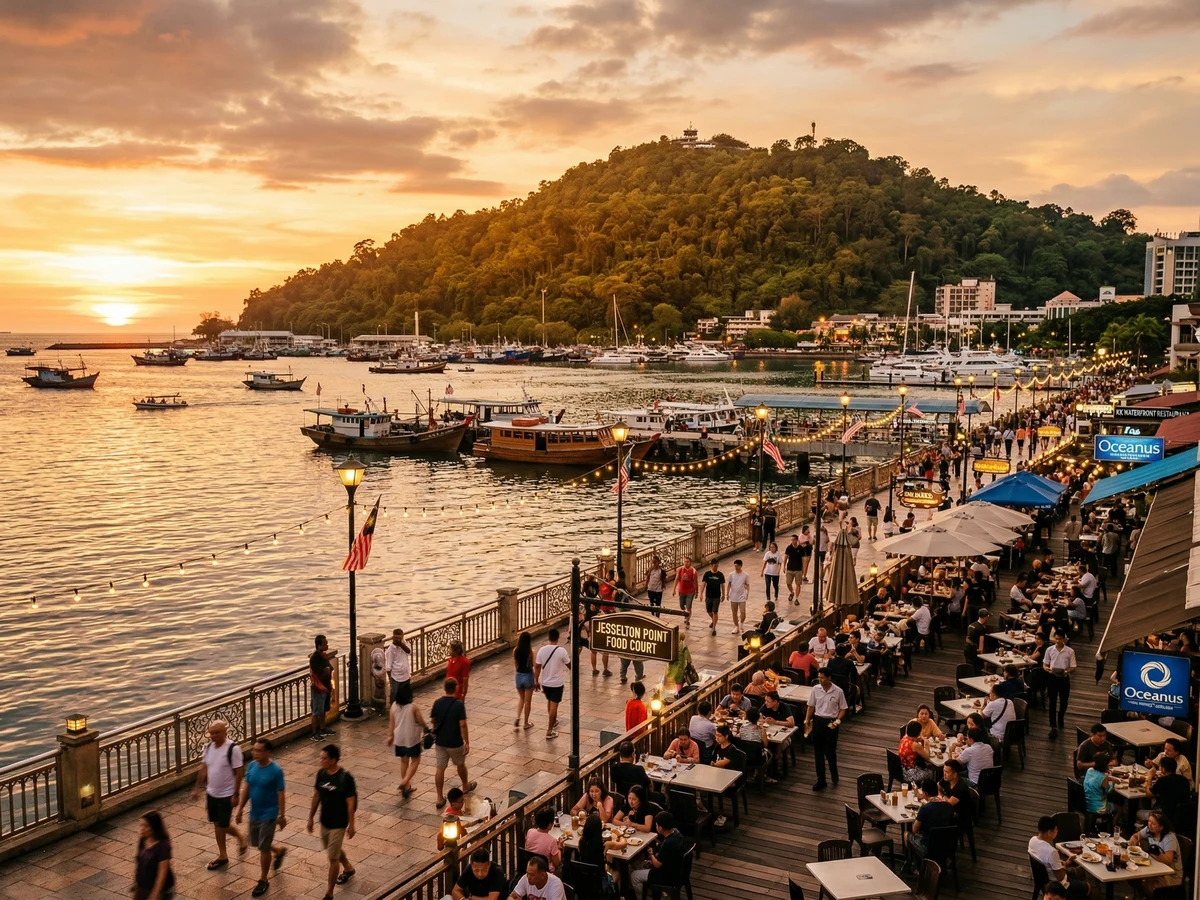
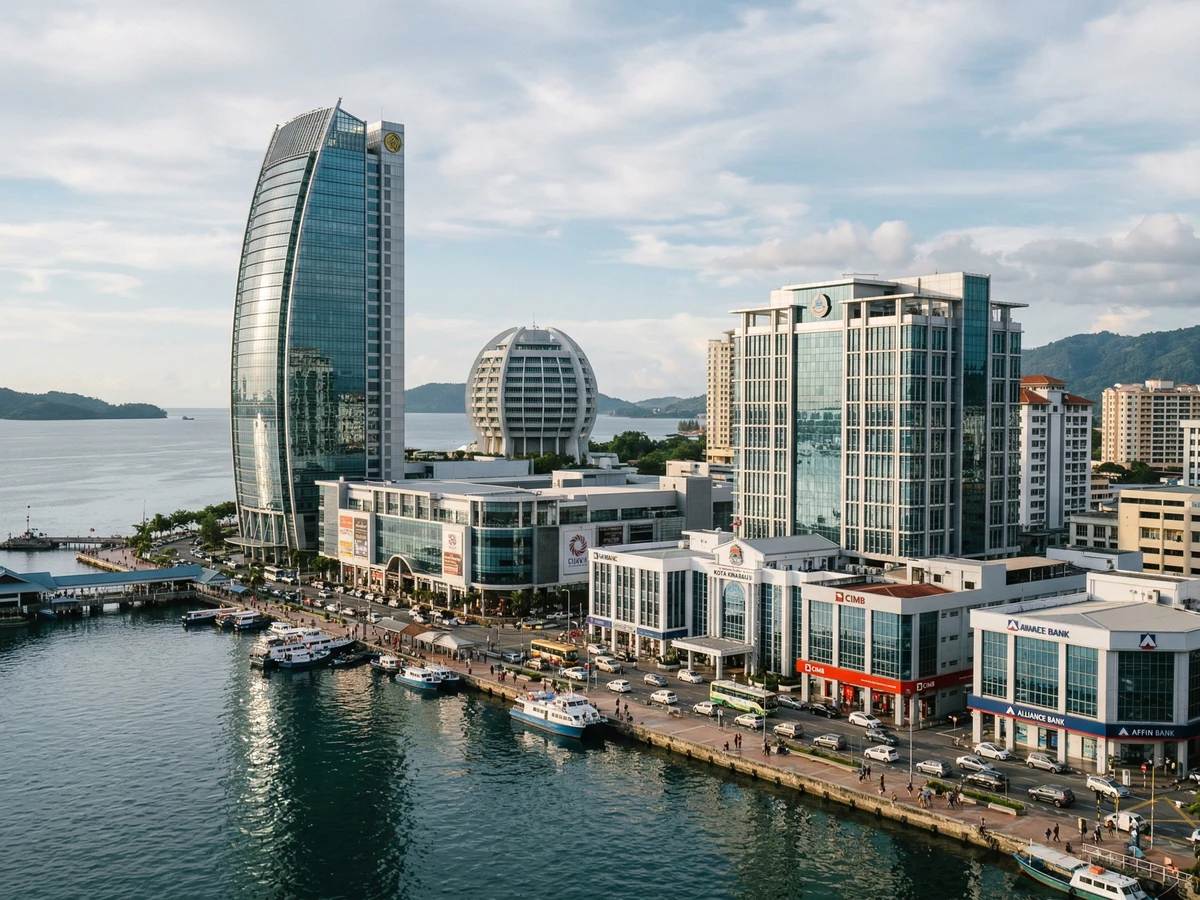
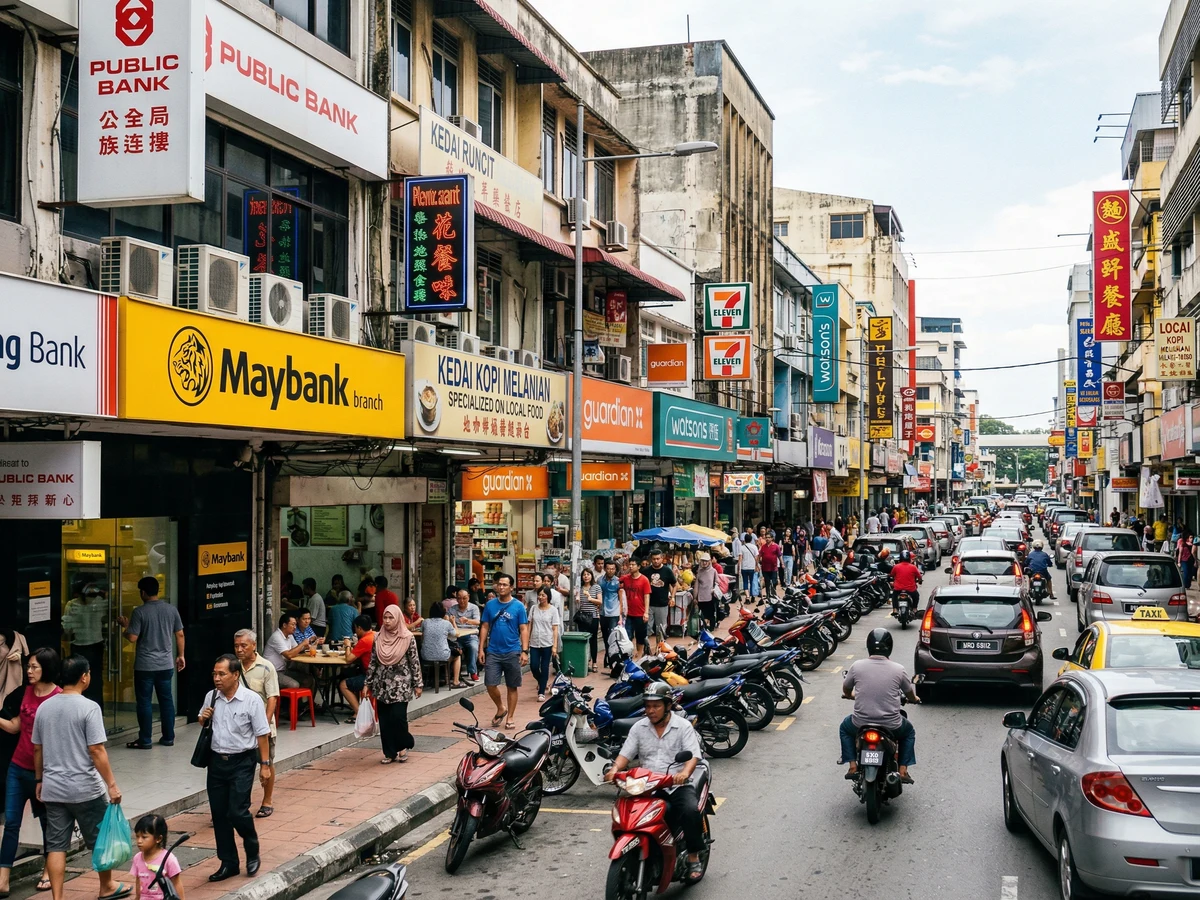
DOSM does not publish GDP broken down by district, so no reliable district split exists. Qualitatively, economic activity is concentrated in Kota Kinabalu — the capital, main port, tourism hub and financial centre — followed by Tawau, Sandakan and Lahad Datu, which are centres for agricultural processing and trade.
The interior districts (Pensiangan, Nabawan, Tongod, Kundasang) are sparsely populated and contribute little to formal GDP, though subsistence farming and informal trade are significant to local livelihoods.
Sabah vs Sarawak: A regional comparison
Sarawak, Malaysia’s other major East Malaysian state, has a larger economy (RM153.5B vs RM88.8B in 2025) despite similar population size and natural resource endowments. Key differences:
- Manufacturing base: Sarawak has petrochemical plants, cement factories, and aluminium smelting. Sabah has mainly commodity processing.
- Infrastructure: Sarawak has invested heavily in ports (Kuching, Sibu, Bintulu) and highways, lowering logistics costs relative to Sabah.
- Fiscal autonomy: Sarawak retained stronger control over oil royalties and state finance under Malaysia Agreement 1963. This funded more development infrastructure.
- Poverty: Sarawak’s poverty rate (8.4%) is far below Sabah’s (17.7%, DOSM 2024), suggesting more inclusive growth.
Sabah could improve GDP growth and per capita income by adopting a Sarawak-style model: prioritise downstream industrialisation, invest in port infrastructure, and negotiate higher oil royalty retention.
Frequently asked questions
Q What drives Sabah's GDP growth?
Q Why is Sabah's GDP per capita lower than the national average?
Q Is oil and gas bigger than palm oil for Sabah's economy?
Q What sectors are driving services growth?
Q How does Sabah's economic growth compare to Sarawak?
Q What did Sabah's 5.1% growth in 2025 mean for Sabahans?
Sources & References 3 sources
Last verified: 17 August 2026