Sabah Petroleum 2026 — Oil & Gas Production & Royalties

We are working through the statistics in this section against their original sources. The headline figures above were re-checked on 16 August 2026. Detailed figures further down the page have not yet been individually verified, and some may be out of date or wrong.
If you spot something that looks wrong, please tell us — it genuinely helps.
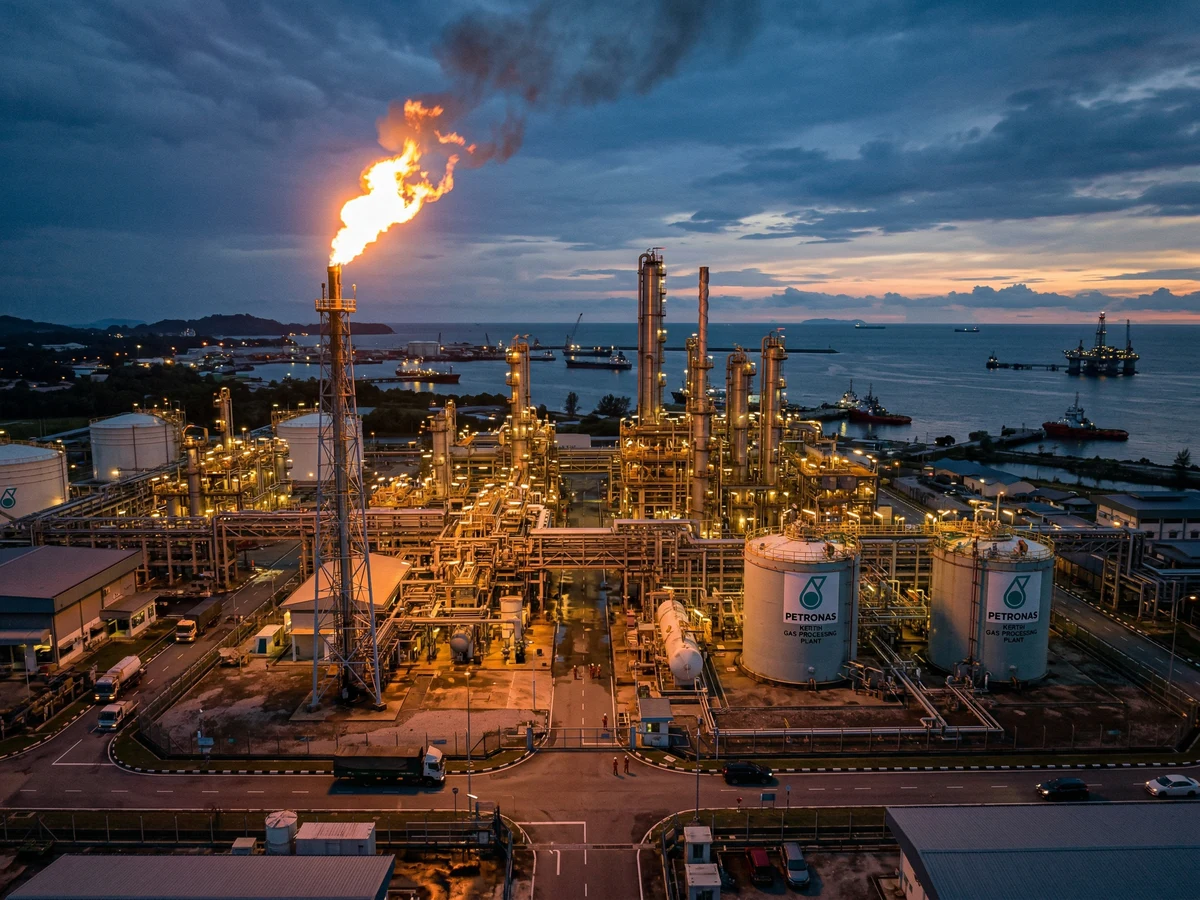
Sabah accounts for more than 40% of Malaysia’s crude oil production (Sabah Government, June 2026). Malaysia does not publish current state-level production volumes; the most recent official figures are ~258,000 bpd of crude and ~884 MMscf per day of gas — about 13% of national gas output — from the Energy Commission’s 2017 national energy balance. Petroleum accounts for 34.7% of Sabah’s exports (RM21.3 billion crude + RM4.6 billion LNG in 2024). The Sipitang Oil & Gas Industrial Park (SOGIP) hosts downstream projects including SAMUR (urea) and PFLNG 3 (floating LNG, targeting 2027).
This page previously showed an oil production trend chart running from 90,000 barrels per day in 2018 down to about 70,000 in 2024. Those figures could not be traced to any published source, and they are roughly three to four times below the last official state-level figure (~258,000 bpd of crude, Energy Commission, 2017). The chart has been removed rather than corrected, because Malaysia does not currently publish state-level production volumes and we have nothing reliable to replace it with.
Petroleum sector overview
Sabah is Malaysia’s largest oil and gas producing region, with extensive offshore fields in the Sulu Sea and Celebes Sea. The sector is a major contributor to state export revenue and employment, though production is concentrated in the hands of a few large operators (PETRONAS, Shell, ExxonMobil, Murphy Oil) and generates less local economic multiplier than plantation agriculture.
The sector is entering a critical transition phase. Onshore fields are in steep natural decline; future growth depends on offshore deepwater development and discovery of new fields. Major downstream projects like PFLNG 3 (floating LNG) offer opportunities to capture value beyond crude export, but face uncertain completion timelines and global energy transition pressures.
Production by commodity and operator
Sabah’s petroleum sector comprises three main products:
Crude Oil
Malaysia does not publish current state-level production volumes. The last official state-level figure is ~258,000 barrels per day (Energy Commission, 2017), and the Sabah government said in June 2026 that the state accounts for more than 40% of Malaysia’s crude output. Sabah’s oil comes from both shallow-water and deepwater fields, with deepwater fields (Kikeh, Gumusut, Malikai, Siakap North-Petai) accounting for the bulk of output.
Natural Gas
The last official state-level figure put gas production at ~884 million standard cubic feet per day (MMscfd), about 13% of Malaysia’s total (Energy Commission, 2017). Gas is associated with oil fields and also produced from dedicated gas fields. Much of Sabah’s gas is piped or shipped for: (1) liquefaction into LNG for export; (2) supply to industrial clients (fertiliser, petrochemicals, power generation); (3) domestic use (power stations, refineries). Gas prices are typically lower than oil prices on an energy-equivalent basis, so gas contributes less revenue despite similar volumes.
LNG (Liquefied Natural Gas)
Sabah has two floating LNG vessels producing ~2.6 million tonnes per annum combined. PFLNG 1 (Malaysia LNG) was the world’s first offshore floating LNG facility (commissioned 2017). PFLNG 3 (under construction in Sipitang, expected 2H 2027) will add 2.0 million tonnes/year capacity. LNG is exported primarily to East Asia (Japan, South Korea, Taiwan, China).
PETRONAS Carigali (subsidiary) is the largest operator. Shell and ExxonMobil are major partners in deepwater fields. Each operator has exploration interests in multiple blocks.
Source: Source under verification (August 2026)
Reserves and production outlook
Sabah’s proven reserves are estimated at 250–300 million barrels of oil and 1.5–2 trillion cubic feet of natural gas (varies by source and measurement methodology). At current production rates, this provides a runway of 10–15 years of crude oil, and 15–20+ years of natural gas. However, proved + probable reserves extend these figures further, and new discoveries could reset the clock.
The critical issue is exploration success. Sabah’s onshore fields are largely exhausted or in terminal decline. All new production must come from deepwater. Deepwater development is capital-intensive (US$500M–2B per field) and takes 5–10 years from discovery to first production. Recent deepwater successes (Kikeh, Gumusut, Shell GKGJE Phase 4) have extended the production plateau, but without continued exploration, production will eventually decline.
SOGIP: Downstream development strategy
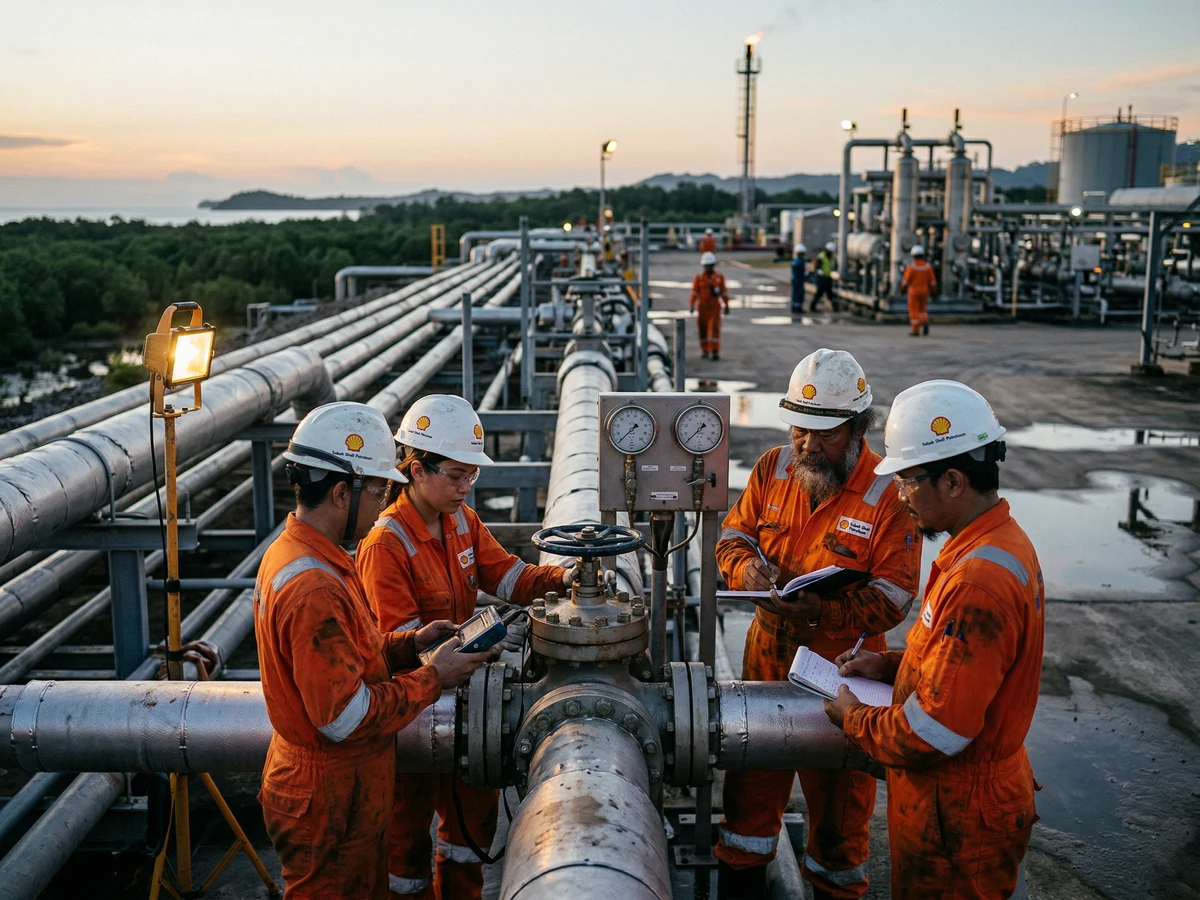
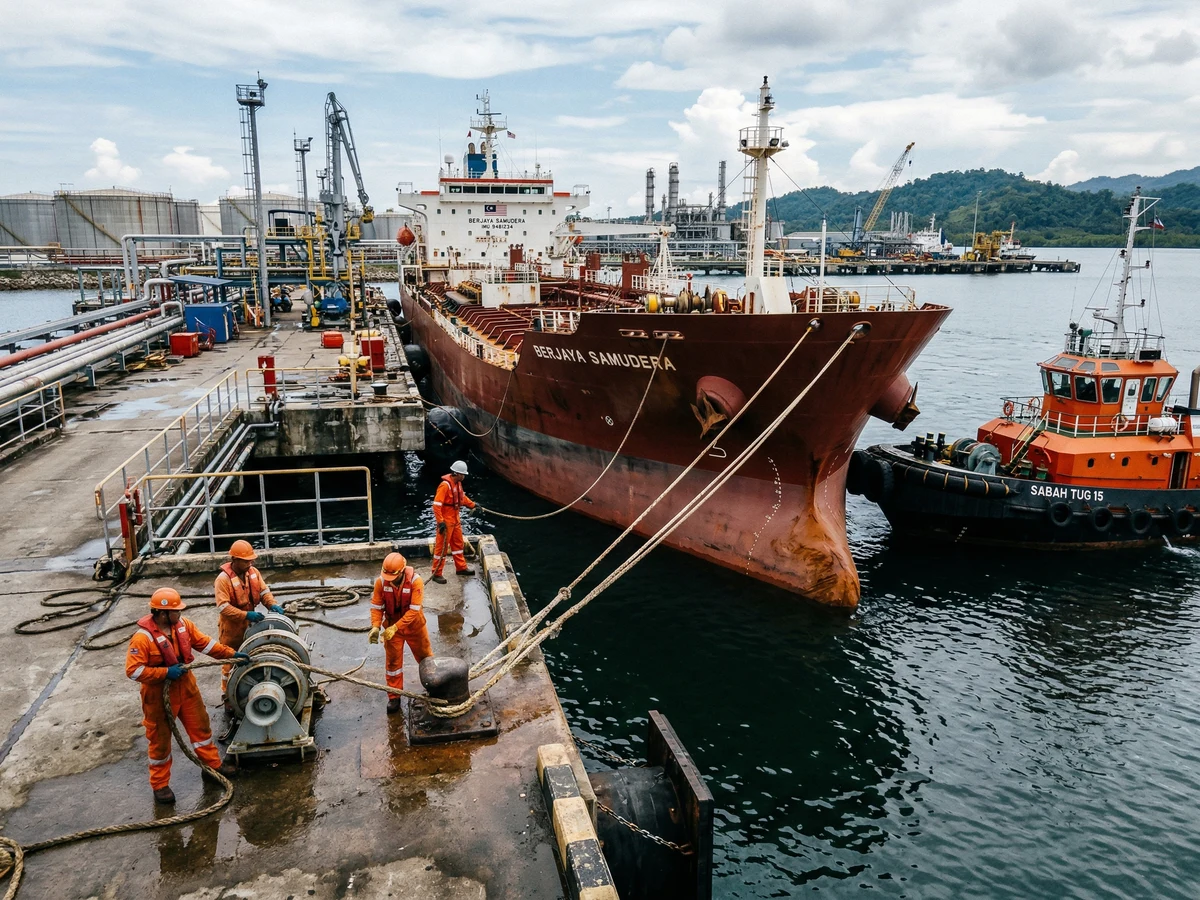
The Sabah Oil & Gas Industrial Park (SOGIP) in Sipitang is the state government’s flagship downstream initiative. The goal: shift from exporting raw crude and gas to producing higher-value products locally, capturing more employment and tax revenue.
SAMUR Urea Plant
Operational since 2019. Capacity: 1.2 million tonnes/year of urea fertiliser. Investment: RM4.6 billion (PETRONAS + international partners). The plant uses Sabah’s natural gas as feedstock and power source. Approximately 80% of output is exported; 20% supplied domestically. Employment: ~500 permanent jobs + contract workers. Economic impact is significant but mostly captured by PETRONAS; royalties to Sabah are limited.
PFLNG 3 (Floating LNG)
Under construction, targeting 2H 2027 commissioning. Capacity: 2.0 million tonnes/year. Investment: RM8–10 billion (PETRONAS + Shell + others). PFLNG 3 will be moored at Sipitang, receiving gas from offshore fields via subsea pipeline. Unlike onshore terminals requiring massive capital (pipelines, port infrastructure), FLNG operates at the production field. Expected to sustain production for 20+ years. Employment during construction phase: 3,000–5,000 workers; operational jobs: 500–800 permanent.
Both SOGIP projects are technically sophisticated and create specialised jobs, but local recruitment is limited — many technical roles require offshore platform experience or engineering expertise, often sourced from international labour markets.
Revenue, royalties, and fiscal terms
Sabah receives 5% of crude oil revenue and 5% of natural gas revenue as state royalties, negotiated under the Malaysia Agreement 1963. In 2024, with crude oil averaging ~US$80/barrel and gas at lower prices, royalty revenue to Sabah was approximately RM1.5–2 billion (depending on exchange rates and exact calculations).
This royalty rate is widely criticised as inadequate. International comparisons:
- Norway takes 50–78% of offshore oil revenue to the state
- UAE (Abu Dhabi) retains 85% of hydrocarbon revenue
- Alaska distributes 25% of oil revenue to residents
- Malaysia: Sabah receives 5%, federal government and PETRONAS take the rest
Sabah has repeatedly lobbied for higher royalties but the federal government has resisted, citing Malaysia Agreement Article 112D complexities and PETRONAS’s corporate autonomy. The disparity remains a source of grievance in state politics.
Frequently asked questions
Q How long will Sabah's oil and gas reserves last?
Q What role does SOGIP play in Sabah's economy?
Q What is Sabah's royalty rate from oil and gas production?
Q Is petroleum or palm oil more important to Sabah's economy?
Q What is the outlook for Sabah's petroleum sector?
Q How does oil and gas affect Sabah's environment?
Q What is Sabah's position on energy transition and net-zero?
Sources & References 5 sources
Last verified: 16 August 2026