Sabah Infrastructure 2026 — Airports, Roads & Ports
We are working through the statistics in this section against their original sources. The headline figures above were re-checked on 20 August 2026. Detailed figures further down the page have not yet been individually verified, and some may be out of date or wrong.
If you spot something that looks wrong, please tell us — it genuinely helps.
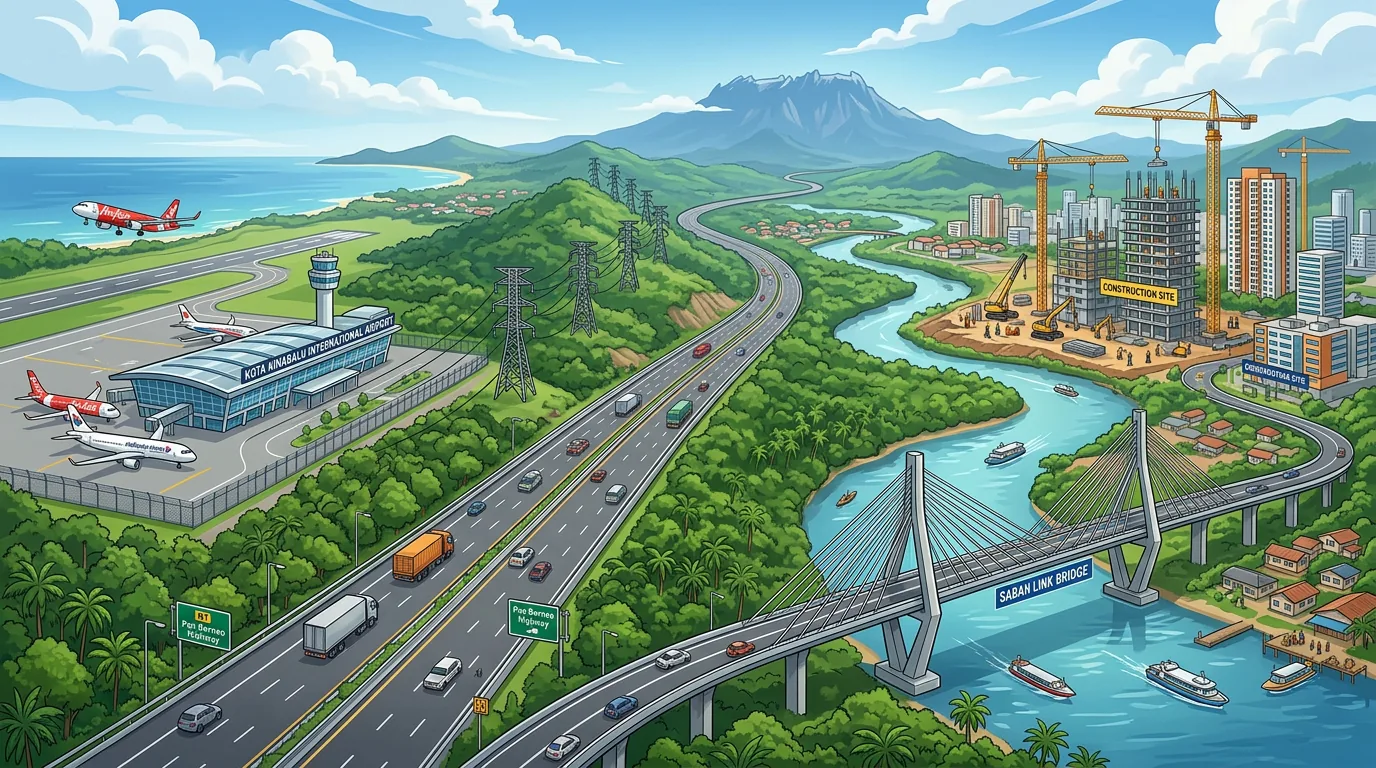
Sabah has four airports with scheduled flights, three container ports and about 22,700 km of road. The Pan Borneo Highway is a 706 km project whose first phase has slipped to mid-2028, with both phases now targeted for the end of 2030. Kota Kinabalu International Airport handled 7.04 million passenger movements in 2023, the last year Malaysia Airports published airport-level figures — still a quarter below its 2019 peak. On broadband, 4G reaches 98.7% of populated areas and 5G 69.0%, and 5G has barely moved in two years.
Kota Kinabalu carries about 72% of Sabah's air traffic. Tawau is much larger than most sources suggest, and Kudat has had no scheduled service since 2020. These are movements, counting each arrival and each departure.
Source: MAHB, Airports Statistics 2023
Infrastructure Overview
Sabah covers 73,631 km² with a dispersed population of 3.76 million, which is why connectivity dominates every state development plan. Hala Tuju SMJ 2.0, the 2026 to 2030 state plan launched in January 2026, puts roads, ports, digital connectivity and power generation at the front. Under the 13th Malaysia Plan, Sabah has an approved allocation ceiling of RM12.024 billion covering 1,173 projects across every sector, not infrastructure alone.
The constraints are the familiar ones: mountains, rivers and scattered settlements; a climate that degrades road surfaces quickly; and delivery capacity. The Pan Borneo Highway is the clearest illustration — a project whose completion date has moved from 2029 to the end of 2030 within a single year.
Airports & Air Connectivity
Sabah has five airports, but only four carry scheduled flights. Kudat has recorded no scheduled passenger traffic since 2020, and the Semporna STOLport none either. Kota Kinabalu is the international gateway; Tawau, Sandakan and Lahad Datu serve domestic routes.
Kota Kinabalu carries about 72% of Sabah air traffic, not the 90% widely repeated. On 2023 movements it handled 7.04 million against a Sabah total of 9.80 million. Tawau alone handled 1.71 million — more than double what a 90% share would leave for every other airport in the state combined.
Malaysia Airports stopped releasing airport-by-airport statistics after it was taken private. 2023 is the last published year. Figures circulating for 2024 and 2025 — including a widely quoted 7.96 million for Kota Kinabalu — trace to uncited third-party tables, not to Malaysia Airports.
The airport has recovered strongly from 2021, but 2023 traffic was still about a quarter below the 2019 peak of 9.45 million. Claims that it has set a new record are not supported by published data.
Source: MAHB, Airports Statistics 2023
Kota Kinabalu was Malaysia’s second-busiest airport in 2023, ahead of Penang by under 4%. The terminal is rated at 9 million passengers a year, lifted to about 10 million by an interim reconfiguration in December 2024 — so it has been operating close to its ceiling. A Terminal 1 upgrade to 12 million was approved by Cabinet in November 2024 at RM442.3 million, later described in Parliament as nearly RM500 million. As at July 2026 the work had not started: the Deputy Transport Minister told the Dewan Rakyat that the project awaits a Sabah government decision on the site.
Ports & Maritime
Sabah Ports operates eight ports, of which three handle containers. The main one is the Sapangar Bay Container Port near Kota Kinabalu, run since September 2024 by DPW Sabah, a joint venture between DP World and Sabah Ports. In 2025 it handled 396,694 TEUs against a current capacity of about 500,000 TEU. A federally funded expansion is raising that towards 1.25 million TEU in two stages, now expected in October 2027. Sapangar Bay is designed as a regional transhipment hub for BIMP-EAGA trade.
Sandakan and Tawau also handle containers — 56,210 and 83,285 TEUs respectively in 2024 — alongside regional cargo, timber and palm oil exports. Cruise traffic across Sabah in 2025 was 23 ship calls carrying 24,634 passengers, mostly at Kota Kinabalu with four calls at Sandakan.
Roads & Pan Borneo Highway
Sabah’s road network reached 22,658 km in 2024, up from 21,876 km in 2021, counting federal, state, municipal and district roads together. Federal roads are a small share of that — about 1,537 km.
The Pan Borneo Highway is the largest road project in the state’s history. Phase 1 runs 706 km from Sindumin on the Sarawak border to Tawau, in 35 work packages, at a construction cost of RM24.889 billion — with a further RM2.53 billion spent on land acquisition. It is toll-free and fully federally funded.
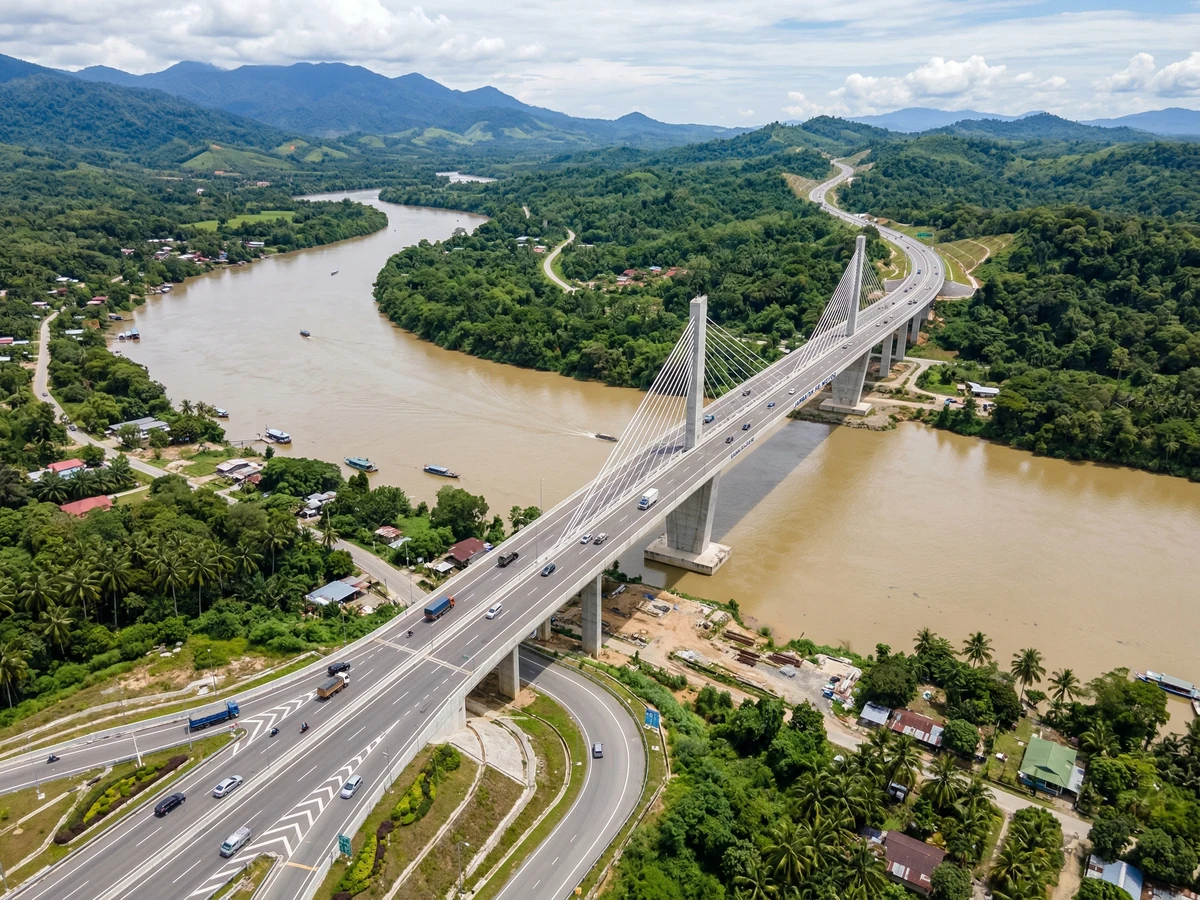
Phase 1A as at July 2026; Phase 1B as at February 2026, the most recent figure published for it. Phases 2 and 3 have no funding, no timeline and no published progress, so they are not charted.
Source: Dewan Negara, 22 July 2026 and Dewan Rakyat, 26 February 2026
The completion date has moved repeatedly. Phase 1A was to finish in October 2026, then the first quarter of 2027, and in July 2026 the Deputy Works Minister told the Dewan Negara it is now expected in mid-2028. Both phases together are now targeted for the fourth quarter of 2030. Nine more Phase 1A packages were due to open by the end of 2026. Phase 2 (about 98 km, Tamparuli to Ranau) and Phase 3 (about 432 km, Kimanis to Keningau to Kalabakan to Tawau) remain at planning stage, dependent on future federal approval.
Digital Infrastructure & Connectivity
As at March 2026, 4G reaches 98.71% of Sabah’s populated areas and 5G reaches 69.0%. The national 5G figure is 82.4%. Sabah’s 5G coverage has been effectively flat for two years — it was 68.6% in July 2024 — so descriptions of a rapid rollout are not supported by the published series. The 5G measure counts coverage delivered by Digital Nasional Berhad. A second network, U Mobile, reached 63.9% of Sabah’s populated areas by May 2026, and no combined any-network figure is published.
Broadband penetration is 27.0 fixed subscriptions per 100 premises and 99.6 mobile broadband subscriptions per 100 inhabitants. Those are two different denominators — premises for one, people for the other — and the mobile figure counts subscriptions, so a person with two SIM cards counts twice.
Three measures get quoted interchangeably and mean different things: coverage of populated areas (the JENDELA headline, and the basis of 69.0% and 98.71%), sites built against sites planned (a construction ratio), and share of population (not published for Sabah at all). Converting a site ratio into a coverage percentage is invalid, and it is where most of the contradictory 5G numbers come from.
Under JENDELA, the federal target is 100% internet access in populated areas nationwide by 2027, and 98% 5G coverage of populated and industrial areas by 2030 under the 13th Malaysia Plan. The JENDELA 2 programme covers 2,700 sites nationwide, and Sabah takes the largest share of the first tranche — 35.2% of the initial 1,000 sites.
Power & Water Infrastructure
Electricity: Sabah had a dependable generation capacity of about 1,179 MW against a record peak demand of 1,003 MW in 2021, a reserve margin of roughly 17.6% — thin by planning standards, which is why capacity additions dominate state energy policy. Most generation is owned by independent power producers rather than by Sabah Electricity itself.
Recent additions have landed: the Lahad Datu battery storage facility (100 MW output, 400 MWh capacity) was inaugurated in December 2025 and is the largest in Southeast Asia by energy capacity, though not by output. A 100 MW interim gas plant at Kimanis is running, with permanent plants due to replace interim diesel units in 2026 and 2027. About 100 MW of solar has been awarded on the east coast, with large-scale solar in Sabah expected to pass 350 MW by 2027. The Sarawak interconnection began supplying Sabah in December 2025 and now carries up to 50 MW.
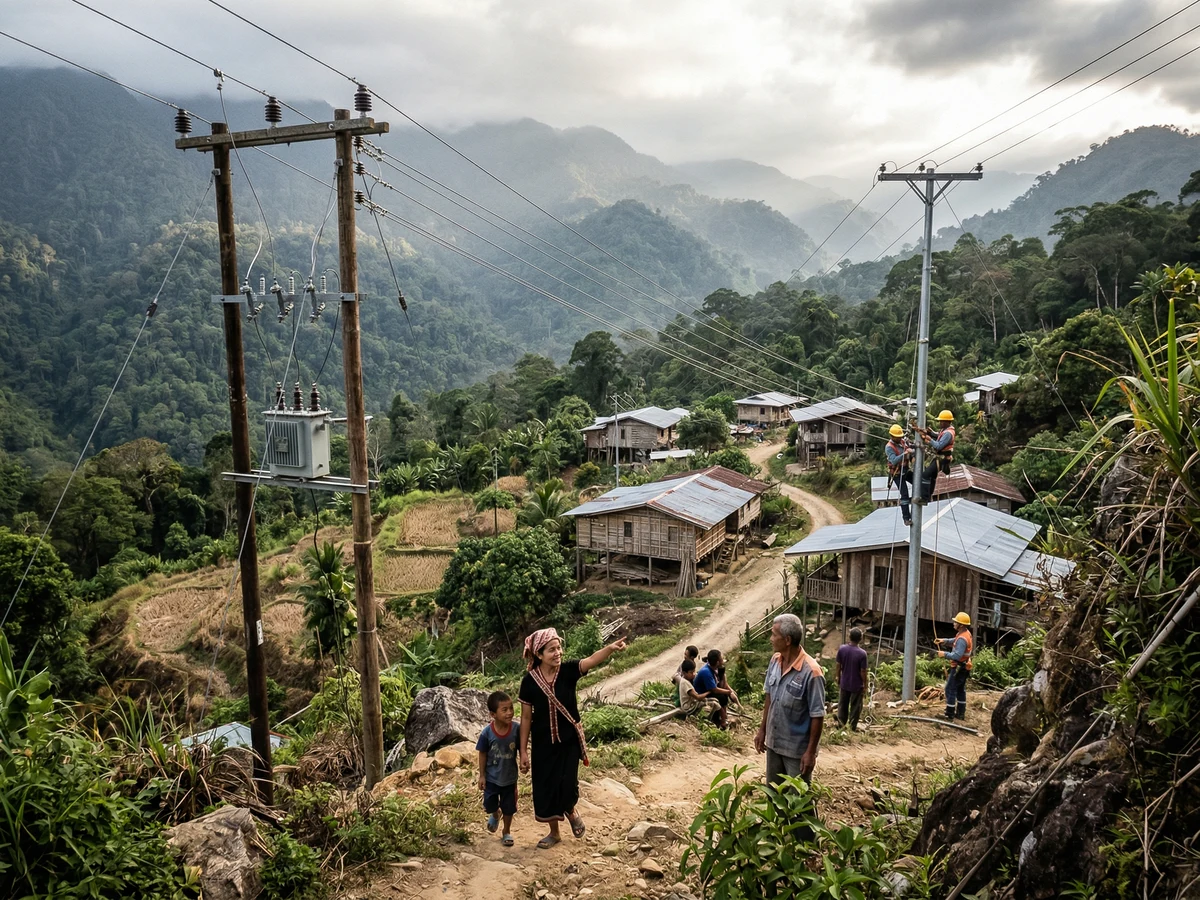
Rural electrification stood at 96% in 2025, with full rural coverage targeted by the end of 2030.
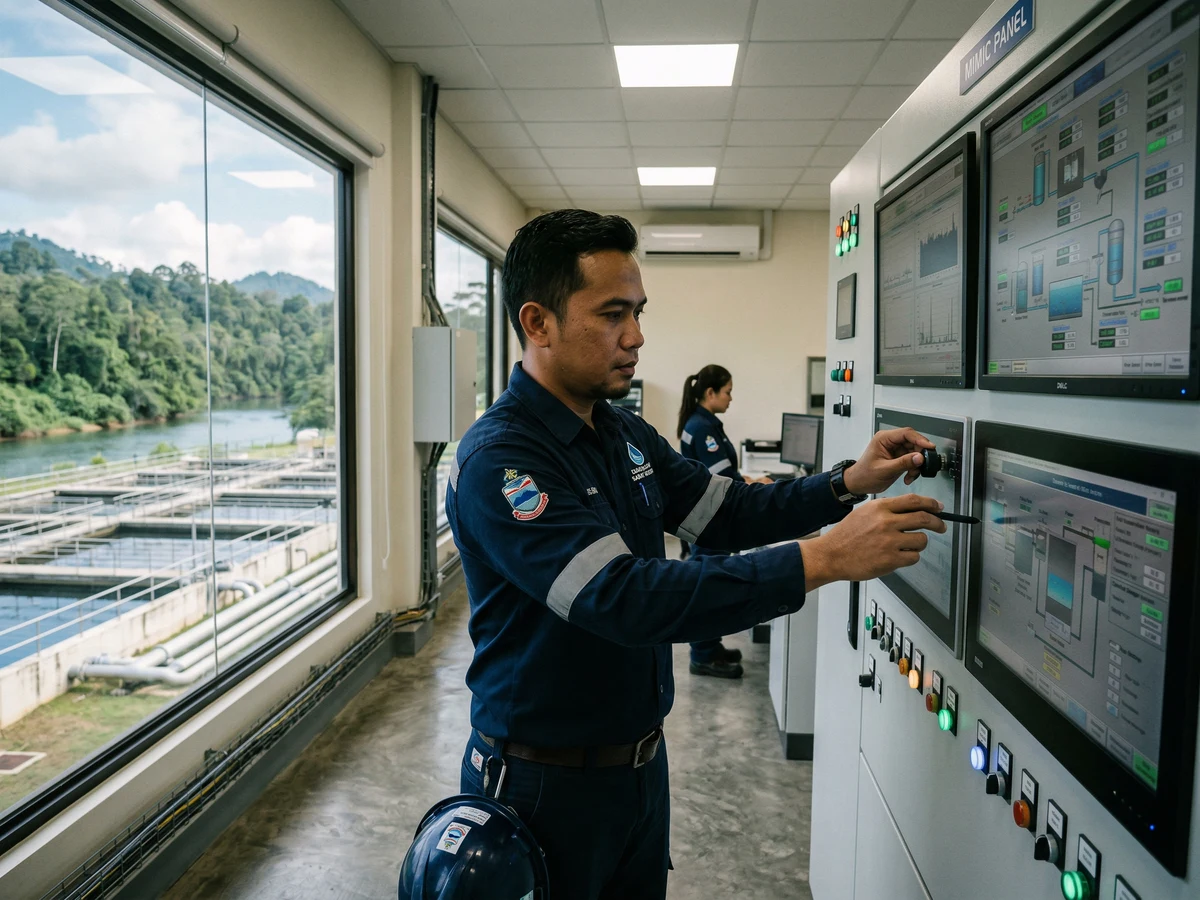
Water: supply reaches 100% of the urban population and 70% of the rural population, through 91 treatment plants producing 1,947 million litres a day across a 15,883 km pipeline network, as at December 2024. Rural coverage is the standing gap.
Frequently asked questions
Q When will the Pan Borneo Highway be fully completed?
Q How do I travel between Kota Kinabalu and Sandakan?
Q What is broadband coverage like in interior districts?
Q Is there a Sabah Rail corridor planned?
Q Can Sabah's ports handle current trade volume?
Q What is the status of rural electrification in Sabah?
Q What new infrastructure projects are planned for 2026 and 2027?
Sources & References 10 sources
Last verified: 20 August 2026
Roads & Transportation
- Works Ministry (KKR) — Pan Borneo Highway Phase 1B Phase 1B alignment, 19 work packages and the RM13.989 billion federal allocation. Phase 1A and 1B progress and revised targets were given by the Deputy Works Minister in the Dewan Negara on 22 July 2026.
- JKR Malaysia — Buku Statistik Jalan Road network length by state and by authority.
Airports & Aviation
Ports & Shipping
Power & Water
- Energy Commission of Sabah — Sabah Energy Roadmap and Master Plan 2040 Dependable generation capacity, peak demand and reserve margin. Also the source of the 2025 rural electrification figure and the 2030 target.
- Jabatan Air Negeri Sabah (Water Department) Water supply coverage, treatment plants and pipeline length, as at December 2024.