Sabah Fisheries 2026 — Marine Catch & Aquaculture Data
We are working through the statistics in this section against their original sources. The headline figures above were re-checked on 16 August 2026. Detailed figures further down the page have not yet been individually verified, and some may be out of date or wrong.
If you spot something that looks wrong, please tell us — it genuinely helps.
Sabah’s Fisheries Sector Overview
Sabah is Malaysia’s second-largest fisheries producer (after Peninsular Malaysia), with total annual production of approximately 450,000 tonnes. The sector comprises two primary components: marine capture fisheries (~320,000 tonnes, 71%) and aquaculture (~130,000 tonnes, 29%), which includes both marine and freshwater farms.
The fisheries sector employs approximately 45,000 registered fishermen and aquaculture workers, plus an estimated 15,000–20,000 informal/migrant workers. Seafood export revenue reaches approximately RM2.5 billion annually, making fisheries a significant foreign exchange earner. Major export products: live grouper and high-value fish (to Hong Kong, China, Singapore), frozen shrimp, dried seaweed, and processed fish products.
Sabah’s long coastline (1,440 km) and proximity to the Sulu-Sulawesi seas — one of the world’s most productive fishing zones — provide exceptional natural endowment. However, the sector faces mounting pressures: overfishing and illegal fishing (IUU), climate change and coral bleaching, fuel cost volatility, and catch market price fluctuations. State policy emphasises sustainable fisheries management, aquaculture expansion, and value-added seafood processing.
Marine capture dominates Sabah fisheries output, with aquaculture representing a rapidly growing segment.
Source: Department of Fisheries Sabah / DOSM
Marine Capture Fisheries — Catch & Species Composition
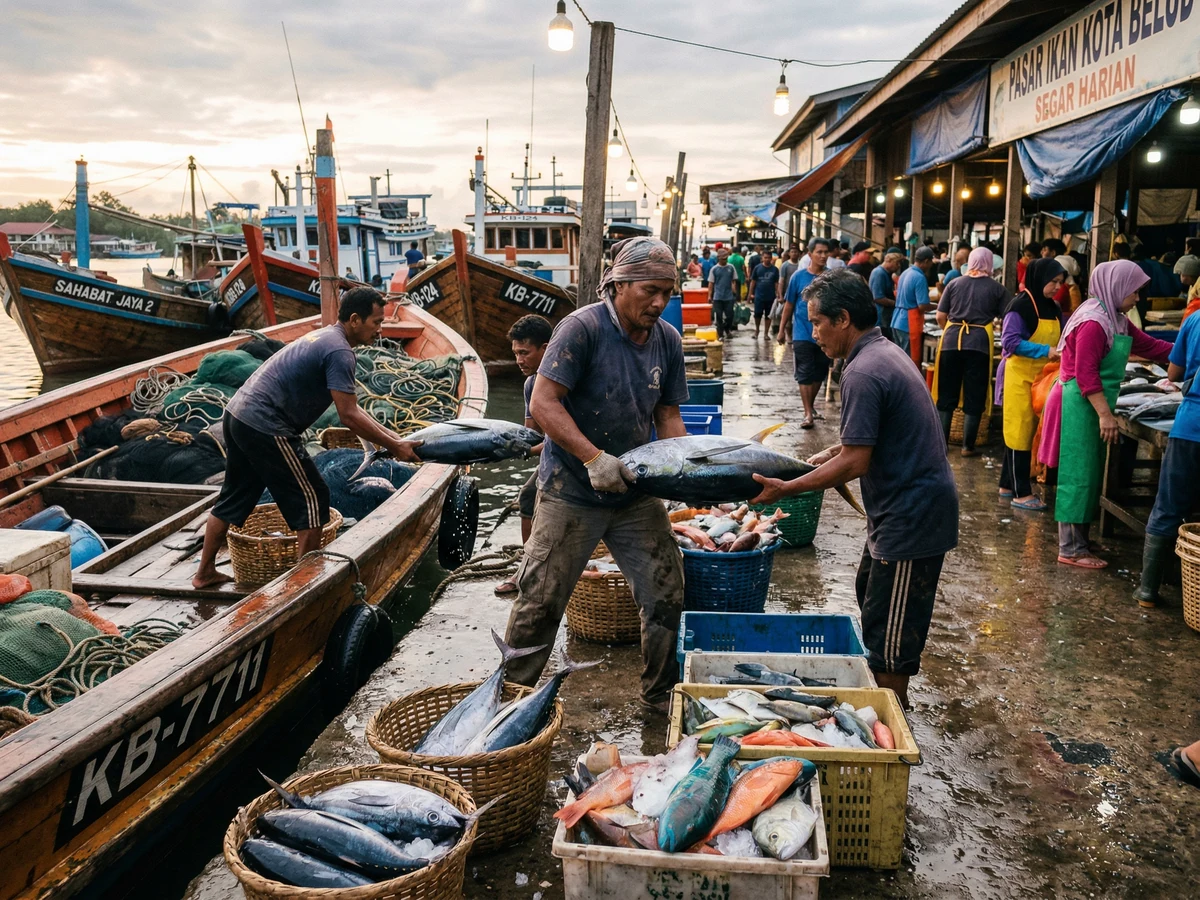
Marine capture fisheries account for approximately 320,000 tonnes annually, sourced from Sabah’s exclusive economic zone (EEZ) and shared regional waters. Major fishing zones and ports include:
- Sandakan (~145,000 tonnes) — largest fishing port; trawling, longlining, and trap fishing dominate; primary species: grouper, snapper, jacks, tuna, squid
- Tawau/Semporna (~128,000 tonnes) — second-largest hub; live grouper exports, seaweed farming, and open-sea pelagic fishing; proximity to Sulu-Sulawesi Sea
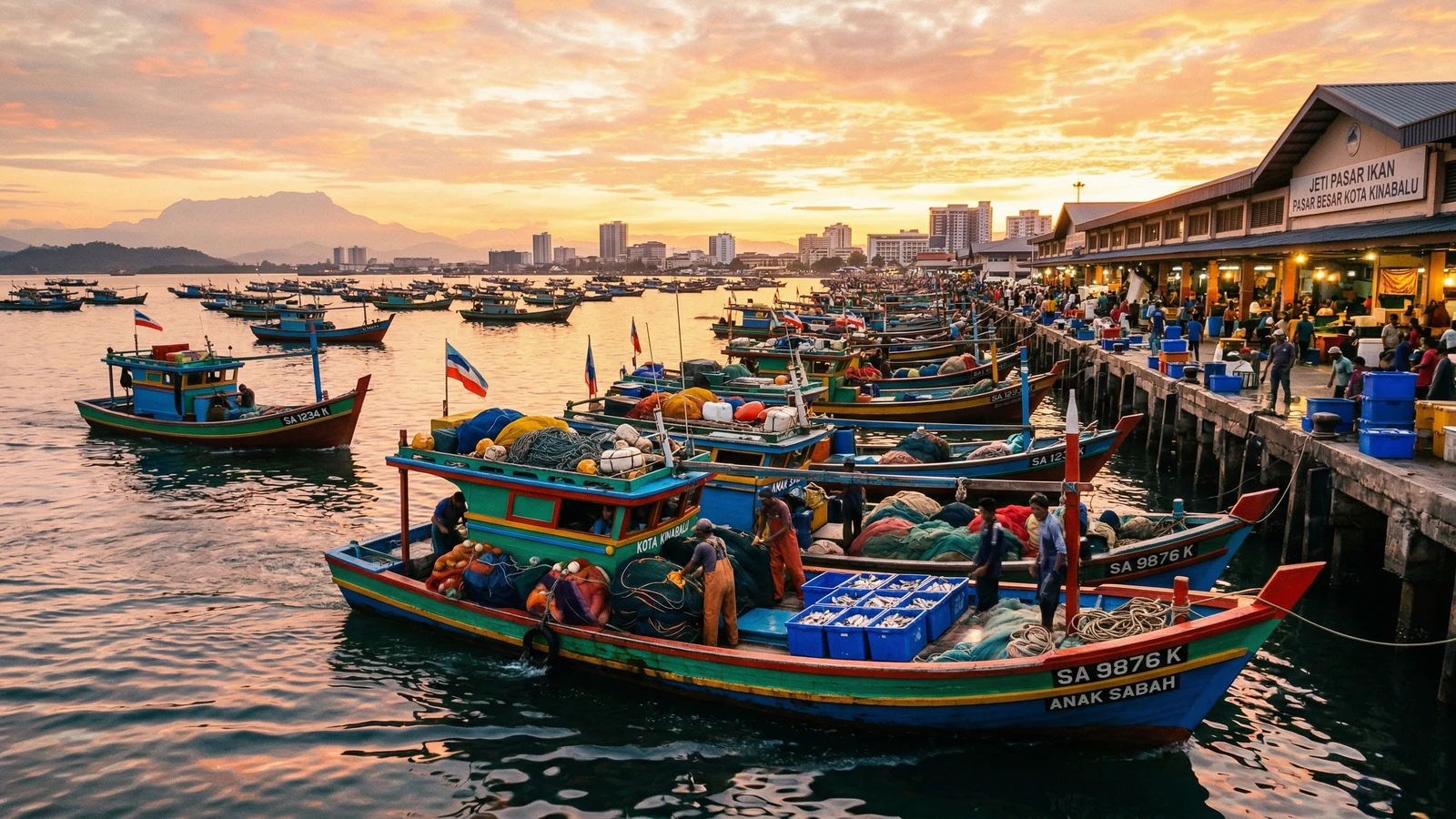
- Kota Kinabalu (~95,000 tonnes) — central port; diverse fleet; small-scale to medium-scale vessels; local market supply
- Kudat (~62,000 tonnes) — northern zone; small-scale and artisanal fishing; squid and small pelagics dominant
- Lahad Datu (~20,000 tonnes) — smaller port; artisanal fishing and seaweed farming
Primary commercial species: Grouper (live export premium RM50–120/kg), snapper, jacks, tuna, squid, shrimp, and cuttlefish. Seasonal patterns: Production peaks Oct–Mar (northeast monsoon) when sea conditions are calmer and fish aggregations form; production falls Jun–Aug (southwest monsoon) due to rough seas and reduced fishing days.
Fishing methods: Otter trawls (bottom and mid-water), longlining, gill nets, trap fishing, and hand-cast nets. Trawling dominates commercial catch volumes but faces sustainability criticism due to bycatch (juvenile fish, discards) and seafloor habitat damage. Longlining and trap fishing are more selective but labour-intensive.
Sabah aquaculture has grown steadily, driven by marine fish farming (grouper, seabass) and seaweed expansion. Slight 2024 dip due to disease and market conditions.
Source: Department of Fisheries Sabah
Aquaculture — Farmed Fish & Seaweed
Aquaculture production is growing steadily at 4–6% annually, reaching 130,000 tonnes in 2024. The sector includes:
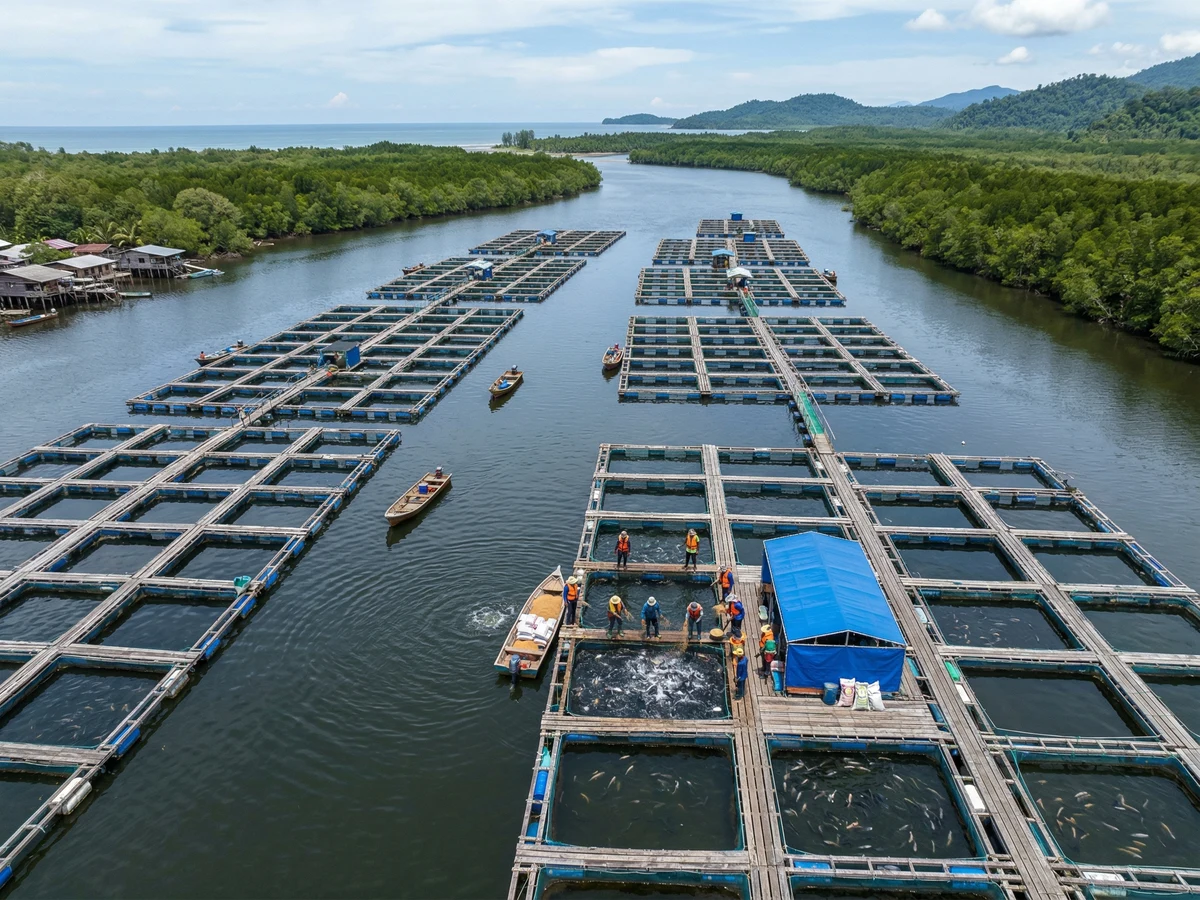
Marine Fish Farming (70,000–80,000 tonnes) — Primarily grouper, seabass, and barramundi in floating net cages. Major zones: Semporna, Lahad Datu, Kunak. Farm size ranges from small-scale (single cage, 1–5 tonnes) to large operations (20+ cages, 500+ tonnes). Grouper farms command premium prices (RM15–25/kg wholesale) for high-value export markets. Challenges: disease outbreaks (viral nervous necrosis, bacterial infections), feed costs (RM8–12/kg), and environmental impact (organic loading in water column).
Seaweed Farming (15,000–20,000 tonnes) — Carrageenan-producing species (Kappaphycus alvarezii) dominate; 45–60 day harvest cycle allows 6–7 crops annually. Seaweed is exported primarily to Philippines, Indonesia, and Japan for carrageenan production (used in food, pharma, cosmetics). Smallholder seaweed farming is labour-intensive but low capital; suitable for coastal communities. Challenges: ice-ice disease (bacterial pathogen causing tissue degradation), climate stress, and price volatility.
Freshwater Aquaculture (30,000–40,000 tonnes) — Tilapia, catfish, and carp in ponds and cages in inland waters. Primarily supplies domestic market (lower-value commodity production). Expansion potential limited by freshwater availability and land constraints.
Growth drivers: (1) High export demand for Asian fish species; (2) Moore’s Law of aquaculture — farming efficiency and disease management improving; (3) Government support (subsidies, technical training, zone development); (4) Youth entry through aquaculture training schemes. Outlook: Aquaculture production could reach 180,000–200,000 tonnes by 2030 if disease management, feed supply, and market access improve.
Sandakan and Tawau/Semporna are Sabah’s largest fishing hubs, accounting for ~68% of marine catch.
Source: Department of Fisheries Sabah
Export Profile & Market Access
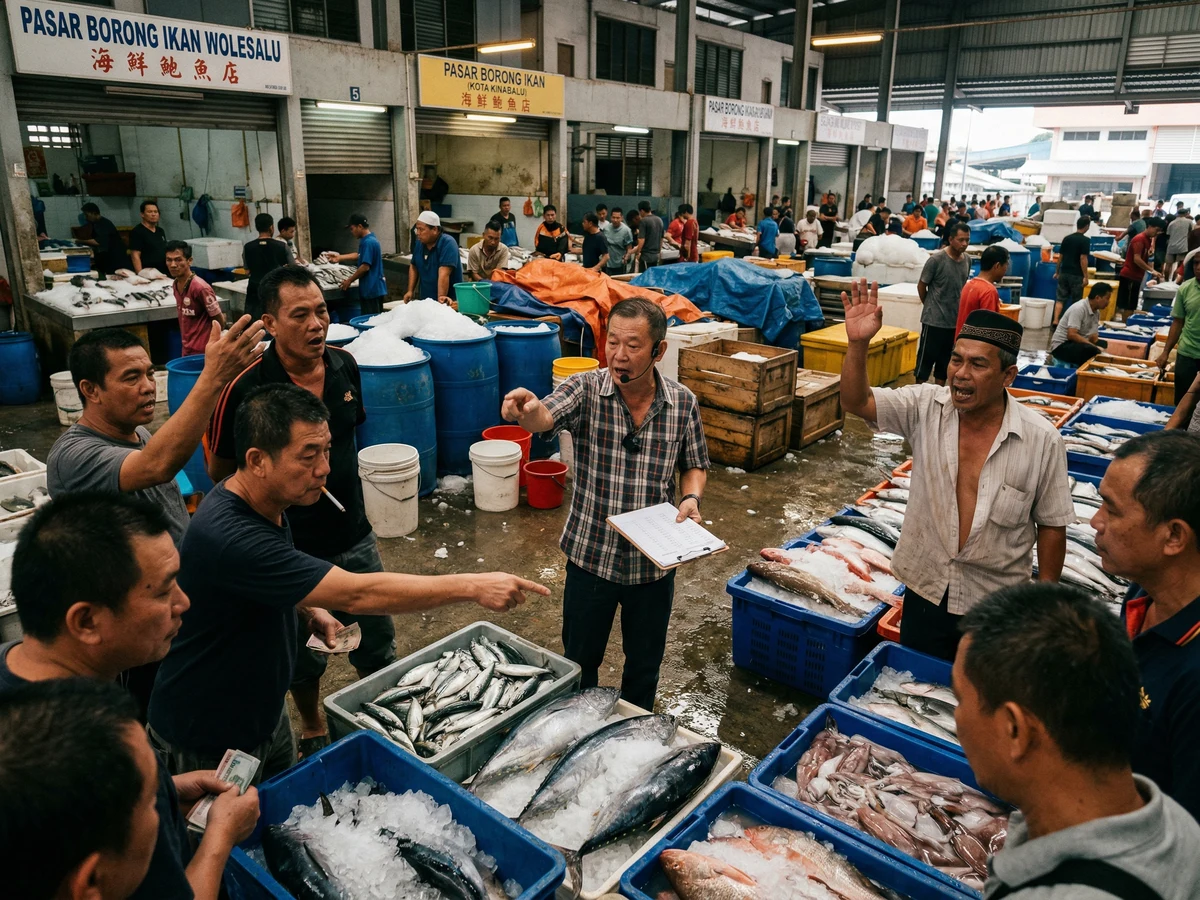
Sabah seafood exports reach approximately RM2.5 billion annually, representing ~4% of state exports by value. Top export products:
- Live Grouper (RM600–800M) — Premium fresh product exported to Hong Kong, China, Singapore, and Malaysia. Live export commands RM50–120/kg depending on species and size. Semporna is the primary live fish export hub.
- Frozen Fish & Seafood (RM800–1,000M) — Processed fish fillets, frozen shrimp, fish meal, and fish paste. Exported to Japan, South Korea, EU, and ASEAN markets.
- Seaweed (RM200–300M) — Dried carrageenan seaweed; exported primarily to Philippines, Indonesia, and Japan for further processing into food additives and agar.
- Other products (RM200–400M) — Canned fish, fish sauce, fish oil, and aquaculture feeds.
Export challenges: (1) Quality standards — EU imports increasingly require traceability and sustainability certifications (MSC, ACDS); most Sabah fisheries lack formal certification; (2) Price volatility — commodity seafood prices fluctuate 15–30% annually; (3) Supply consistency — IUU fishing and wild catch volatility disrupt supply to export processors; (4) Value-added gap — Sabah exports mostly raw/semi-processed products; limited seafood processing industry limits margin capture.
Challenges & Sustainability Outlook
Key pressures on Sabah fisheries:
1. Overfishing & IUU — Illegal, unreported, unregulated (IUU) fishing estimated at 15–25% of catch in the Sulu-Sulawesi region. Foreign vessels using destructive methods (dynamite, cyanide) reduce fish stocks and damage ecosystems. Government enforcement is under-resourced relative to sea area (~370,000 sq km EEZ). Estimated lost government revenue: RM200–500M annually.
2. Climate Change & Coral Bleaching — Elevated sea temperatures have triggered coral bleaching events (2016, 2020) killing 30–50% of reefs in some zones. Reef degradation reduces fish nursery habitat, potentially lowering long-term catch productivity by 20–30%. Changing monsoon patterns alter seasonal catch predictability.
3. Fuel Cost Volatility — Diesel prices (RM2–3/litre) fluctuate with global crude prices; fuel accounts for 40–60% of fishing vessel operating costs. Price spikes (e.g., 2022) squeeze profit margins and reduce fishing trips, particularly for small-scale fishers.
4. Market Price Volatility & Low Value-Add — Sabah exports mostly raw/semi-processed seafood; limited seafood processing and value-added product development. Price-takers in commodity markets; vulnerable to oversupply and price collapses (e.g., grouper price fell 30% in 2023 due to oversupply).
5. Limited Profitability for Small-Scale Fishers — Small-scale artisanal fishers (30–40% of workforce) operate at tight margins; many live below poverty line. Debt traps common; limited access to credit and market information.
Government sustainability response: (1) Port state control and vessel monitoring systems to combat IUU; (2) Marine protected areas (Tun Sakaran MPA protects 325,000 hectares); (3) Coral restoration and fishery closure areas; (4) Aquaculture zoning and environmental standards; (5) Sustainable fishing certification support (MSC, ACDS); (6) Value-added processing incentives (seafood processing parks, tax holidays). Progress improving, but challenges remain significant.
Q Why is Semporna so important for Sabah fisheries?
Q How large is Sabah's seaweed farming industry?
Q Is illegal fishing (IUU) a major problem in Sabah waters?
Q What are typical incomes for Sabah fishermen?
Q What sustainable fishing certifications does Sabah have?
Q How do coral reefs affect Sabah fishery productivity?
Sources & References 8 sources
Last verified: 11 April 2026
Government — Fisheries
- Department of Fisheries Sabah (FiD) State fisheries production data, licensing, and enforcement
- Ministry of Agriculture & Food Security — Fisheries Division National fisheries policy, catch statistics, and aquaculture promotion
- DOSM — Fisheries Statistics Aggregated production and employment data by state
- Fisheries Management Division (FMD) Malaysia Fisheries resource management, licensing, and monitoring
Marine Conservation & Research
- Tun Sakaran Marine Park Marine protected area management and conservation initiatives
- World Wildlife Fund (WWF) — Sabah Marine Research on coral reef health, fish stocks, and conservation projects
- FAO — Southeast Asian Fisheries Regional fisheries assessments, IUU fishing estimates, sustainability trends
- Borneo Post — Fisheries News Local fisheries news, catch reports, and policy updates