Sabah Agriculture 2026 — Cocoa, Paddy, Rubber & Timber
We are working through the statistics in this section against their original sources. The headline figures above were re-checked on 16 August 2026. Detailed figures further down the page have not yet been individually verified, and some may be out of date or wrong.
If you spot something that looks wrong, please tell us — it genuinely helps.
Sabah’s Agricultural Sector Overview
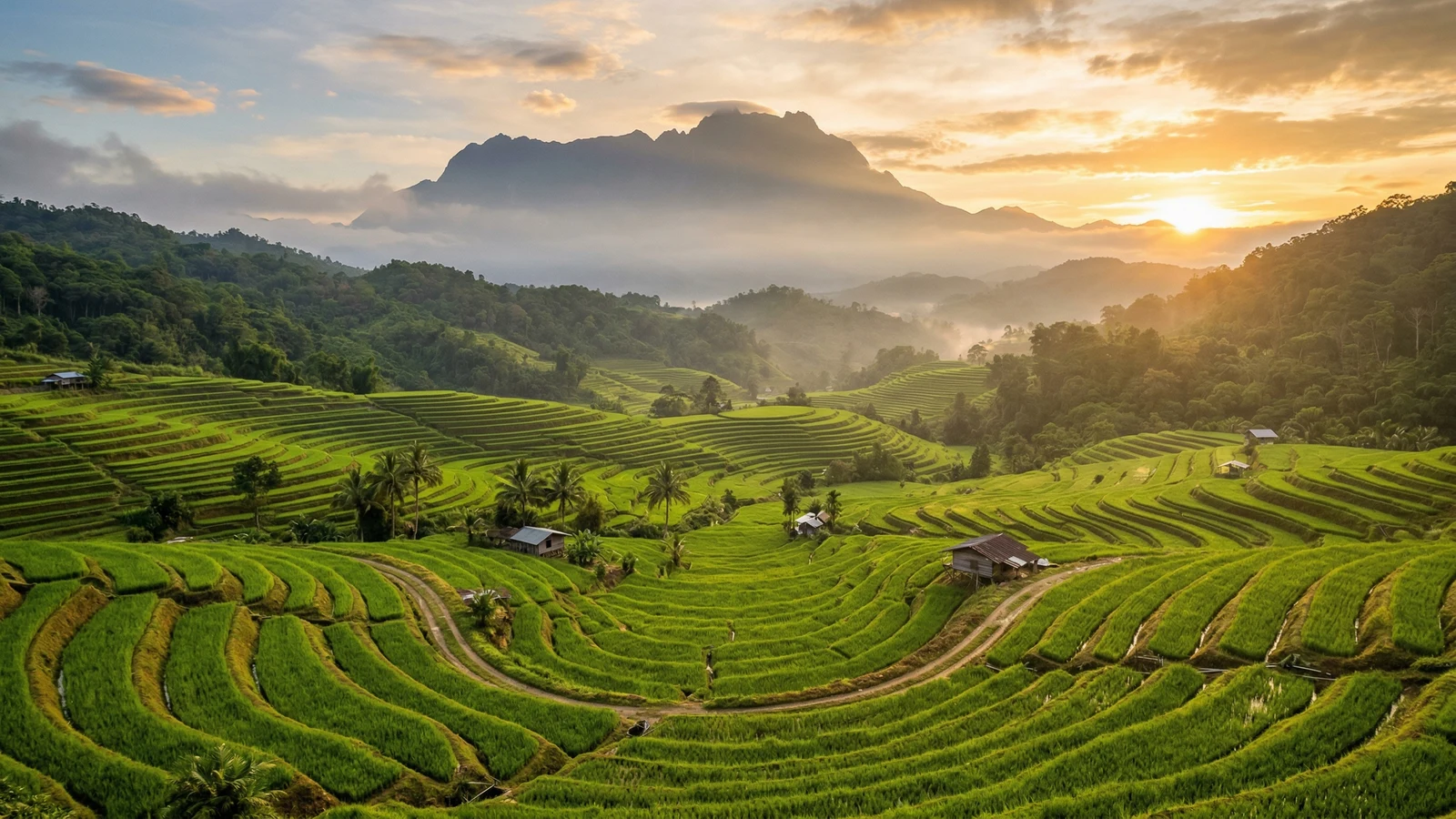
Agriculture contributes approximately 14% of Sabah’s GDP, representing a critical economic pillar beyond fossil fuels. While palm oil dominates by area (1.59 million hectares) and revenue (RM18.5 billion annually), Sabah’s agricultural portfolio is more diverse than commonly perceived — encompassing cocoa, rubber, paddy/rice, timber, fruits, vegetables, and emerging sectors like organic farming and agro-tourism.
The sector employs approximately 25% of Sabah’s workforce, though employment is increasingly concentrated in large plantation estates rather than smallholder farms. Foreign workers (Indonesian, Filipino, and Burmese nationals) comprise an estimated 40–50% of plantation labour. The sector faces mounting pressures: commodity price volatility, ageing tree populations, land-use competition, climate variability, and generational shift away from farming.
State government policy prioritises agricultural diversification, value-added processing, and food security. Initiatives include cocoa and rubber replanting programmes, paddy self-sufficiency targets (aiming for 50% by 2030 from current 30%), organic certification support, and agro-tourism development.
Sabah’s agricultural output remains dominated by palm oil, but cocoa, timber, and paddy maintain significant contributions.
Source: Source under verification (August 2026)
Key Commodities & Production Trends
Palm Oil (1.59M hectares) — Sabah’s dominant agricultural export, generating RM18.5 billion annually. Covered in detail on the /numbers/palm-oil/ page. While monoculture expansion has stabilised in recent years (due to sustainability pressures and land limitations), palm oil remains the primary driver of agricultural revenue and employment.
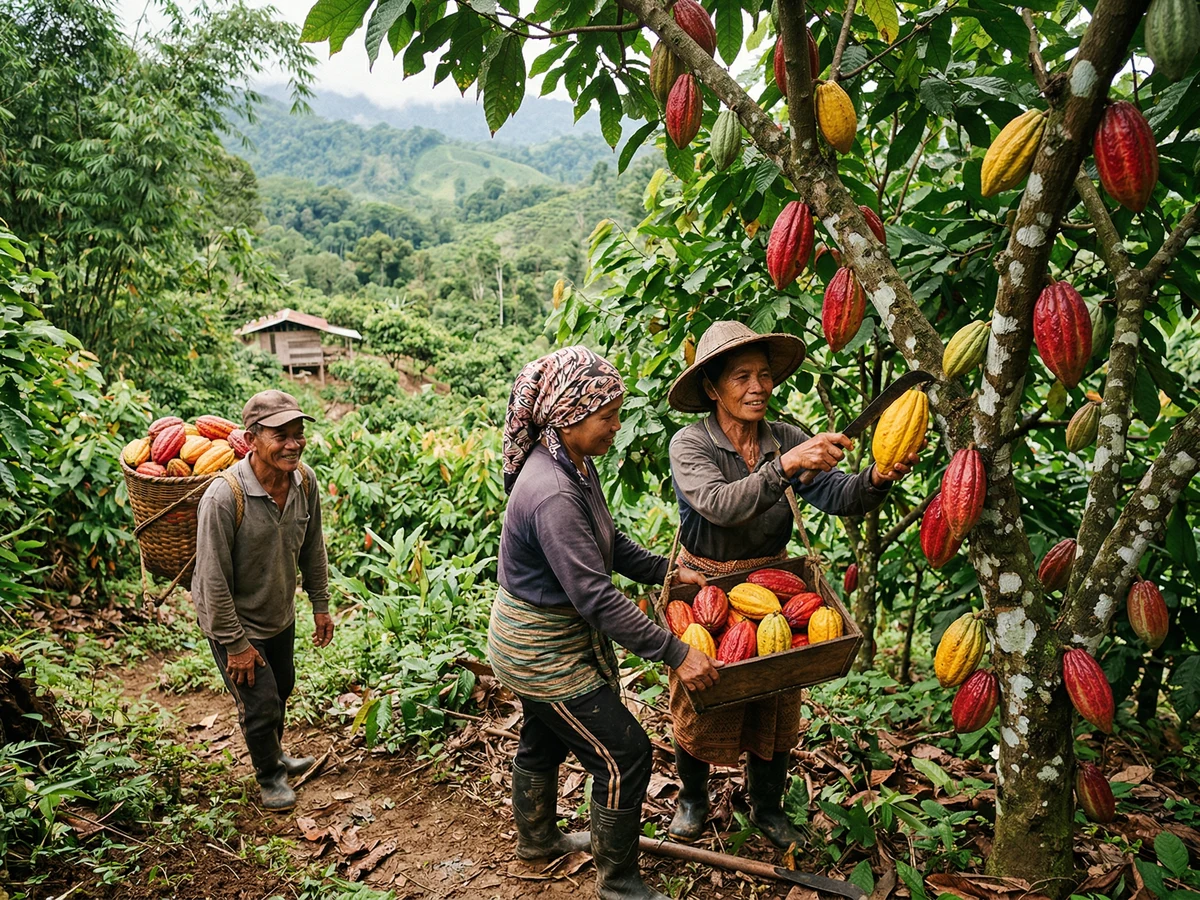
Cocoa (30,000 hectares) — Sabah produces approximately 40% of Malaysia’s cocoa output, making it the nation’s second-largest cocoa state after Peninsular Malaysia. Production has declined significantly from 40,000 tonnes in 2015 to 22,000 tonnes in 2024, due to ageing trees, labour costs, and land conversion to palm oil. Replanting efforts and specialty cocoa initiatives are underway but face profitability challenges.
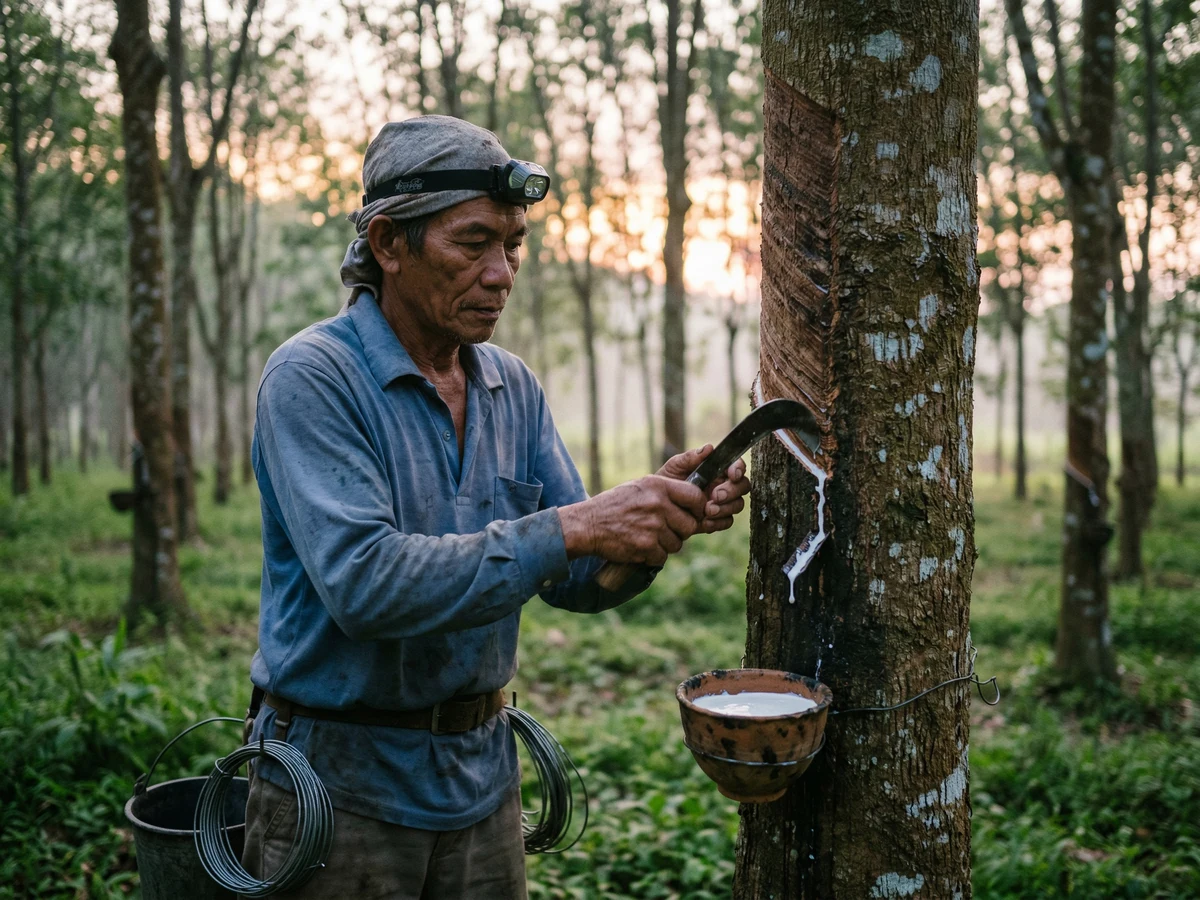
Rubber (80,000 hectares) — Sabah once had a thriving rubber sector. Current area of 80,000 hectares represents a decline from 120,000 hectares in the early 2000s. Global rubber price collapse (from RM6–7/kg to RM2–3/kg) and land conversion have rendered most smallholder rubber farming economically unviable. Niche recovery via sustainable/fairtrade rubber certification is possible but limited in scale.
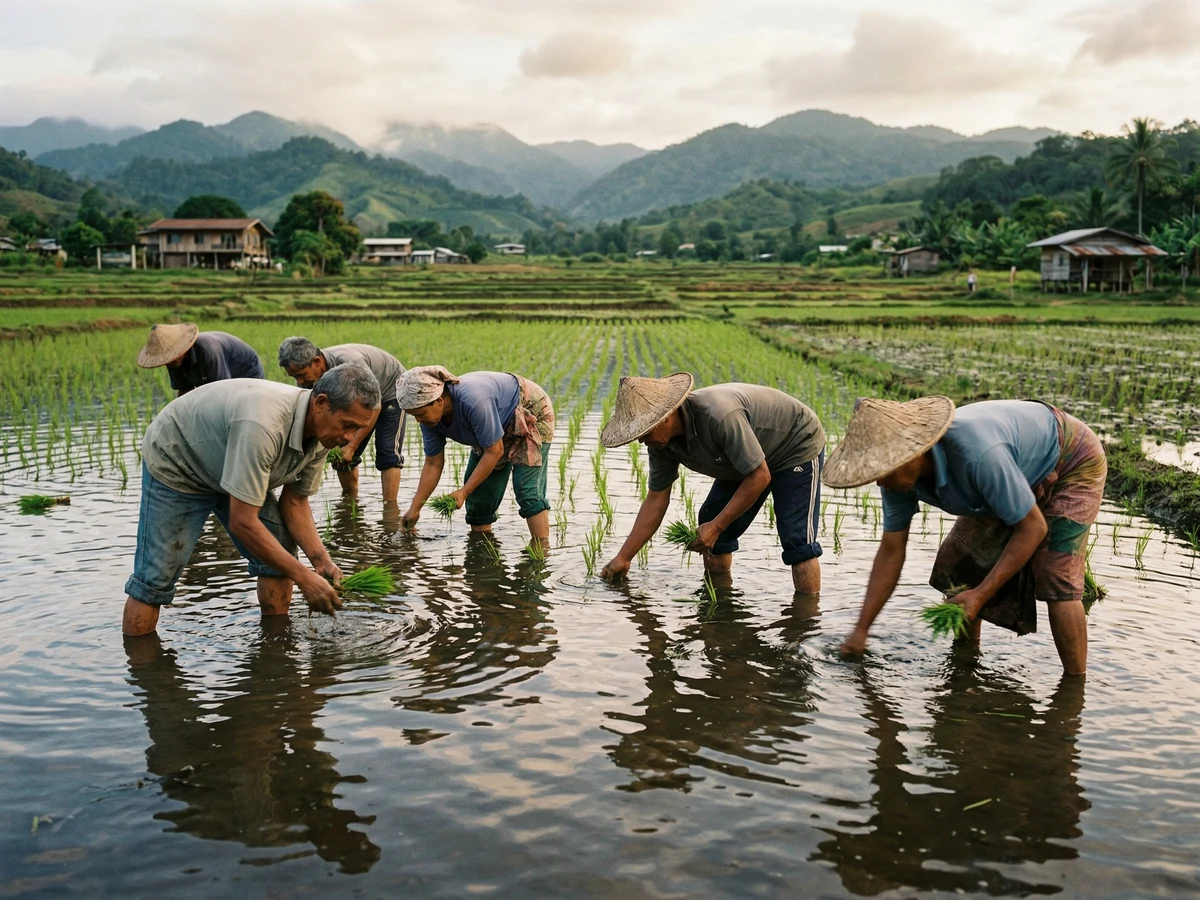
Paddy/Rice (48,000 hectares) — Sabah produces only ~100,000–120,000 tonnes annually, meeting just 30% of state rice consumption. Paddy farming is in long-term decline due to low margins, labour costs, and competing land use. Rice imports from Peninsular Malaysia and Thailand dominate supply. State target: increase paddy area and production to achieve 50% self-sufficiency by 2030.
Timber (controlled logging) — Sabah timber production (~3.2 billion RM value) comes from licensed logging concessions and managed forests. Timber moratorium (logging suspension) periods have reduced harvest volumes and revenue. Sustainable forest management and selective logging are increasingly enforced. Timber sector also includes pulpwood and furniture production.
Fruits & Vegetables (950M RM) — Vegetables, tropical fruits (pineapple, banana, papaya), and citrus are grown throughout Sabah. Production primarily supplies domestic market; some export to Singapore and Peninsular Malaysia. Organic vegetable farming is emerging as a niche, particularly near KK and Kundasang. Vegetable production has grown 8–12% annually over the past 5 years.
Sabah cocoa production has declined steadily due to ageing trees, land conversion to palm oil, and labour cost pressures.
Source: Source under verification (August 2026)
The Paddy Crisis & Food Security
Sabah’s low rice self-sufficiency (30%) is a persistent policy concern. Paddy production has stagnated or declined despite government replanting support. Root causes:
- Economics: Paddy farming yields RM400–600 per tonne; palm oil yields RM3,000–4,000 per hectare. Rational farmers choose palm oil.
- Land competition: High-value land needed for palm oil, urban expansion, and conservation prevents paddy expansion.
- Labour shortage: Younger generations leave rural areas for service sector jobs in KK and Peninsular Malaysia.
- Climate risk: Paddy is vulnerable to monsoon variability; off-season irrigation is costly and underdeveloped.
- Mechanisation gap: Large-scale paddy mechanisation is capital-intensive; smallholder equipment ownership low.
State initiatives to boost paddy self-sufficiency:
- Paddy replanting subsidies (RM800–1,200 per hectare)
- Input subsidy schemes (fertiliser, seeds, machinery rental)
- Irrigation infrastructure in Kota Belud, Beaufort, and Kunak regions
- Rice farmer cooperative support (aggregation, marketing, input pooling)
- Land allocation policy prioritising paddy areas in key zones
Target: 50% self-sufficiency by 2030. This requires significant investment and policy commitment. Without progress, Sabah remains vulnerable to global rice price shocks and regional supply disruptions.
Paddy area and production show modest decline; self-sufficiency remains at ~30% of Sabah consumption.
Source: Source under verification (August 2026)
Emerging Opportunities: Organic, Premium, & Agro-Tourism
While commodity agriculture faces structural pressures, three emerging segments offer growth potential:
1. Organic & Specialty Products — Organic certification (ECOCERT, OCIA) allows 20–40% price premiums in European and Japanese markets. Organic cocoa, organic coffee, and organic vegetables are expanding. Initial certification costs (RM2,000–3,000) and 3-year transition periods limit smallholder adoption, but government subsidies and cooperative structures are improving access.
2. Value-Added Processing — Government policy encourages downstream processing rather than raw commodity export. Examples: cocoa butter production (RM8–10/kg vs RM3–4 for beans), palm oil refining, coffee roasting. Processing creates higher-margin products and local employment. SEDIA offers tax incentives for food manufacturing in designated zones.
3. Agro-Tourism — Sabah’s 4+ million annual tourists create demand for farm experiences. Cocoa farm tours (Tenom), strawberry picking (Kundasang), farm stays, and farm-to-table restaurants command RM50–150 per person. Estimated potential: RM200–300M annual revenue by 2030. Barriers include capital costs (RM500K–1M per farmstay) and limited hospitality training, but government promotion is increasing.
Q Can Sabah's cocoa industry be revived?
Q Why is Sabah only 30% self-sufficient in paddy?
Q What caused the rubber industry decline?
Q Does Sabah face food security risks?
Q Is organic farming growing in Sabah?
Q What is the potential for agro-tourism in Sabah?
Sources & References 7 sources
Last verified: 11 April 2026
Government — Agriculture
- Department of Agriculture Sabah (DoA) State agriculture production data, crop reports, and farm schemes
- Malaysian Palm Oil Board (MPOB) Palm oil statistics, planted area, and production data by state
- Malaysian Cocoa Board (Lembaga Koko Malaysia) Cocoa production trends, replanting programmes, and market data
- DOSM Agriculture Census 2024 Comprehensive agricultural land use, crop area, and production statistics
Industry & Research
- Borneo Post — Agriculture Reports Local news on farming, commodity prices, and agricultural policy
- Universiti Malaysia Sabah (UMS) — Agriculture Research Agricultural research, crop trials, and sustainability initiatives
- FAO — Malaysia Country Report Global FAO data on Malaysian agriculture, food security, and commodity trends