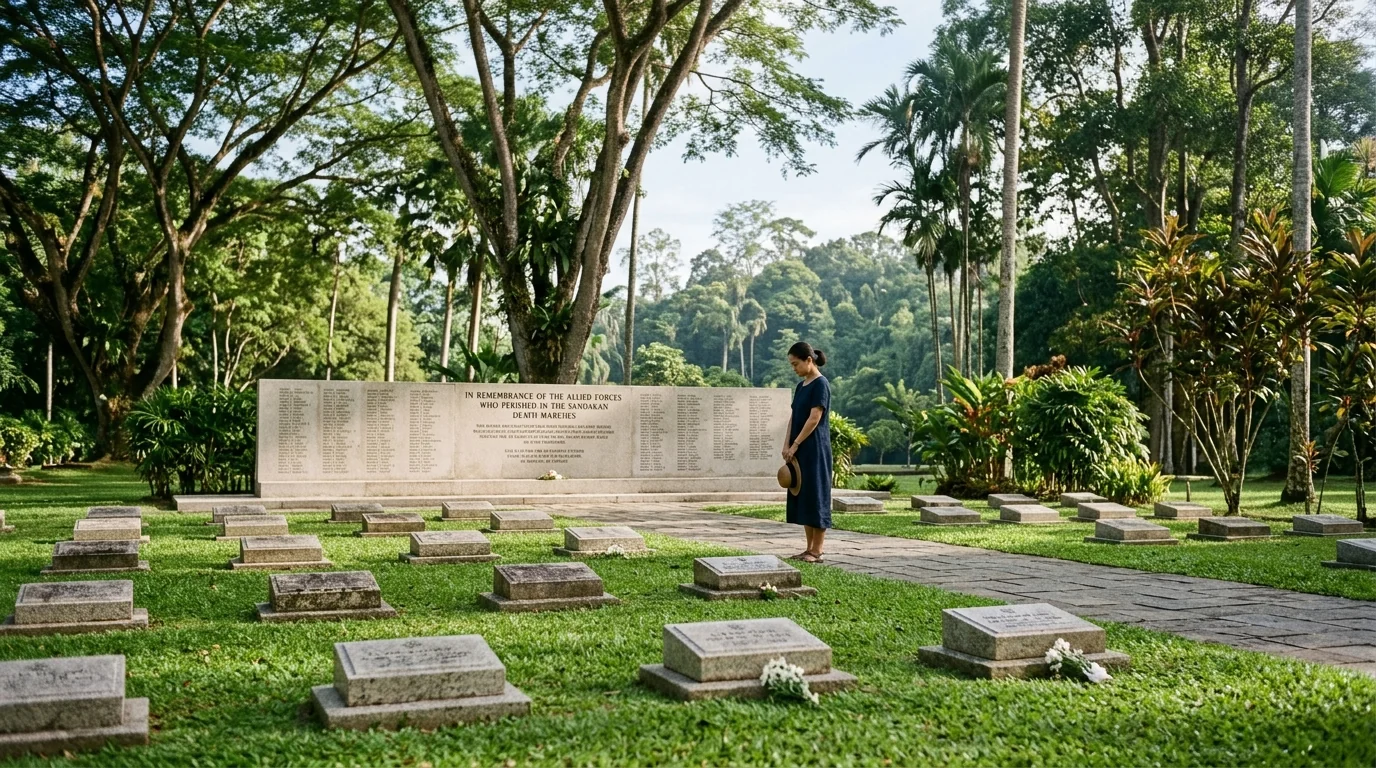
Sandakan Memorial Park — WWII POW Camp Memorial in Sabah
What is Sandakan Memorial Park?
Sandakan Memorial Park is one of Australia's most significant World War II memorial sites outside Australian soil. Located at Mile 8 (approximately 13km north of Sandakan town centre), it stands on the exact site of the original Sandakan POW Camp, where approximately 2,700 Australian and British prisoners of war were held from 1942 to 1945 under Japanese occupation.
The memorial was formally established in 1962 to honour the memory of Allied soldiers who perished in captivity and during the subsequent Sandakan Death Marches of 1945. Today, it is recognized as a National Heritage Site under the management of the Sabah Museum and serves as a place of remembrance, education, and solemn reflection for visitors from around the world.
Entry to the park is completely free, making it accessible to all who wish to pay respects and learn this crucial chapter of Sabah's history. The park remains open daily from 9:00am to 5:00pm, with extended visiting hours during major commemoration dates.
What happened at the Sandakan POW camp?
The Sandakan POW Camp, known as "E Force Camp," was established by the Japanese Imperial Army in 1942 following their occupation of North Borneo. The camp was constructed to house Allied prisoners captured during the fall of Singapore and subsequent military operations in Southeast Asia.
At its peak, the camp held approximately 2,700 Australian and British prisoners of war. Conditions were brutal. Prisoners were subjected to forced labour, disease, malnutrition, and harsh treatment. A primary objective of the camp was to use prisoner labour to construct a military airstrip for Japanese operational use—an airstrip that has since disappeared from the landscape.
From 1942 to 1944, approximately 1,800 prisoners perished in the camp from disease, malnutrition, beatings, and executions. By early 1945, the Japanese recognized that the war was turning against them and ordered a series of evacuation marches beginning in January, May, and June 1945. These became known as the Sandakan Death Marches.
The marches were designed to move the remaining prisoners inland toward Ranau, approximately 240km away on foot through dense Borneo jungle. Prisoners were forced to walk without adequate food, medical care, or supplies. Of approximately 2,700 prisoners who had been held at Sandakan, only six Australians survived the marches and the war. All six were escapees who separated from the main columns during the journey.
This dark chapter represents one of the largest losses of Australian and British soldiers in the Pacific Theatre, and remains deeply significant in both Australian and British military history.
What can you see at the memorial park today?
Sandakan Memorial Park preserves the legacy of the camp through several key features:
- Memorial Obelisk: A striking central monument that serves as the focal point of the park. The obelisk is inscribed with dedication and remembrance text.
- Concrete Foundations and Camp Remnants: Original concrete foundations and scattered remnants of the POW camp buildings are visible, offering tangible evidence of the camp's physical layout and scale.
- Interpretation Centre/Museum: A dedicated museum space housing photographs, documents, personal artefacts, diaries, letters from prisoners, and detailed historical exhibits explaining the camp's history and the experiences of those imprisoned there.
- Wall of Names: A solemn memorial listing the names of all prisoners who perished at Sandakan or during the subsequent Death Marches. This personal acknowledgement ensures each individual is remembered by name.
- Gardens and Walking Paths: Carefully maintained memorial gardens with walking pathways allow visitors to explore the grounds, find quiet spots for reflection, and understand the geographic layout of the original camp.
The park is meticulously maintained and peaceful. Many visitors describe it as a deeply moving and educational experience. Photography is permitted throughout the park.
When are the annual memorial ceremonies?
Sandakan Memorial Park hosts two significant annual ceremonies that draw international attendees:
| Date | Ceremony Name | Significance | Typical Attendance |
|---|---|---|---|
| 25 April | Anzac Day | Honours Australian and British soldiers who served and died in WWII. Recognised across Australia as the national day of remembrance for military service. | Australian and British veterans' families, government representatives, dignitaries, and local community members |
| 15 August | Sandakan Day | Commemorates the liberation of Sandakan and the end of Japanese occupation. Honours the local Sabahan community who suffered under occupation and those who assisted Allied prisoners. | Local Sabahan participants, school groups, government officials, and international visitors |
Both ceremonies typically include formal services, wreath-laying, prayers, and personal tributes. Veterans' families often travel from Australia and the UK to participate. If you plan to visit during these dates, be aware that the park may be crowded, and special arrangements may be in place. Contact the Sabah Museum in advance for specific ceremony times and program details.
How do I get to Sandakan Memorial Park?
From Sandakan Town Centre: The memorial park is located at Mile 8, Jalan Utara (North Road), approximately 13km from central Sandakan. There is no regular public bus service to the park.
By Taxi or Grab: The easiest option for independent travellers is to take a taxi or use Grab (the regional ride-hailing app). Expect to pay approximately RM25–35 one way from Sandakan town centre. The journey takes 20–25 minutes depending on traffic. Ask the driver to take you to "Sandakan Memorial Park" or "Taman Peringatan Sandakan."
By Rental Car: If you have a rental vehicle, the park is clearly signposted along Jalan Utara. Parking is available on site.
Combination Visits: Many visitors combine a trip to Sandakan Memorial Park with the Sepilok Orang Utan Rehabilitation Centre, which is approximately 20 minutes further along the same road. A logical itinerary would be: memorial park in the morning (cooler, better light), lunch in town, then Sepilok in the afternoon.
Best Time to Visit: Morning hours (9:00am–11:00am) are ideal. The weather is cooler, the light is better for photography, and the park is less crowded. Additionally, morning visits allow you to proceed to other attractions in the afternoon.
What other WWII sites are near Sandakan?
Sandakan and the surrounding region contain several other significant WWII heritage sites and stories:
Sepilok Orang Utan Rehabilitation Centre (20 minutes further): While primarily a wildlife sanctuary, the area around Sepilok holds historical significance. The nearby Sandakan airstrip (rebuilt post-war) was constructed by the prisoners at the POW camp.
Kundasang War Memorial (approximately 3 hours by road): Located in the highlands near Mount Kinabalu, this memorial honours the conclusion of the Sandakan Death Marches. The marches began at Sandakan and ended in Ranau, near Kundasang. A visit to both memorials provides a complete picture of this historical tragedy.
Agnes Keith House (Central Sandakan): This colonial-era heritage house was the home of American writer Agnes Newton Keith during the Japanese occupation. The house has been preserved as a museum and offers insights into civilian life during wartime in Sandakan.
Sandakan Heritage Trail: The broader Sandakan area contains numerous heritage plaques and historical markers documenting pre-war colonial history, the Japanese occupation, and post-war reconstruction.
The geographic connection between Sandakan Memorial Park and Kundasang War Memorial is historically significant: Sandakan marks the starting point of the Death Marches, while Kundasang marks the destination region where the survivors were eventually liberated. Together, these two memorials tell the complete story of this profound chapter in Sabah's wartime history.
Frequently asked questions
Q Is entry to Sandakan Memorial Park really free?
Q How long should I spend at the memorial park?
Q Is the memorial park accessible for visitors with mobility limitations?
Q Can I visit Sandakan Memorial Park and Sepilok Orang Utan Centre in one day?
Q What is the significance of the annual ceremonies held here?
Resources and further reading
- Australian War Memorial — Sandakan POW Camp — Comprehensive historical documentation and personal accounts
- Sabah Museum Official Website — Information on the memorial park and visiting details
- Sabah Tourism Board — Tourist information and visitor guides
- Wikipedia: Sandakan Death Marches — Detailed historical overview and context