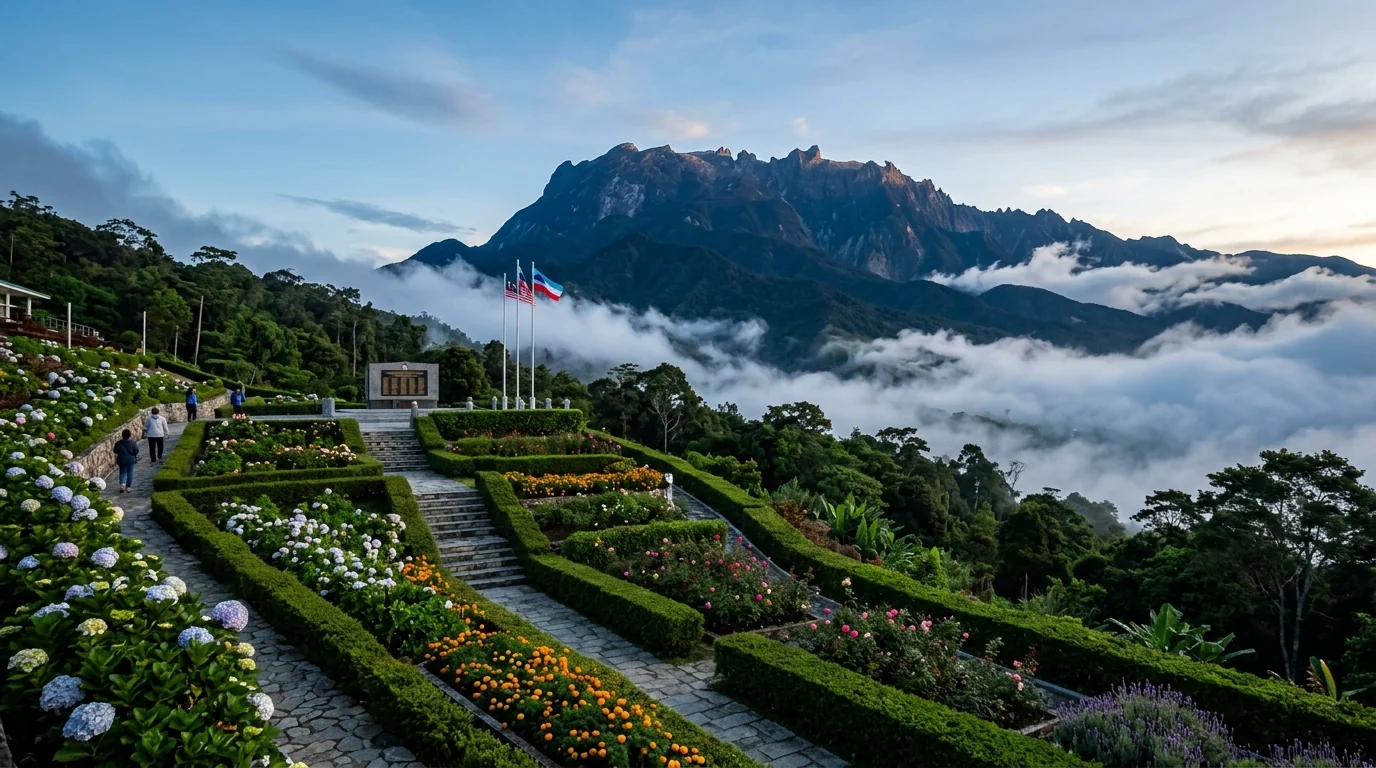
Kundasang War Memorial — Sabah's Tribute to WWII Fallen Soldiers
What is the Kundasang War Memorial?
The Kundasang War Memorial is a poignant tribute to Allied soldiers who died during the Sandakan Death Marches of 1945 and those who perished in the Sandakan POW camp during World War II. Located in Kundasang, a highland town approximately 92km east of Kota Kinabalu, the memorial occupies a hillside setting with breathtaking views of Mount Kinabalu, Sabah's most iconic landmark at 4,095m above sea level.
The memorial was conceived and developed by Major Gordon Senior "Toby" Carter DSO, a New Zealand war veteran and Shell Oil employee, who envisioned creating a lasting tribute to those who suffered. Carter visited the Kundasang area in 1962 and was profoundly moved to establish this memorial. The site was chosen because it marks the destination region of the Sandakan Death Marches—Ranau, located approximately 12km from Kundasang, was where the marches concluded and liberation ultimately occurred.
Today, the memorial stands as a National Heritage Site and a solemn place of remembrance. It is recognized internationally as one of the most significant WWII memorials in the Asia-Pacific region, attracting researchers, veterans' families, and visitors seeking to understand and honour this chapter of history. The memorial is open daily from 8:30am to 8:30pm, with modest entry fees supporting site maintenance: RM10 for foreign visitors, RM3 for Malaysian adults, and RM2 for students and children.
Why is the memorial located in Kundasang?
The geographic location of the Kundasang War Memorial is historically significant and deliberately chosen. It marks the destination of the Sandakan Death Marches—one of the most tragic forced marches in military history.
Beginning in January, May, and June 1945, approximately 2,700 Australian and British prisoners of war were forced to march from the Sandakan POW camp toward Ranau, approximately 240km away through dense Borneo jungle. The journey took weeks. Prisoners were forced to walk with minimal food, medical care, or supplies. Thousands died en route from disease, starvation, exhaustion, and Japanese brutality.
Kundasang and Ranau lie in the highlands at the projected endpoint of these marches. By placing the memorial here, the site honours not only those who died during the march but also the survivors who eventually reached this region and those natives of Sabah—the Dusun and other indigenous peoples—who risked their lives assisting the exhausted prisoners, providing shelter, food, and information about the marches.
The memorial thus serves a dual purpose: it honours the sacrifice of Allied soldiers and explicitly recognizes the courage and compassion of the local Sabahan community. This inclusive commemoration distinguishes Kundasang War Memorial from other war memorials and reflects the shared human experience and mutual respect among all who suffered during the occupation.
What are the four memorial gardens?
The Kundasang War Memorial is organized into four distinct memorial gardens, each honouring a different group affected by the Sandakan POW camp and Death Marches:
| Garden Name | Who It Honours | Key Features |
|---|---|---|
| Australian Garden | Australian soldiers who perished at Sandakan or during the Death Marches | Features Australian insignia, native Australian plant species, memorial plaques with Australian military symbols. Many visitors from Australia pay respects here annually. |
| English Garden | British soldiers and servicemen who died in the camp or during the marches | Reflects British design traditions, includes memorials to various British regiments and units, features plants and landscaping in Commonwealth style. Visited by British veterans' families and dignitaries. |
| Borneo Garden | Local Sabahan people who suffered under Japanese occupation and those who helped Allied prisoners | Celebrates indigenous Sabahan heritage, honours civilian casualties and resistance efforts, acknowledges the crucial role of local communities. This garden recognizes that the tragedy was not limited to prisoners but affected the entire population. |
| Contemplation Garden and Pool | All who suffered; a space for personal reflection and remembrance | A peaceful garden with a water feature designed for quiet meditation. Visitors from all backgrounds come here to sit, reflect, and remember those who died. The serene setting contrasts with the historical tragedy being commemorated. |
Each garden maintains distinct landscaping and character while remaining part of a unified memorial complex. Visitors often move through all four gardens during their visit, creating a comprehensive experience of remembrance that acknowledges the multinational and multi-community nature of the tragedy.
Who does the memorial honour?
Australian Soldiers: The memorial explicitly honours approximately 1,800 Australians who died in the Sandakan POW camp and during the subsequent Death Marches. Australia suffered the highest casualty rate of any Allied nation at Sandakan. The Australian War Memorial recognizes Sandakan as one of Australia's most significant WWII sites outside Australian soil.
British Servicemen: Approximately 900 British soldiers and Royal Air Force personnel also perished at Sandakan and during the marches. The memorial acknowledges British sacrifice and maintains a distinct English Garden specifically for British commemoration.
Local Sabahan Community: A crucial and often-overlooked aspect of the memorial is its honour to the indigenous Sabahan people—particularly the Dusun, Murut, and other indigenous groups—who suffered immensely under Japanese occupation. Many Sabahans died in forced labour camps, were conscripted for military labour, or perished from disease and starvation. Additionally, local people risked their lives assisting exhausted Allied prisoners during and after the Death Marches, providing food, water, shelter, and information. Some assisted prisoners to escape. The Borneo Garden explicitly recognizes this contribution and sacrifice.
Six Australian Survivors: Only six Australian soldiers survived the Sandakan Death Marches and the war. All six were escapees who separated from the main columns during the march and eventually received assistance from local Sabahans. Their survival stands as testimony to both human resilience and the compassion of local communities who risked severe punishment to assist them.
How do I get to Kundasang War Memorial from KK?
Distance and Driving Time: Kundasang is approximately 92km from Kota Kinabalu. By road, the journey takes approximately 1.5 to 2 hours, depending on traffic and driving conditions. This is a scenic mountain drive that ascends significantly from coastal KK to the highlands.
Route: From Kota Kinabalu, drive south and then inland toward Tambunan. Follow signs toward Ranau. The road passes through Tambunan (a highland agricultural area) and continues toward Ranau. Kundasang lies on this route. The Tambunan–Ranau highway is one of Malaysia's most scenic mountain roads, with dramatic views of Mount Kinabalu as you approach.
By Rental Car: This is the most flexible option. Rent a vehicle in KK and drive independently. The route is well-signposted. Parking is available at the memorial site.
By Bus: Public buses operate between Kota Kinabalu and Ranau, passing through Kundasang. The journey takes 2–2.5 hours. Alight at Kundasang (inform the driver you want to stop at the War Memorial). From the bus stop, the memorial is a short walk or local taxi ride.
By Organised Tour: Many KK-based tour operators offer day trips to Kundasang War Memorial, often combined with visits to Mount Kinabalu National Park or strawberry farms. This eliminates driving concerns and typically includes guide commentary on the historical significance.
Elevation and Climate: Kundasang sits at approximately 1,500m above sea level, significantly higher than coastal Kota Kinabalu. Expect cooler temperatures (roughly 18–25°C compared to KK's 24–33°C, though no official weather station publishes normals for the highlands). Bring a light jacket, especially for morning visits.
What else can I do in Kundasang?
Kundasang is a small highland town with several attractions and activities worth combining with a war memorial visit:
Mount Kinabalu National Park (20 minutes away): Malaysia's highest mountain and a UNESCO World Heritage Site. The park headquarters offers visitor facilities, nature walks, and the opportunity to see subtropical flora. Many visitors spend half a day or full day hiking within the park. Climbers can attempt the summit (2–3 day ascent requiring guides and permits).
Kinabalu Park Headquarters: Located near Kundasang, the visitor centre provides information on the mountain's geology, ecology, and climbing routes. Educational exhibits and restaurants are available.
Strawberry Farms: Kundasang is famous for strawberry cultivation due to its cool climate. Several farms operate farm stands and "pick your own" experiences. This is a pleasant casual activity and an opportunity to taste fresh local produce.
Mountain Scenery and Photography: The highland location offers spectacular photographic opportunities, particularly of Mount Kinabalu. Morning light and clear visibility make sunrise and early morning visits particularly rewarding.
Vegetable Wholesale Markets: The memorial is located immediately behind the Kundasang vegetable wholesale stalls—a local agricultural hub. This reflects the agricultural character of the highland region.
Sample Itinerary: A typical Kundasang day visit from Kota Kinabalu might include: early morning drive (1.5–2 hours), visit Kundasang War Memorial (1 hour), lunch at a local restaurant or farm cafe, visit Mount Kinabalu National Park or strawberry farm (2–3 hours), return drive to KK (1.5–2 hours). This creates a full but manageable day excursion.