Sandakan Death Marches: The Worst WWII Atrocity in Borneo
What were the Sandakan Death Marches?
The Sandakan Death Marches were three forced military evacuations of Allied prisoners of war from Sandakan POW Camp in North Borneo (now Sabah) during January, May, and June 1945. Nearly 2,700 Australian and British prisoners began the ordeal; only 6 survived. The marches represent one of the Pacific War's most catastrophic military disasters and stand as a stark testament to the brutality of Japanese occupation in Southeast Asia.
Over the course of nine months, the Japanese systematically moved prisoners 260 kilometers overland from Sandakan to Ranau through unforgiving jungle and mountainous terrain. The prisoners were given rations for only 4 days of travel for a journey that would take over 9 days — a deliberate decision that guaranteed mass starvation. Those who fell behind were executed by beheading, bayoneting, or gunshot. Of the 2,700 men who left Sandakan, fewer than 100 reached Ranau alive, and of those, only 6 ultimately survived to tell the story.
The 88% mortality rate makes Sandakan one of the deadliest POW camps in the entire Pacific Theater of World War II. The tragedy is recognized as a watershed moment in Australian military history and has become central to how both Australia and Sabah remember the human cost of war.
How did Allied prisoners end up in Sandakan?
The story of Sandakan's prisoners begins with the rapid collapse of British defenses in Southeast Asia after the Fall of Singapore on February 15, 1942. Following the Japanese invasion, thousands of Australian and British servicemen were captured and processed as prisoners of war across the occupied territories.
Over the following months, roughly 2,700 prisoners were transported to a remote camp near Sandakan in North Borneo. The camp, designated "E Force" by the Allies, was established to serve a strategic purpose: the Japanese needed the prisoners to construct a military airstrip under conditions of extreme hardship. The location was deliberately isolated — hundreds of kilometers from any Allied position and surrounded by inhospitable terrain that made escape nearly impossible.
Most prisoners arrived as individuals or in small groups from 1942 to early 1943. They came from various units of the Australian and British armies and included soldiers from the 2/4th Australian Machine Gun Battalion, the 2/10th Australian Field Company, and numerous other regiments. Many had already endured months in transit camps and prison ships before reaching Sandakan. By early 1945, the camp held one of the largest concentrations of Allied POWs in the entire Pacific region.
What conditions did prisoners face at the camp?
Sandakan POW Camp was a hellscape. Under the command of Captain Hoshijima Susumi, the camp operated under principles designed to extract maximum labor while minimizing prisoner welfare. The stated Japanese policy was that POWs who could not work were expendable.
Prisoners worked 12-hour days constructing the military airstrip, toiling in tropical heat with no protective equipment. Food rations were catastrophically inadequate — a daily diet consisting of small amounts of rice, sometimes supplemented with rotten vegetables or diseased meat that caused dysentery and other intestinal diseases. The caloric intake was often below 1,000 calories per day, insufficient for men performing heavy manual labor.
Sanitation was nonexistent. The camp had no proper medical facilities, no clean water, and no disease prevention measures. Malaria, dengue fever, dysentery, beriberi, and tropical ulcers were endemic. Men with infected wounds were left to rot. The Japanese provided minimal medical supplies and no effective treatment.
Discipline was enforced through systematic violence. Guards beat prisoners routinely, sometimes to death, for minor infractions. Execution by beheading was not uncommon for those suspected of sabotage or escape attempts. The psychological toll matched the physical: men lived in constant terror, knowing that starvation, disease, or violence could end their lives at any moment. By late 1944, disease and malnutrition had weakened the prisoner population to a breaking point.
What happened during the three death marches?
As Allied forces advanced toward Borneo in early 1945, the Japanese high command made a fateful decision: rather than surrender the prisoners or allow them to be liberated, the camp would be evacuated and the prisoners moved inland to Ranau, a location even more remote and isolated. What followed were three successive forced marches that devastated the prisoner population.
| Death March | Date | Prisoners Departed | Route | Survivors Reached Ranau |
|---|---|---|---|---|
| First | January 1945 | ~1,800 | 260 km jungle and mountains | ~40 |
| Second | May 1945 | ~600 | Same route, worse conditions | ~30 |
| Third | June 1945 | ~300 | Shortest march, fastest deaths | ~20 |
The First March (January 1945) was the largest and most brutal. Approximately 1,800 prisoners set out from Sandakan toward Ranau, carrying minimal supplies. The prisoners received a four-day ration of rice for a journey that would take more than nine days. Within days, men began collapsing from starvation and disease. Those unable to walk were executed summarily by guards using bayonets, swords, or gunshots. The bodies were left where they fell. Of the 1,800 who departed, fewer than 40 reached Ranau alive, and most of those died within weeks from dysentery and malaria.
The Second March (May 1945) saw approximately 600 prisoners forced to undertake the same route. These men were already severely weakened from months of malnutrition in the camp. The march took longer, stretching over two weeks as the men moved even more slowly through the jungle. Mortality was catastrophic — perhaps 30 prisoners arrived in Ranau, most in a state of complete physical collapse.
The Third March (June 1945) involved the remaining 300 prisoners considered fit enough to move. By this point, the prisoners were so weak that the journey became a death march in the truest sense — many collapsed within days and were left to die in the jungle. Only about 20 reached Ranau alive.
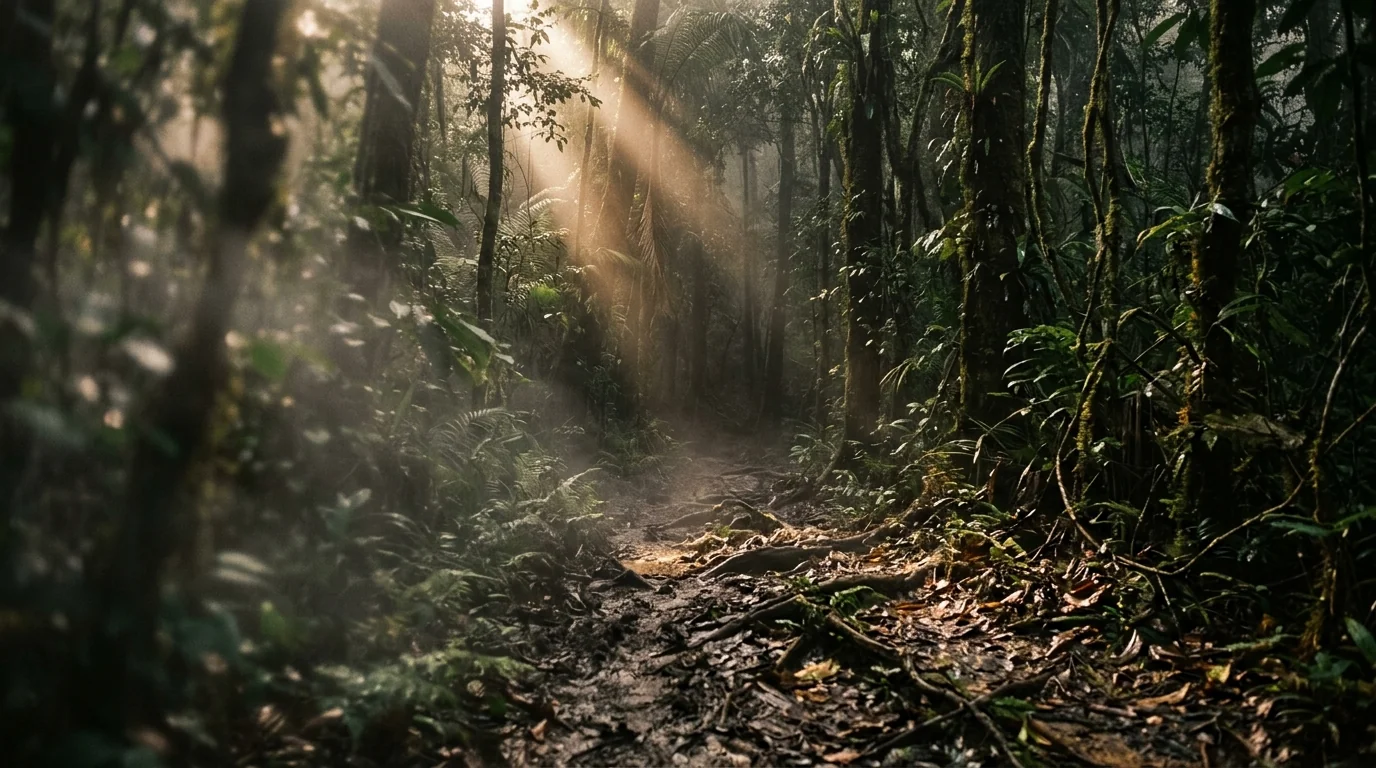
Throughout all three marches, the pattern was identical: insufficient food, no medical care, deliberate brutality by guards, and systematic execution of the dying. The route took prisoners through some of Borneo's harshest terrain — dense jungle, mountain passes, swollen rivers, and areas inhabited by wildlife. Many prisoners died not from violence but from simple starvation and disease, their bodies abandoned in the forest.
Who were the six survivors?
The fact that only 6 men survived the Sandakan ordeal makes each survivor's story extraordinary. All six survivors were Australian soldiers who managed to escape during the death marches, making their way through the jungle and eventually finding refuge with local indigenous communities or sympathetic traders.
The survivors included men like Private Keith Botterill, who escaped from the first march and spent months hiding in the jungle before being sheltered by local Dusun people. Others, like Private Owen Cullen, made their escape during the later marches and relied on the assistance of local communities who, at great personal risk, provided food and shelter to fugitive prisoners.
The six survivors were among the very few prisoners who had the physical strength to escape and the good fortune to encounter local people willing to help them. Many other prisoners simply lacked the energy or opportunity to flee, and those who attempted escape often were recaptured and executed. The survivors' accounts, given after the war, provided crucial testimony about conditions at the camp and during the marches, and their evidence was instrumental in securing war crimes convictions against Japanese officers.
The names and stories of these six men are preserved in Australian military records and at the Sandakan Memorial Park. Their survival against impossible odds has made them living symbols of resilience, and their testimonies remain essential historical documents about one of World War II's darkest chapters.
How is the Sandakan tragedy remembered today?
The Sandakan tragedy is remembered with deep respect across Australia and increasingly in Sabah. Sandakan Memorial Park, located at Mile 8 approximately 13 kilometers from Sandakan town, sits at the site of the original POW camp. The park features a memorial dedicated to the 2,700 prisoners and the 6 survivors. The grounds are carefully maintained and include plaques and inscriptions honoring the dead.
Two significant dates mark annual commemorations. Anzac Day (April 25) is observed worldwide by the Australian and New Zealand military communities, and Sandakan holds special services at the memorial park. Sandakan Day (August 15) is a more recent observance specifically dedicated to remembering the death marches and the prisoners who perished.
In recent years, efforts have been made to restore sections of the actual death march route as a heritage trail. Walking portions of the original path helps visitors understand the terrain and hardships prisoners endured. These trail projects involve both Australian historians and Sabah-based communities, reflecting a shared commitment to preserving this history.
Captain Hoshijima Susumi, the camp commandant, faced justice after the war. He was tried for war crimes, found guilty, and executed by hanging on April 6, 1946. His conviction affirmed that extreme brutality toward prisoners would be prosecuted under international law.
The story of Sandakan is taught in Australian schools and increasingly in Sabah's educational institutions. It stands as a cautionary tale about the costs of war and the consequences of dehumanization. For many Australians, the Sandakan Death Marches represent Australia's single greatest military tragedy on foreign soil — more widely known and more symbolically significant than most other Pacific War events.
Frequently asked questions
Q How many prisoners were at Sandakan POW Camp?
Q Why did the Japanese force the prisoners to march to Ranau?
Q What was Captain Hoshijima Susumi's fate after the war?
Q Can I visit the Sandakan Death March memorial sites today?
Q Who was Agnes Keith and what was her connection to Sandakan?
Resources and further reading
- Australian War Memorial — Sandakan — Comprehensive official documentation of the camp and death marches
- Sandakan Death Marches — Official dedicated website with survivor accounts and historical research
- Wikipedia: Sandakan Death Marches — Overview and references
- Sabah Museum — Local historical resources and artifacts related to WWII in Sabah