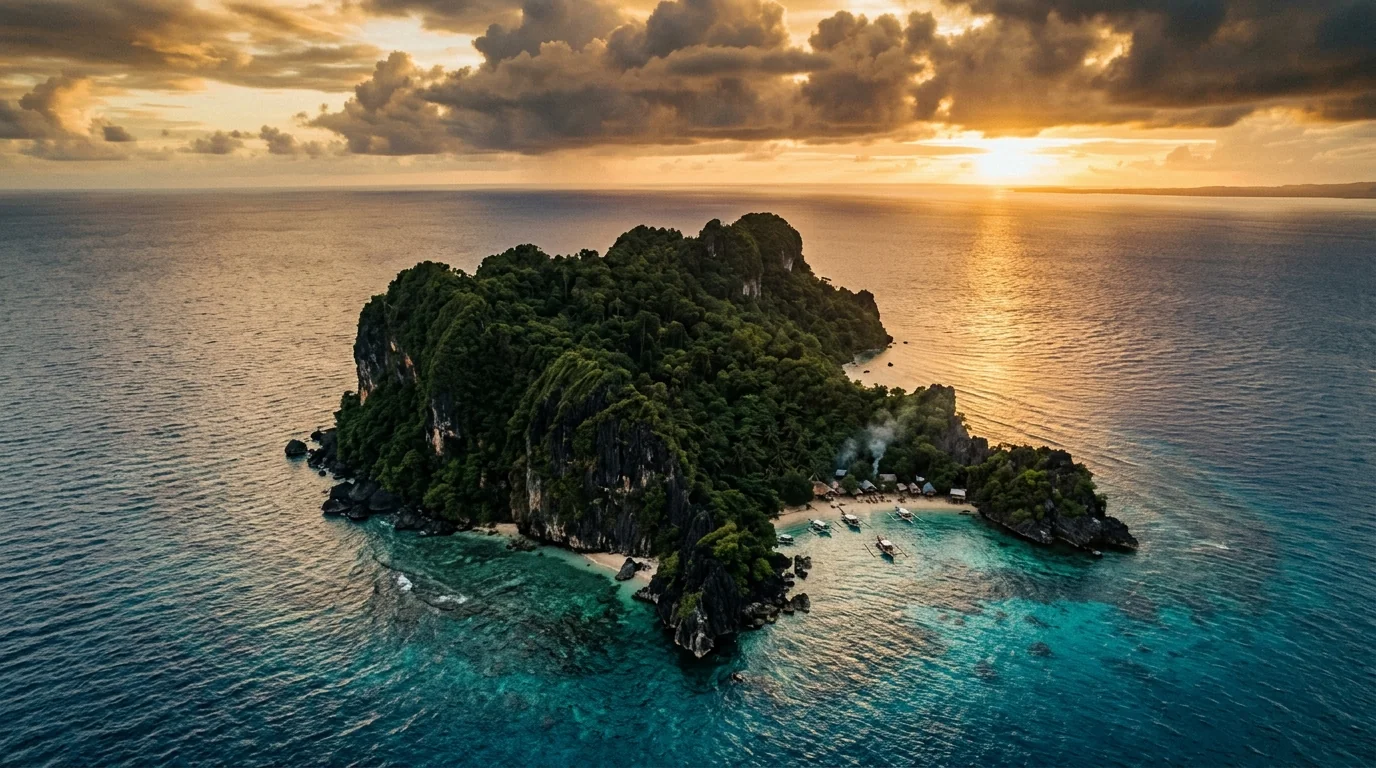
Berhala Island — WWII Internment Camp and Sandakan's Historical Island
What is Berhala Island?
Berhala Island (Pulau Berhala) is a small island located approximately 8 kilometers off the coast of Sandakan in Sandakan Bay. Despite its modest size and simple appearance, Berhala Island holds profound historical significance for Sabah and Malaysia, representing one of the most poignant chapters of World War II history in the region.
Before World War II, Berhala Island served an entirely different purpose under British colonial administration. The island was designated as a quarantine and leper colony — a common colonial practice of isolating disease and contagious conditions far from populated centers. This use reflected both the medical knowledge and social attitudes of the pre-war era.
Today, Berhala Island is a gazetted protected marine park, part of the larger Sandakan Bay marine protected area. The island's pristine beaches, coral reefs, and clear tropical waters make it an ecologically valuable site. Yet beneath the natural beauty lies the weight of history — the internment camp that once held hundreds of Allied civilians during the Japanese occupation of British North Borneo.
What was Berhala Island used for during World War II?
When Japanese forces invaded British North Borneo in January 1942, the occupation authorities faced the problem of managing non-combatant Allied nationals — primarily British civilians, Eurasians, and other foreign residents. Berhala Island was selected as a civilian internment camp, a facility separate from the military prisoner-of-war camps that held captured Allied soldiers.
The island's previous use as a quarantine facility made it suitable for isolation, and its small size made it relatively easy to guard and control. Japanese military authorities moved hundreds of civilian internees to Berhala Island, where they would remain for varying lengths of time throughout the occupation.
The camp operated under harsh conditions, with internees subjected to the same deprivations that characterized Japanese military occupation across Southeast Asia. Food was scarce, medical care was minimal, sanitation was poor, and the tropical climate presented constant health challenges. Berhala Island became a place of hardship and survival for those held there.
The internment camp represented a different form of WWII experience from the infamous Sandakan POW camp, where Australian military prisoners were subjected to brutal forced labor and systematic murder. Yet Berhala Island's internees — many of them women and children — faced their own ordeal of confinement, malnourishment, and disease in an isolated tropical setting.
Who was interned on Berhala Island?
The internees on Berhala Island were primarily British civilians and their families — women, children, and men deemed non-essential to the war effort. Among them was Agnes Newton Keith, a British-American author who had lived in Sabah before the war and written about her experiences in "Land Below the Wind." Agnes was imprisoned on Berhala Island along with her young son George, while her husband Harry was captured and held in a separate military POW camp.
The internee population also included Eurasians — people of mixed European and Asian descent — as well as other foreign nationals from Allied countries or territories under Allied control. These internees represented the diverse community that had inhabited British North Borneo before the occupation.
Many internees had lived in Sabah for years or decades, building lives, businesses, and families in the pre-war period. They were not foreign soldiers or spies, but ordinary civilians caught in the catastrophe of war. Some were elderly, some were infants. Families were separated — husbands and fathers confined in military camps while wives and children endured the internment on Berhala Island.
The social composition of the internee population reflected the colonial structure of pre-war Sabah: British administrators and professionals, merchants, planters, missionaries, their spouses and children. Many had deep roots in the territory and considered Sabah their home.
What were conditions like at the internment camp?
Conditions on Berhala Island were grim. The camp was severely overcrowded, with hundreds of internees housed in inadequate structures on a small island with limited resources. The tropical heat was relentless, exacerbated by poor ventilation and sanitation facilities.
Food was the most immediate and constant problem. The Japanese military provided minimal rations — primarily rice supplemented by whatever could be grown on the island or obtained through limited trade with local populations. Malnutrition was endemic, particularly among children and the elderly. Internees supplemented their diet through vegetable gardening and occasional barter, but hunger was a constant companion.
Disease flourished in the overcrowded, unsanitary conditions. Tropical illnesses — dysentery, malaria, dengue fever — spread rapidly through the camp. Medical facilities were virtually non-existent. Agnes Keith's account describes the death of fellow internees from preventable diseases and the helplessness of those who could not obtain basic medicine or treatment.
Water quality was poor, and the island's limited fresh water supply was a perpetual problem. Sanitation was primitive, with sewage disposal inadequate for the camp's population. The combination of malnutrition, disease, poor sanitation, and stress took a severe toll on internees' health and mortality rates.
Psychological pressure was equally significant. Internees lived in uncertainty about the war's course, the fate of separated family members, and the possibility of rescue. Many feared the fate of Allied prisoners in other Japanese camps, where conditions were known to be even more horrific. The psychological burden of confinement and isolation, combined with physical hardship, left deep scars on survivors.
| Aspect | Berhala Island (Civilian Camp) | Sandakan POW Camp (Military) |
|---|---|---|
| Location | Berhala Island, Sandakan Bay | Mile 8, approximately 13km from Sandakan |
| Detainee Population | British and Allied civilians, including women and children | Australian and British military prisoners of war (POWs) |
| Conditions | Poor: malnutrition, disease, overcrowding; less systematically brutal | Extreme: forced labor, systematic starvation, executions, death marches |
| Primary Cause of Death | Disease, malnutrition, lack of medical care | Murder by Japanese guards, forced labor, starvation, disease |
| Survival Rate | Majority of internees survived; some died; released or transferred | Catastrophic: 2,700 POWs entered camp; only 6 survived |
| Notable Accounts | Agnes Keith's "Three Came Home" (1947) | Australian War Memorial records, survivor testimonies |
What happened to the internees after Berhala Island?
As the Japanese occupation progressed and military conditions changed, the management of internees was reorganized. Most internees on Berhala Island were transferred to a larger internment facility at Batu Lintang in Kuching, Sarawak. This move occurred in stages, with the Berhala camp gradually emptying as internees were relocated.
Batu Lintang was a major Japanese internment camp holding thousands of internees from across Borneo and other occupied territories. The transfer represented both a change in camp administration and, in some respects, a change in conditions — though Batu Lintang itself was severely overcrowded and difficult.
Agnes Keith and her son George were among those transferred. Agnes would later recount her internment experience in her memoir "Three Came Home," published in 1947. The book became a primary historical record of the civilian internment experience and won international recognition, eventually being adapted into a 1950 Hollywood film of the same name.
The liberation of internees came gradually as the war turned against Japan. By mid-1945, Australian forces were advancing through Borneo. When the Japanese occupation ended in September 1945, the surviving internees were finally released. Many had been imprisoned for over three years.
The psychological and physical toll of internment lasted long after liberation. Survivors carried trauma, health problems, and complicated emotions about their years of imprisonment. Some eventually returned to Britain or emigrated to other countries. Others remained in Sabah, rebuilding their lives in the post-war period.
What is Berhala Island like today?
Today, Berhala Island bears little physical resemblance to the wartime internment camp. The island has been reclaimed by nature. The buildings and structures of the Japanese-era camp have largely disappeared, either demolished or deteriorated beyond recognition. Vegetation has reclaimed much of the cleared land.
The island is now a gazetted protected marine park, recognized for its ecological value. The surrounding waters are rich with coral reefs and marine life. Mangrove forests line parts of the shoreline, providing habitat for coastal species. The island's beaches are pristine and undeveloped, a testament to its protected status.
Visitor access is regulated to protect the marine environment and any remaining historical sites or artifacts. This means Berhala Island is not a developed tourist resort with hotels, restaurants, or facilities. Instead, it remains largely in its natural state, accessible only to those willing to arrange boat transport and respect the island's protected status.
For those who visit, Berhala Island offers both natural beauty and historical resonance. Walking the island's beaches, one can observe the landscape where Agnes Keith and hundreds of others endured internment. While formal memorials are minimal, the island itself is a memorial — a place where history happened, and where the traces of that history remain in the natural landscape and the stories of survivors.
How do I visit Berhala Island?
Berhala Island is accessible from Sandakan, located approximately 8 kilometers offshore in Sandakan Bay. Visiting requires advance planning and coordination with local tour operators who have permission to conduct trips to the protected island.
Most visits are organized as day trips departing from Sandakan town. Tour operators provide boat transport and guide services. The boat journey from Sandakan typically takes 20-40 minutes depending on sea conditions and the specific departure point.
Before visiting, consider visiting the Agnes Keith House Museum in Sandakan town to understand the historical context. The museum documents Agnes Keith's life, her internment experience, and the broader WWII civilian experience in Sabah. This preparation will enhance your understanding and appreciation of Berhala Island itself.
Best visiting times are during the dry season (typically March-October) when sea conditions are calmer and weather is more predictable. The rainy season (November-February) can bring rough seas that make boat access difficult or impossible.
Bring sun protection, sturdy footwear for walking on rocky terrain, and adequate water. The island offers no facilities — no shops, no restaurants, no fresh water. You must be self-sufficient in terms of food, water, and supplies. Respect the protected status of the island by taking all trash with you and avoiding damage to coral or marine life.