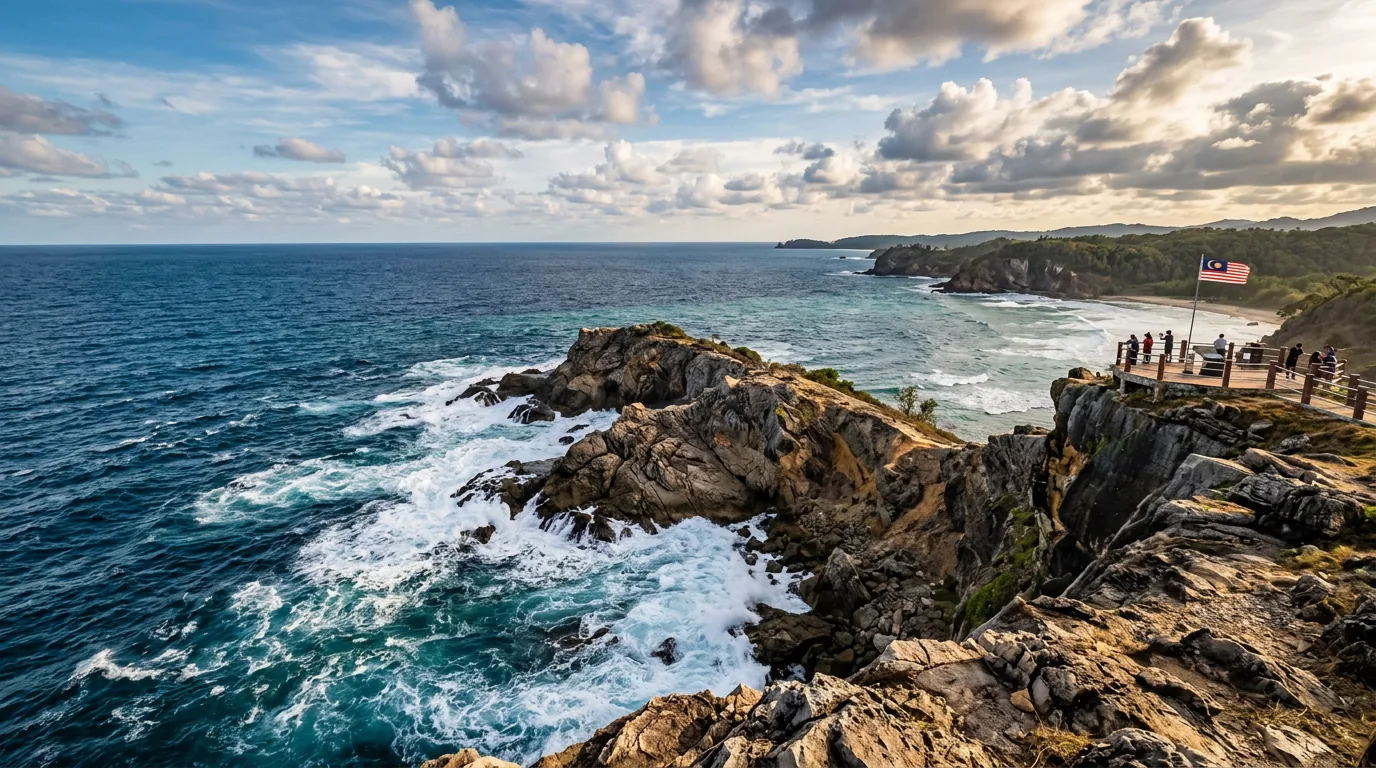
Kudat sits at the northern tip of Borneo, where the South China Sea meets the Sulu Sea. It's the homeland of the Rungus people — one of Sabah's indigenous groups known for beadwork, gong music, and traditional longhouse culture.
This is authentic, unhurried, rural Sabah. No crowds, no resorts, just empty beaches, longhouse stays, and one of the most dramatic landmarks in Malaysian Borneo — the Tip of Borneo.
Things to Do
- Tip of Borneo (Tanjung Simpang Mengayau) — The northernmost point of Borneo. Rocky headland with a globe monument, dramatic waves crashing below. Best at sunrise or sunset. Free entry.
- Rungus Longhouse stays — Overnight in a traditional communal longhouse. Experience gong performances, beadwork, and traditional cuisine. From RM60-80/person/night.
- Bavanggazo Cultural Village — Restored traditional Rungus longhouse compound. Guided tours of indigenous architecture and customs.
- Kalampunian Beach — White sand beach near the Tip of Borneo. Quiet, uncrowded, and beautiful. No facilities — bring your own supplies.
- Kelambu Beach — Another pristine stretch of sand. Locals rate it as one of the best mainland beaches in Sabah.
- Kudat Golf & Marina Resort — 18-hole course on the coast. One of the most scenic golf settings in Sabah.
The beaches around Kudat — Kalampunian, Kelambu, and others — are genuinely some of Sabah's best mainland beaches. Far better than anything near KK. Worth the drive just for this.
Rungus Culture
The Rungus are one of the Kadazandusun sub-groups, native to the Kudat peninsula. They are known for:
- Beadwork — Intricate multicoloured bead necklaces and accessories. A distinctive Rungus art form.
- Gong ensemble — Traditional brass gong music used in ceremonies and celebrations.
- Longhouses — Communal living structures housing multiple families. Some communities still maintain functional longhouses.
- Linangkit weaving — Traditional textile patterns passed down through generations.
A longhouse stay is the most meaningful way to experience Rungus culture firsthand. Meals are typically included and feature traditional dishes.
Where to Eat
- Kudat town centre — Small kopitiam (coffee shops) and local restaurants. Basic but good. Seafood is fresh and cheap.
- Seafood restaurants near the jetty — Fresh catch daily. Grilled fish, prawns, squid.
- Longhouse meals — If staying overnight, meals are traditional Rungus cooking. Rice, wild vegetables, river fish, chicken.
- Sunday Tamu (market) — Local weekly market for fresh produce, snacks, and village specialties.
Getting There
- Drive from KK — ~190km, approximately 2h45m via Tuaran and Kota Belud. Good sealed road throughout, some winding sections near Kudat.
- Recommended stops en route — Tuaran Mee noodles in Tuaran town, Sunday Tamu market at Kota Belud.
- Public transport — Buses run from KK but are limited and slow. Car rental strongly recommended.
- Day trip possible? — Yes, but tight. Better as an overnight or 2D1N trip to properly enjoy the area.
Accommodation
| Type | Style | Price Range |
|---|---|---|
| Rungus longhouse | Traditional communal stay | RM60-80/person/night |
| Budget | Town guesthouses | RM50-100/night |
| Mid-range | Kudat Riviera / resort-style | RM150-350/night |
| Tip of Borneo area | Chalets near the headland | RM100-250/night |
Practical Tips
- Best time to visit: March-May (driest). The Tip of Borneo is dramatic in any weather, but clear days give the best photographs.
- Fill up fuel in Kota Belud or Kudat town. Petrol stations are sparse north of Kota Belud.
- Bring cash. Very few places accept cards. ATMs available in Kudat town only.
- Download offline maps. Mobile signal is patchy around the Tip of Borneo and rural areas.
- Less touristy = less English. Basic Malay phrases help. Locals are very friendly and welcoming.
- Combine with Kota Belud: Stop at the famous Sunday Tamu market if your timing works out.