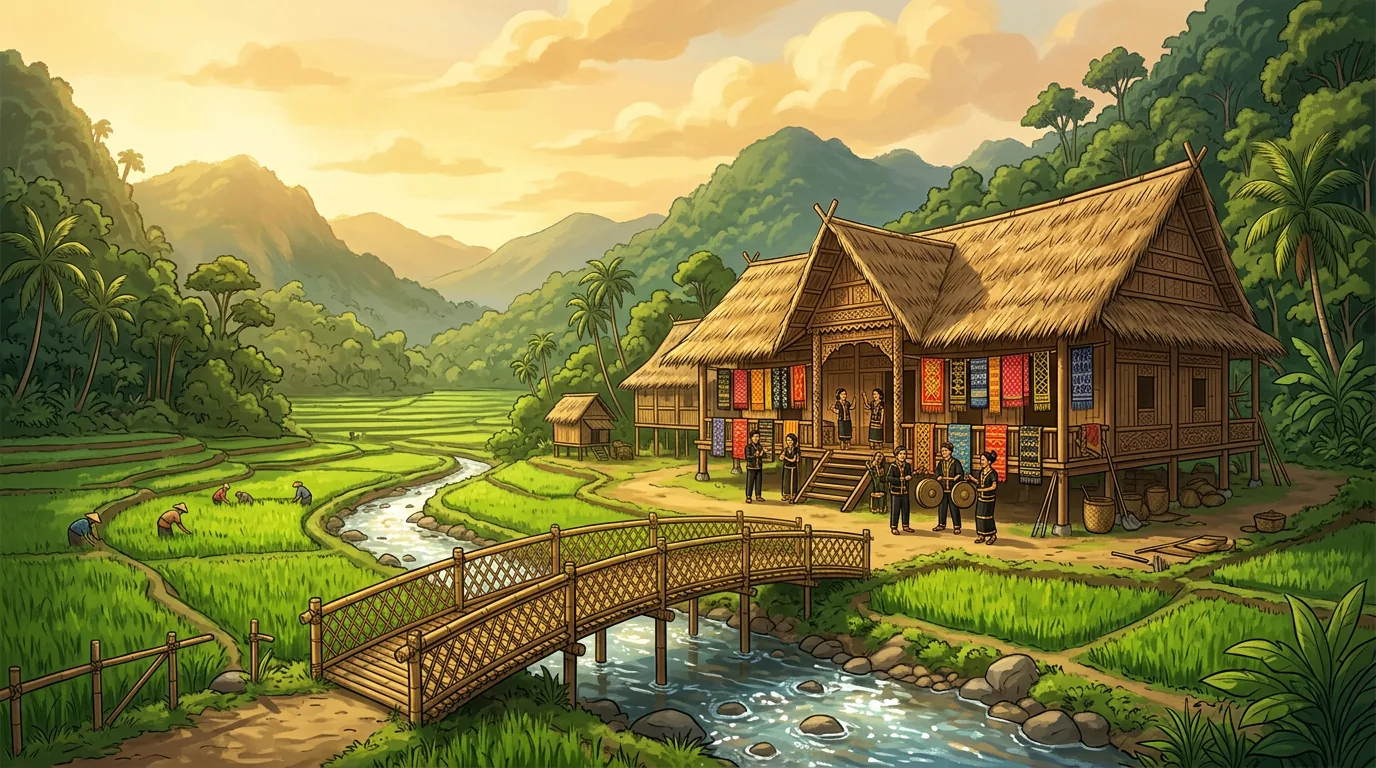
Cultural Heritage of Sabah — Kadazan-Dusun, Bajau & More
Indigenous Groups of Sabah
The 2020 census table for Sabah names 14 Sabah Bumiputera groups (DOSM, Census 2020 Sabah, checked 7 October 2026), and there are dozens of sub-groups, speaking about 50 languages and 83 forms of speech once dialects are counted (King and King, 1984). The Kadazan-Dusun (660,777 people, 19.3% of Sabah's residents at the 2020 census) are the largest group — traditional rice farmers with many sub-groups of their own, known for the Sumazau eagle dance and Kaamatan harvest festival. The Bajau, Sabah's second-largest group (565,499 people), include the west coast horsemen called the "Cowboys of the East" (Sabah Tourism, checked 7 October 2026) and the seafaring Bajau Laut of the east coast.
The Murut ("hill people") are shifting cultivators known for blowpipe hunting and communal longhouse living. The Rungus of northern Sabah maintain traditional longhouse culture and are famous for their intricate beadwork (Pinakol).
Cultural Villages & Museums
Mari Mari Cultural Village
Located outside Kota Kinabalu, Mari Mari offers guided cultural immersion sessions. International visitors pay MYR130 per adult and MYR110 per child; Malaysians pay MYR110 and MYR100. Children aged 4 and under go free. The price covers an English-speaking guide and a local meal; hotel transfer within KK costs extra. Sessions start at 10am and 2pm. Contact: +6013 881 4921 (Mari Mari Cultural Village, checked 7 October 2026). Book ahead.
Monsopiad Heritage Village
Named after the legendary warrior Monsopiad, the village offers cultural shows, blowpipe shooting, a visit to the House of Skulls and handicraft making. Check current rates on the Monsopiad Cultural Village website (checked 7 October 2026).
Sabah State Museum & Heritage Village
Entry is RM2 for Malaysians and RM15 for non-Malaysians, and the museum is open daily from 9am to 5pm (Sabah Museum, checked 7 October 2026). Check the museum website for any galleries closed for works. The Heritage Village showcases traditional ethnic houses from the Kadazan-Dusun, Bajau, and Murut communities, with weaving, beadwork, and traditional games.
Mari Mari Cultural Village runs set tour sessions. Both morning and afternoon sessions fill up, especially during peak tourist season. Book ahead through their website, phone number or your hotel concierge.
Festivals & Traditional Arts
Kaamatan is celebrated throughout May, with the biggest celebrations on 30 and 31 May (Sabah Tourism Board, checked 7 October 2026). The grand finale at Hongkod Koisaan in Penampang features the Sumazau dance, Unduk Ngadau beauty pageant, cultural competitions, and ethnic food. Regatta Lepa in Semporna is a festival of colourful traditional lepa boats with the Igal-Igal traditional Bajau dance. Its dates change each year. The 2026 edition ran over a week, from 20 to 28 June (NST, checked 7 October 2026).
From late August to late September, Sabah Fest fills Kota Kinabalu with traditional performances, arts and crafts. The 2025 edition ran from 30 August to 30 September (Sabah Tourism Board, checked 7 October 2026).
The Sumazau dance symbolises an eagle spreading its wings over golden rice fields, with paired dancers fluttering their hands like bird wings. Malaysia's Department of National Heritage declared it National Heritage in 2007. Traditional instruments include the Sompoton (mouth organ from dried gourd and bamboo pipes), Kulintangan (horizontal gong set), and Sompogogungan (hanging gongs accompanying the Sumazau).
Living Culture Experiences
Homestays
Nopungguk Homestay offers Dusun tribal culture with traditional dances. Kiulu Valley Homestay includes rice pounding, blowpipe making, handcrafts, and traditional fishing. The Rungus longhouse at Kampung Bavanggazo, 41 km south of Kudat town, takes overnight guests by prior arrangement (Sabah Tourism Board, checked 7 October 2026).
Cooking Classes
Seek Sophie arranges classes with local guides cooking linopot (hill rice), hinava, and tuhau (wild ginger relish). Taste of Borneo in Penampang combines a local market tour with cooking in a local home.