Sabah Education 2026 — Literacy, Schools & Enrolment

We are working through the statistics in this section against their original sources. The headline figures above were re-checked on 16 August 2026. Detailed figures further down the page have not yet been individually verified, and some may be out of date or wrong.
If you spot something that looks wrong, please tell us — it genuinely helps.
Sabah has 1,700+ schools educating 535,000+ students (2025). Literacy is Sabah’s weakest social indicator: around 85% among 15–24 year-olds (DOSM, 2019) — the lowest of any Malaysian state. On the stricter UN functional-proficiency measure the figure is lower still, at roughly 73%. There are 4 major universities with combined capacity of ~15,000–17,000 students. Tertiary enrolment rate is 28–32%, below the national average of 42%, indicating capacity constraints. Digital learning infrastructure is expanding — 55% of government schools have functional platforms. Urban-rural gaps persist in school quality and internet access.
Primary education dominates enrolment. Secondary shows ~8–10% dropout rate, a key challenge for education authorities.
Source: Sabah Ministry of Education 2025
Education Overview
Sabah’s education system comprises government schools (70% of students), private schools (25%), and international institutions (5%). Literacy is the state’s weakest social indicator rather than a strength: youth literacy sits around 85%, the lowest of any Malaysian state. Alongside it are persistent urban-rural quality gaps, limited tertiary capacity and uneven digital infrastructure. The Sabah Maju Jaya 2.0 development plan (2026–2030) prioritizes human capital development through school infrastructure upgrades, tertiary expansion, and digital learning initiatives.
Key statistics: 535,000+ students, ~85% youth literacy (lowest in Malaysia), 4 universities, 28–32% tertiary enrolment rate. Growth areas: digital learning (+30% annually), STEM education, vocational training. Challenges: rural school resourcing, brain drain to Kuala Lumpur, limited higher education capacity.
Primary & Secondary Education
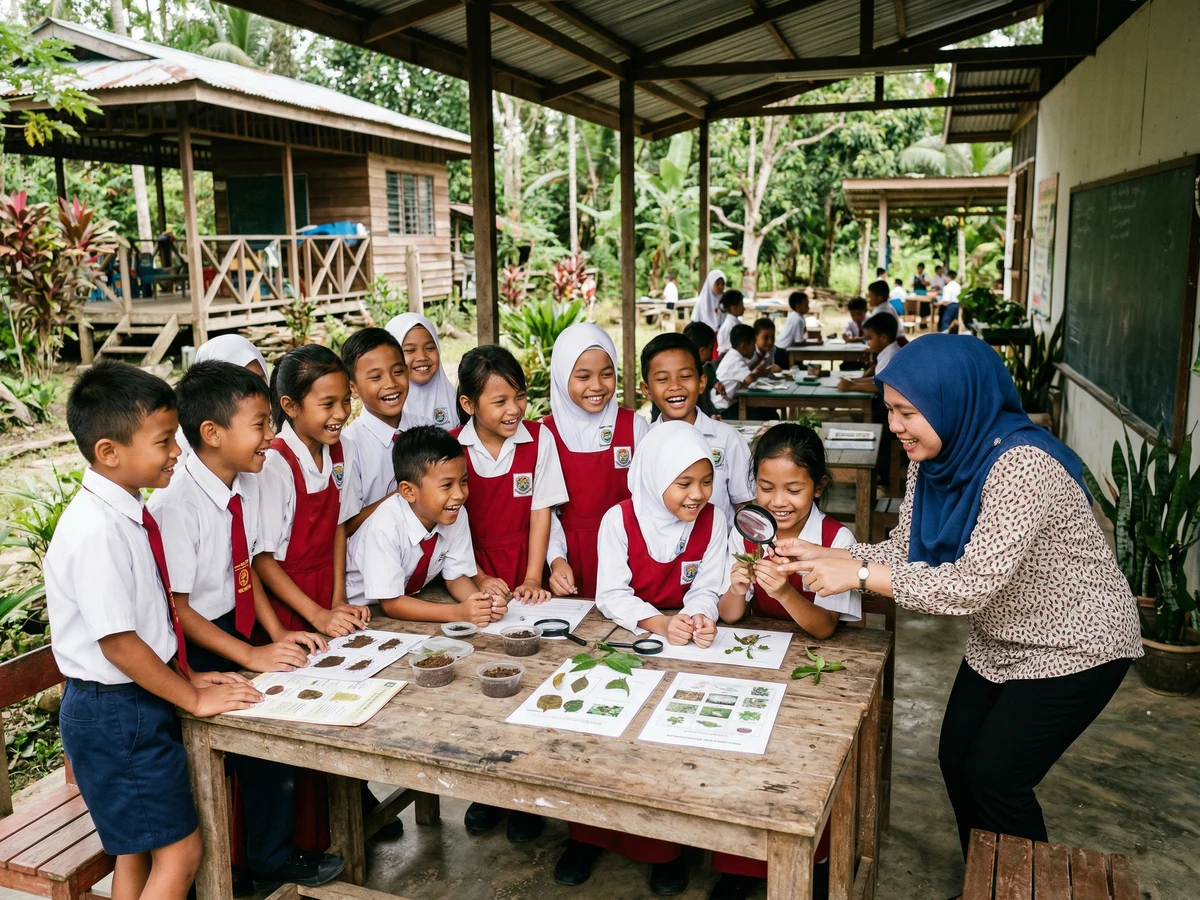
School Distribution: 1,700+ registered schools include ~650 primary schools, ~400 secondary schools, and ~650 private/international institutions. Government schools educate majority; private schools concentrated in urban centers (KK, Sandakan, Tawau). School density varies dramatically: KK has 40 schools per 100,000 people vs interior regions with only 5 per 100,000.
Enrolment Trends: Total enrolment 535,000+ (2025), growing 2.8% annually. Primary: 300,000 students (steady). Secondary: 200,000 students (declining as students age and dropout). Pre-school: 35,000 (growing as awareness increases). Gender split: roughly 50-50 at primary; slight female advantage (51%) at secondary.
Dropout Rates: Overall dropout: 8–10%, higher in secondary (Form 4–5: 12–15%). Primary dropout minimal (1–2%). Rural dropout rates 2–3x higher than urban due to transportation, poverty, and limited school facilities. Girls drop out at lower rates (6–8%) than boys (10–12%).
Enrolment declined during COVID (2020–2021), recovered 2022+. Post-COVID growth (+2.8% annually) driven by improved access and population growth.
Source: Sabah Ministry of Education
Tertiary Education & Universities
4 Major Universities:
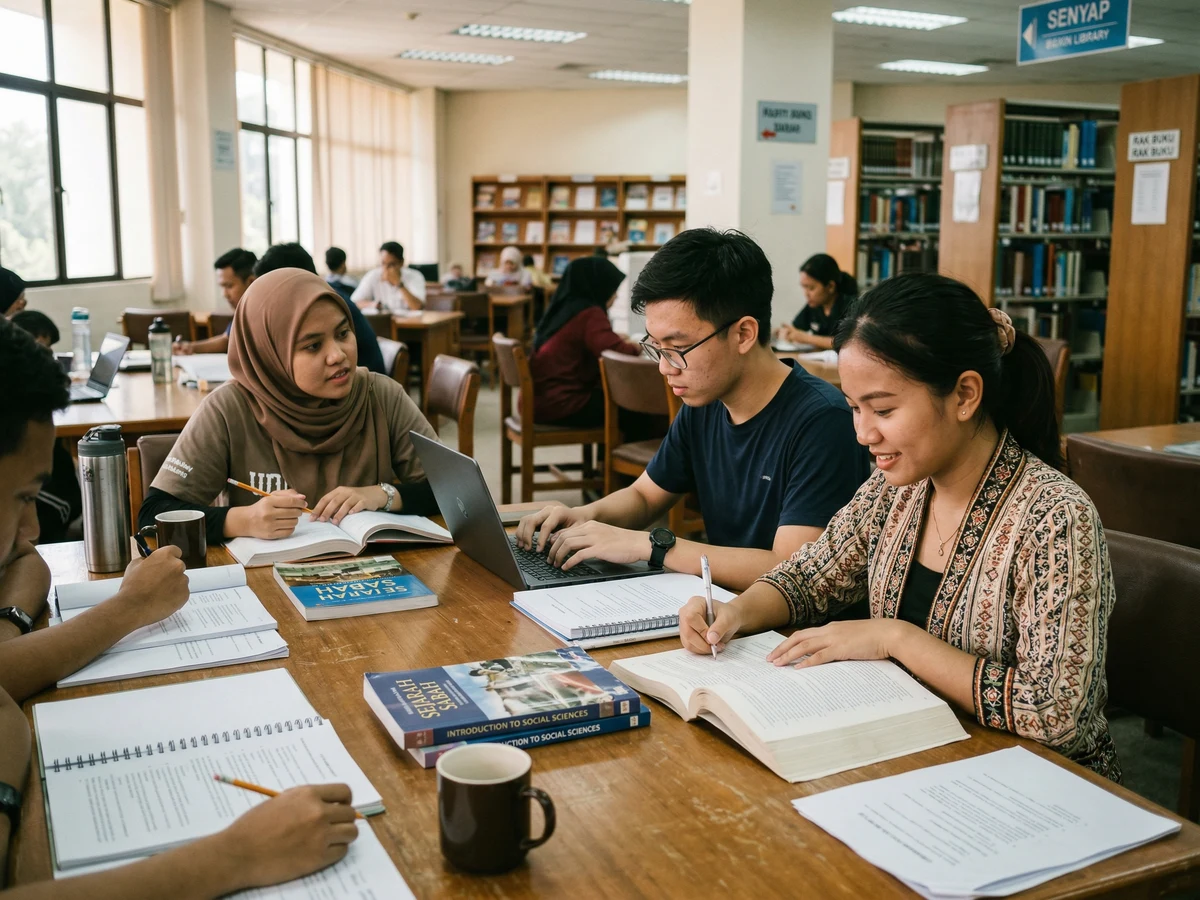
(1) Universiti Malaysia Sabah (UMS) — Public Largest university in Sabah. ~8,500 students across engineering, science, commerce, and humanities programmes. Located in Kota Kinabalu. Expansion project targets +2,000 capacity by 2028. Offers both undergraduate and postgraduate degrees.
(2) Universiti Teknologi MARA Sabah (UiTM) — Public Vocational and technical focus. ~3,500 students. Offers diploma and degree programmes in engineering, hospitality, business. Located in Kota Kinabalu. Expansion planned: +1,000 capacity by 2027.
(3) Tun Abdul Razak University (Unitar) — Private Business and management focus. ~2,000 students. Offers MBA, BBA, and professional certifications. Located in Kota Kinabalu. Growing presence in distance learning.
(4) Swinburne University Sarawak — International Australian university with Sabah enrolment (~1,000 students via extension programmes). Engineering, IT, and business focus. Premium fees (RM80,000–150,000/year). Attracts high-income families.
Capacity Constraints: Combined university capacity: ~15,000–17,000 undergraduate seats annually. With ~50,000–60,000 Form 6 graduates each year, only 25–30% gain tertiary places. Many students pursue overseas education (Australia, UK, USA) or vocational training instead.
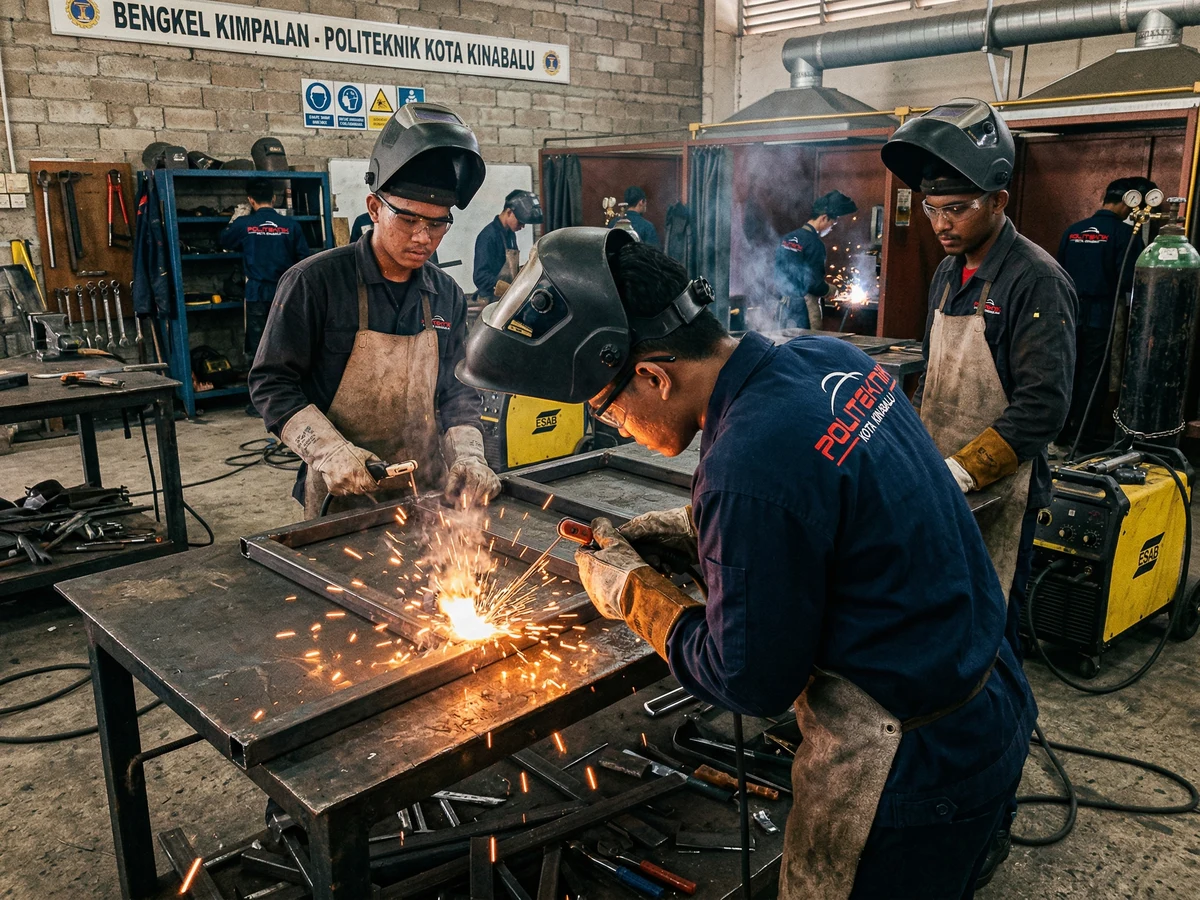
Vocational Training: Complementary capacity through polytechnics and vocational colleges (MARA, TEKNIKAL, private institutes) adds ~5,000–7,000 seats, but demand still exceeds supply. Vocational training enrollment growing 5–8% annually as students recognize alternative pathways to employment.
Literacy & Education Quality
Literacy: youth literacy (ages 15–24) was 85.1% for males and 85.6% for females at the last published measurement (DOSM, 2019) — the lowest of any state in Malaysia. On the UN functional literacy and numeracy measure (SDG 4.6.1) Sabah scores about 73%. Earlier versions of this page showed 91.3% overall and 98.5% youth literacy; both were incorrect. District, adult and gender breakdowns have been removed until they can be sourced properly.
Quality Indicators: Sabah participation in international assessments (PISA, TIMSS) shows mixed results. STEM performance: above national average in mathematics; below in science literacy. Language proficiency (English): 70% of secondary students achieve competency; 30% struggle with basic communication.
Urban-Rural Disparities: Urban schools (KK, Sandakan, Tawau) offer well-resourced classrooms, laboratory facilities, and experienced teachers. Rural schools often operate with outdated textbooks, minimal laboratory equipment, and frequent teacher turnover. Student-teacher ratio: urban 20:1 (ideal) vs rural 35:1 (overcrowded).
Government schools serve 70% of students. Private schools concentrated in urban centers. International schools (Cambridge, IB) serve high-income families.
Source: Sabah Ministry of Education
Digital Learning & Infrastructure
Current Status: 55% of government schools have functional digital learning platforms (2025), up from 35% in 2022. Urban schools lead: 75–80% have computer labs and internet. Rural schools lag: 30–50% have access. Broadband connectivity remains a bottleneck in interior regions.
MyDigital2030 Initiative (Government Programme): Aims to equip 90% of schools with broadband by 2027. Invest RM500M+ in school digital infrastructure. Train 5,000 teachers in digital pedagogy. Provide tablets/laptops to disadvantaged students. Progress on track: 3,000 teachers trained (2025), 700+ schools equipped with smart classrooms.
Learning Management Systems: Government rolled out Google Workspace for Education to all schools (free). Adoption varies: urban schools 70%+, rural 30–40%. Private schools using commercial LMS (Blackboard, Moodle) at higher rates (85%+). International schools fully integrated digital learning.
Frequently asked questions
Q How many schools are there in Sabah?
Q What is the literacy rate in Sabah?
Q How many students are enrolled in Sabah schools?
Q What are the main universities in Sabah?
Q What is the university enrolment rate?
Q What is the quality of education in Sabah schools?
Q How is digital learning developing in Sabah?
Sources & References 6 sources
Last verified: 11 April 2026