Melayu Sabah: The Muslim Malay Communities of Sabah
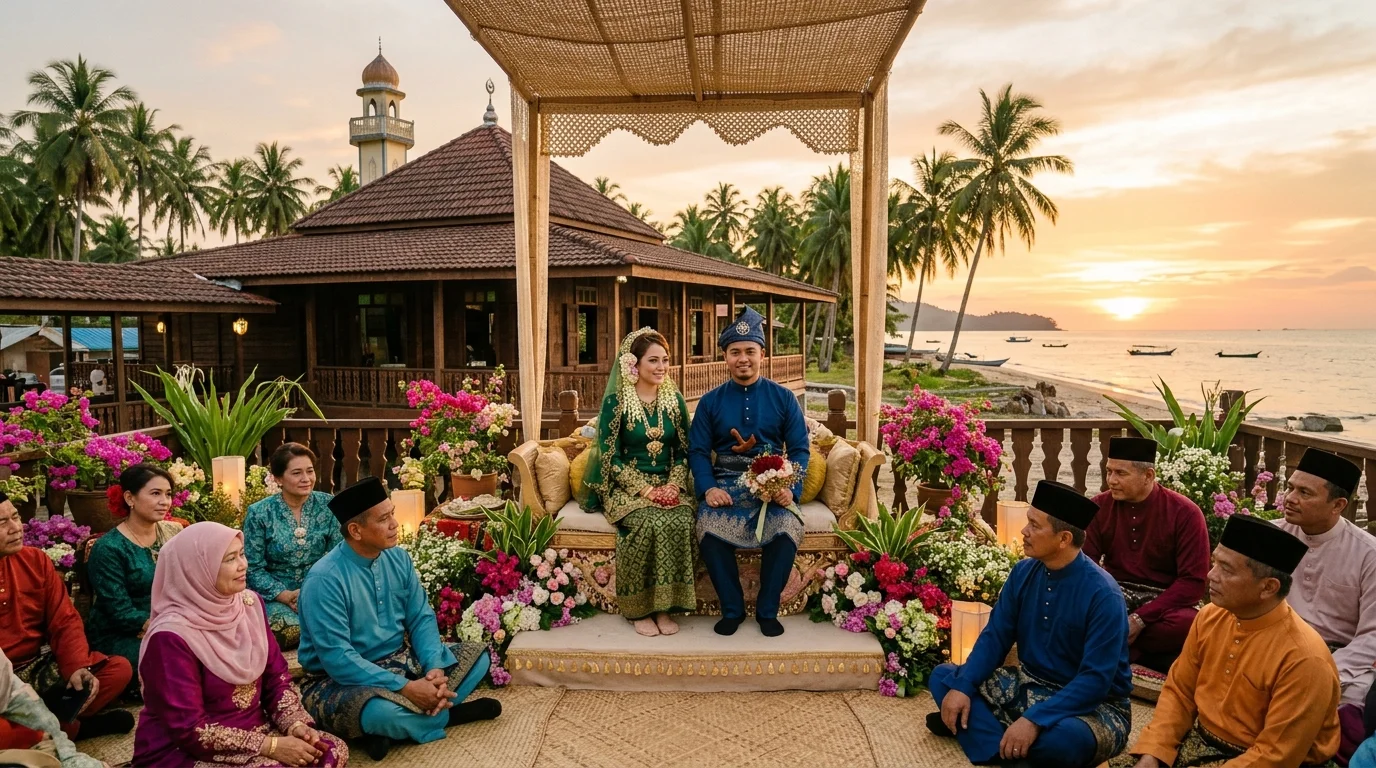
Melayu Sabah is an umbrella term for the Muslim Malay-speaking indigenous communities of Sabah — primarily the Brunei Malay, Bisaya, and Kedayan. Together they form one of the most significant cultural forces in Sabah's history, having spread Islam, established coastal trading networks, and shaped the Malay language's dominance as a regional lingua franca. According to the 2020 DOSM census, Malays constitute approximately 14.9% of Sabah's citizen population.
Who Are the Melayu Sabah?
Melayu Sabah is not a single ethnic group but a cluster of related Muslim communities whose identities converge around shared faith (Sunni Islam), Malay-based language, and coastal Borneo heritage. The three main groups are Brunei Malay, Bisaya, and Kedayan — each with distinct origins, dialects, and subcultures, yet collectively recognised as "Melayu" in the Malaysian constitutional and administrative framework.
Unlike Peninsular Malays, Melayu Sabah communities are indigenous to Borneo and trace their political and cultural roots to the Sultanate of Brunei, which held significant influence over Sabah's west coast from the 15th century onwards. The spread of Islam into Sabah was largely facilitated by Brunei traders, nobility, and missionaries.
Who Are the Brunei Malay of Sabah?
The Brunei Malay are the largest and most historically prominent Melayu Sabah community. Their ancestors arrived from Brunei as traders, nobles, and administrators who established settlements along Sabah's west coast, particularly in Kota Belud, Papar, Menggatal, Putatan, and Tuaran. They were the primary agents of Islamisation in coastal Sabah.
Culturally, Brunei Malay identity is closely tied to the adat perpatih and adat temenggong legal traditions, to elaborate textile arts (particularly kain dastar woven headcloths and kain lunggi sarongs), and to a strong oral tradition of syair (poetry) and pantun (verse). Historically, the Brunei Malay held administrative roles under the Brunei Sultanate, giving them elevated social status among coastal communities.
Today, many Brunei Malay families are well-integrated into Sabah's professional class. Their distinctive dialect — closer to Brunei Standard Malay than to Peninsular Bahasa Malaysia — is still spoken at home, while Bahasa Malaysia and Sabah Malay are used publicly.
Who Are the Bisaya of Sabah?
The Bisaya (also spelled Bisayah or Visaya) are a small but distinct indigenous group found mainly in the Beaufort, Limbang, and Kuala Penyu areas. With an estimated population of around 20,000–30,000 in Sabah and Labuan, they are one of the smaller Melayu Sabah communities. They are also found across the border in Brunei's Temburong district.
The Bisaya are almost entirely Muslim and have been closely associated with Brunei Malay culture for centuries — many Bisaya converted to Islam under Brunei influence between the 16th and 18th centuries. Their traditional economy centred on riverine fishing, wet rice cultivation in the Klias wetlands, and the collection of forest products. The Klias River wetlands in Beaufort, a significant ecotourism site today, have historically been Bisaya territory.
The Bisaya language belongs to the Austronesian family and is classified under the North Bornean branch. It is closely related to Brunei Malay and Kedayan but is a distinct language with its own phonology and vocabulary. Language preservation efforts are ongoing as younger generations increasingly shift to Sabah Malay and Bahasa Malaysia.
Who Are the Kedayan?
The Kedayan are an agricultural Muslim community found primarily in Papar, Beaufort, Labuan, and parts of Brunei. Known historically as skilled rice farmers, the Kedayan developed one of the most distinct agricultural traditions in Borneo, including the cultivation of over 100 varieties of traditional rice — a living agricultural heritage that has attracted academic attention from ethnobotanists.
Kedayan society is traditionally organised around kampung (village) units with strong communal labour practices called begawai or bagawi — a form of cooperative farming where community members help each other during planting and harvest seasons. This tradition of mutual aid remains culturally significant, even as modern agriculture reduces its practical necessity.
The Kedayan language is classified as part of the Malayo-Polynesian family, closely related to but distinct from Brunei Malay. Their cuisine is particularly notable — the Kedayan are famous throughout Brunei and Sabah for dishes like ambuyat (sago paste, also eaten by Murut communities), kuih cincin (ring-shaped rice cookies), and nasi kuning (yellow glutinous rice) served at ceremonial occasions.
Where Do Melayu Sabah Communities Live?
Melayu Sabah communities are concentrated along Sabah's west coast, following the historical patterns of Brunei Sultanate influence and coastal trade routes.
| District / Area | Primary Community | Notes |
|---|---|---|
| Kota Belud | Brunei Malay | Historical stronghold; Tamu Besar also serves Bajau community |
| Papar | Brunei Malay + Kedayan | Significant Kedayan rice-farming presence |
| Beaufort | Bisaya + Kedayan | Klias wetlands; traditional Bisaya riverine territory |
| Labuan (Federal Territory) | Kedayan + Brunei Malay | Kedayan are numerically significant in Labuan |
| Tuaran / Menggatal | Brunei Malay | Coastal settlements near Kota Kinabalu |
| Kuala Penyu | Bisaya | Gateway to Tunku Abdul Rahman Marine Park for Bisaya coastal fishing |
What Role Does Islam Play in Melayu Sabah Identity?
Islam is the central pillar of Melayu Sabah identity — more defining, in many ways, than language or ancestry. Converting to Islam has historically been described as masuk Melayu ("entering Malay-ness"), a phrase that reveals how closely Malay identity and Islamic faith are intertwined in Borneo's coastal culture.
Sabah's Islamic history dates to at least the 15th century, when Brunei traders brought the faith to coastal communities. The Sabah State Mosque (Masjid Negeri Sabah) in Kota Kinabalu, completed in 1977 and expanded multiple times, is the symbolic heart of Islam in the state. Sabah has over 1,200 mosques and suraus across its districts as of 2024.
Major Islamic observances in the Melayu Sabah calendar include Hari Raya Aidilfitri (end of Ramadan), Hari Raya Aidiladha (Feast of Sacrifice), Maulidur Rasul (Prophet's Birthday), and Israk Mikraj. These are public holidays in Sabah. The Sabah Islamic Religious Affairs Department (JHEAINS) administers Islamic education, halal certification, and religious courts in the state.
What Language Do Melayu Sabah Speak?
Melayu Sabah communities speak several related but distinct languages at home, while using Sabah Malay (Bahasa Sabah) as an everyday lingua franca and Bahasa Malaysia as the formal language of education and government.
| Language | Spoken By | Status | Notes |
|---|---|---|---|
| Brunei Malay | Brunei Malay community | Stable | Close to Standard Malay; spoken in homes and community events |
| Bisaya (Sabah) | Bisaya community | Vulnerable | North Bornean Austronesian; shifting to Sabah Malay among youth |
| Kedayan | Kedayan community | Vulnerable | Malayo-Polynesian; also spoken in Brunei and Labuan |
| Sabah Malay | All communities (lingua franca) | Thriving | Creole-influenced; "bah" marker; widely spoken across Sabah |
Sabah Malay is distinct from standard Bahasa Malaysia — it incorporates vocabulary from Kadazan, Bajau, and other indigenous languages, and features the iconic "bah" discourse particle used for emphasis, agreement, or mild exasperation. It is one of the most widely spoken home languages in Sabah, used across ethnic boundaries.
What Are the Cultural Traditions of Melayu Sabah?
Melayu Sabah culture blends Islamic practice with pre-Islamic Bornean customs — a synthesis evident in music, performing arts, textiles, and ceremonial life.
Zapin is a traditional Malay dance brought to Sabah via Brunei and the Arab spice trade. Performed at community celebrations and cultural festivals, Zapin features rhythmic footwork and is typically accompanied by gambus (lute) and marwas (hand drum). The Sabah Zapin style is distinct from its Peninsular counterpart in tempo and costume.
Hadrah, a devotional music form performed at weddings and Islamic celebrations, involves group chanting of prayers while beating frame drums (rebana). It is common at Melayu Sabah weddings and still performed by community groups in Papar and Kota Belud.
Berzanji recitals — oral readings from the Berzanji text praising the Prophet Muhammad — are performed at maulid (birthday celebration) events and are central to Melayu Sabah Islamic practice.
Traditional Melayu Sabah weddings are elaborate multi-day affairs involving berinai (henna application), akad nikah (solemnisation ceremony), and bersanding (throne sitting ceremony). The bridal couple wears traditional Brunei Malay attire — baju kurung for women and baju Melayu with kain dastar headcloth for men.
What Is Melayu Sabah Food Like?
Melayu Sabah cuisine reflects the communities' coastal, riverine, and agricultural heritage — heavy on seafood, rice, coconut, and aromatic spices brought through centuries of trade.
| Dish | Community | Description |
|---|---|---|
| Ambuyat | Kedayan / Brunei Malay | Sticky sago starch eaten with spiced sauces (cacah); shared with Murut |
| Nasi Kuning | All Melayu Sabah | Turmeric-yellow glutinous rice served at kenduri (feast) and weddings |
| Kuih Cincin | Kedayan | Crispy ring-shaped rice cookies; iconic Kedayan festive snack |
| Ikan Bakar Papar | Brunei Malay (Papar) | Grilled fish from Papar coast; famous throughout Sabah as a roadside dish |
| Sinanggang / Nasi Dagang | Brunei Malay | Rice cooked in pandan and coconut milk, served with fish curry |
| Kuih Wajid | All Melayu Sabah | Brown sugar and glutinous rice cake; essential at Hari Raya gatherings |
The Papar waterfront is famous throughout Sabah for its grilled seafood — locally known as Ikan Bakar Papar. Families drive from Kota Kinabalu (45 minutes away) specifically to eat grilled fish and seafood at the riverside stalls in Papar town, particularly on weekends and public holidays.
How Did Melayu Sabah Shape Sabah's Coastal History?
Melayu Sabah communities were the primary intermediaries in Borneo's historic trade networks. From the 15th to 19th centuries, Brunei Malay traders controlled the exchange of forest products — beeswax, rattan, camphor, birds' nests, edible sea cucumbers (teripang) — with Chinese and Indian merchants. This trade enriched the Brunei Sultanate and spread Malay language and Islamic culture throughout coastal Sabah.
The Tamu (market) system — a tradition of weekly open-air markets where different ethnic groups trade goods — was formalised under British North Borneo Chartered Company rule (1881–1942) but has Melayu Sabah roots. The Tamu in Kota Belud (held every Sunday) and Tuaran remain active today, drawing traders and tourists from across Sabah.
When the British North Borneo Chartered Company took control of Sabah in 1881, Melayu Sabah leaders — particularly from the Brunei Malay nobility — negotiated positions as local administrators and interpreters. This gave them continued influence during the colonial period. After Sabah joined Malaysia in 1963, Melayu Sabah communities were among the first to be incorporated into the Bumiputera political framework.
How Do Melayu Sabah Communities Identify Today?
Identity among Melayu Sabah communities is layered and sometimes contested. Nationally, they are classified as "Malay" under Malaysia's constitutional definition and enjoy Bumiputera privileges. Locally, however, distinctions between Brunei Malay, Bisaya, Kedayan, and even Bajau (some of whom are Muslim and culturally Malay-adjacent) remain meaningful in social and cultural contexts.
There is growing interest among Melayu Sabah youth in documenting heritage that risks being absorbed into a generic "Malay" identity. Cultural organisations like the Persatuan Kedayan Sabah and community-run social media pages are active in preserving traditional language, food, and crafts. The Kedayan community in Labuan has been particularly active in cultural revival efforts, including documentation of traditional rice varieties.
Academically, Melayu Sabah studies fall under Borneo studies and ethnohistory departments at Universiti Malaysia Sabah (UMS), where researchers continue to document oral histories, traditional knowledge systems, and the complex interplay between Islamisation and indigenous Bornean identity.