Sabah Tourism Revenue 2026 — RM8.74B Breakdown

We are working through the statistics in this section against their original sources. The headline figures above were re-checked on 17 August 2026. Detailed figures further down the page have not yet been individually verified, and some may be out of date or wrong.
If you spot something that looks wrong, please tell us — it genuinely helps.
Sabah generated RM8.74 billion in tourism revenue in 2025, an increase of 20% year-over-year. No official average spend per visitor is published — dividing receipts by 3,793,709 arrivals gives roughly RM2,300, but that is arithmetic, not a reported statistic. The category split below is a Sabah Tourism Board estimate rather than an audited breakdown. Tourism now represents 12% of Sabah’s GDP and employs 387,600 people.
Receipts crashed in 2020, bottomed in 2021, and have climbed since. At RM8.74 billion, 2025 is the strongest post-pandemic year but still sits below the RM9.6 billion recorded in 2019.
Source: Sabah Tourism Board & DOSM
Revenue Overview
Sabah’s tourism revenue of RM8.74 billion in 2025 is the highest since the pandemic, though still below 2019. Receipts rose 20% year-on-year from RM7.28 billion in 2024, tracking visitor volume, which grew 20.5% to 3,793,709 — growth came from more visitors rather than higher spend per visitor.
The revenue figure captures direct tourism receipts reported by the Sabah Tourism Board. DOSM’s Regional Tourism Satellite Account measures the value added of tourism industries at RM13.7 billion for 2024 — 12% of state GDP. The two figures measure different things and are not directly comparable.
Revenue Breakdown by Category
Tourism spending in Sabah follows a predictable pattern across major categories, with accommodation and F&B dominating. Understanding this breakdown is key for policy and investment decisions.
Accommodation generates the highest share, followed by dining and activities. These three categories account for 77% of total spending.
Source: Sabah Tourism Board breakdown
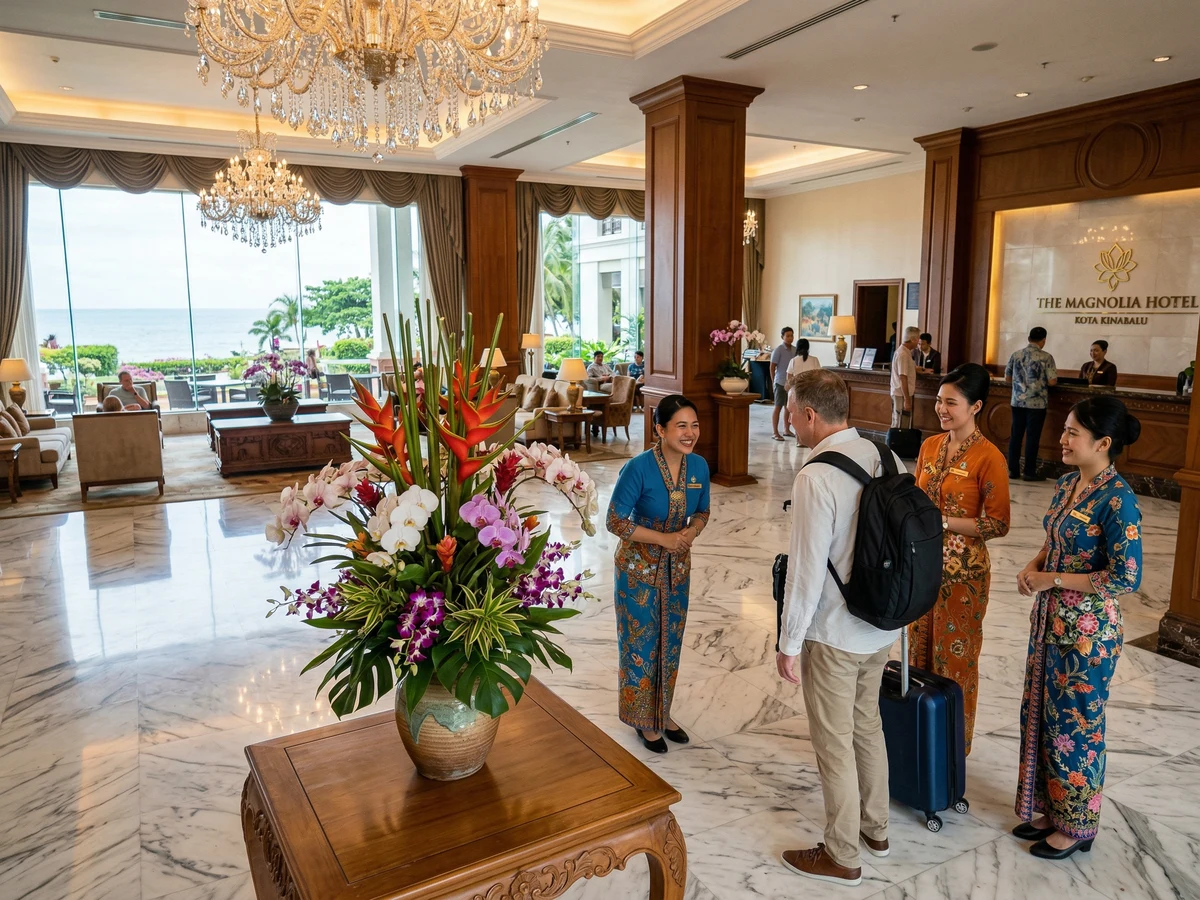
Accommodation (32%, ~RM2.8B): Hotels, resorts, guesthouses, and homestays. Kota Kinabalu runs roughly RM250–500 a night for 3–4 star; luxury resorts command RM600–1,500+. Average occupancy, however, was 51.6% in 2024 and 54.4% across the first nine months of 2025 (Tourism Malaysia) — below the national average, so the sector is filling barely half its rooms rather than pricing from strength. See our hotels page.
Food & Beverage (25%, ~RM2.2B): All dining — from street food (RM5–20/meal) to fine dining (RM100–300+/meal). International visitors spend 3–4x more on F&B than domestic; premium F&B is a significant opportunity for revenue growth.
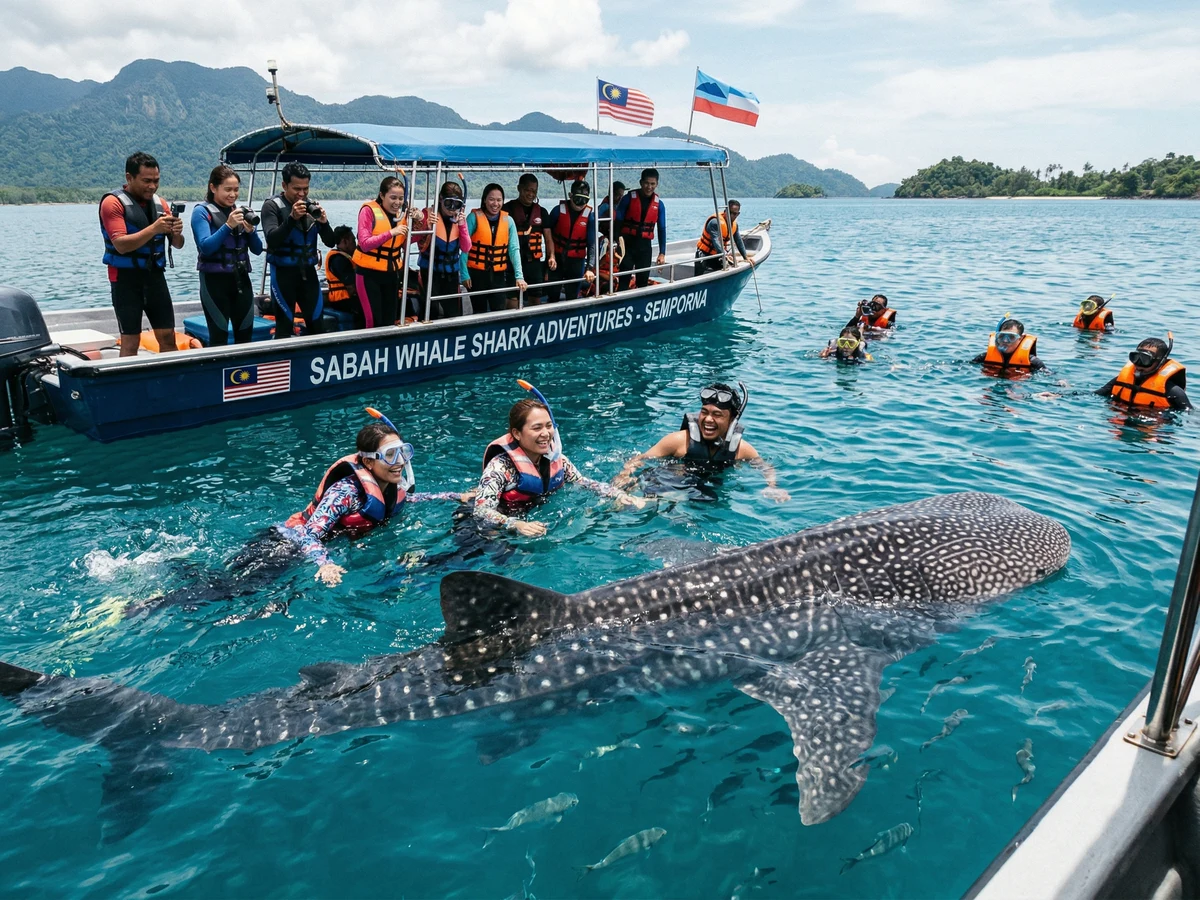
Activities (20%, ~RM1.75B): Mount Kinabalu climbs, Sipadan diving, river safaris, guides, entry fees, transport services. Premium packages (dive liveaboards, private climbs) command RM2,000–5,000+; this is the highest-growth category.
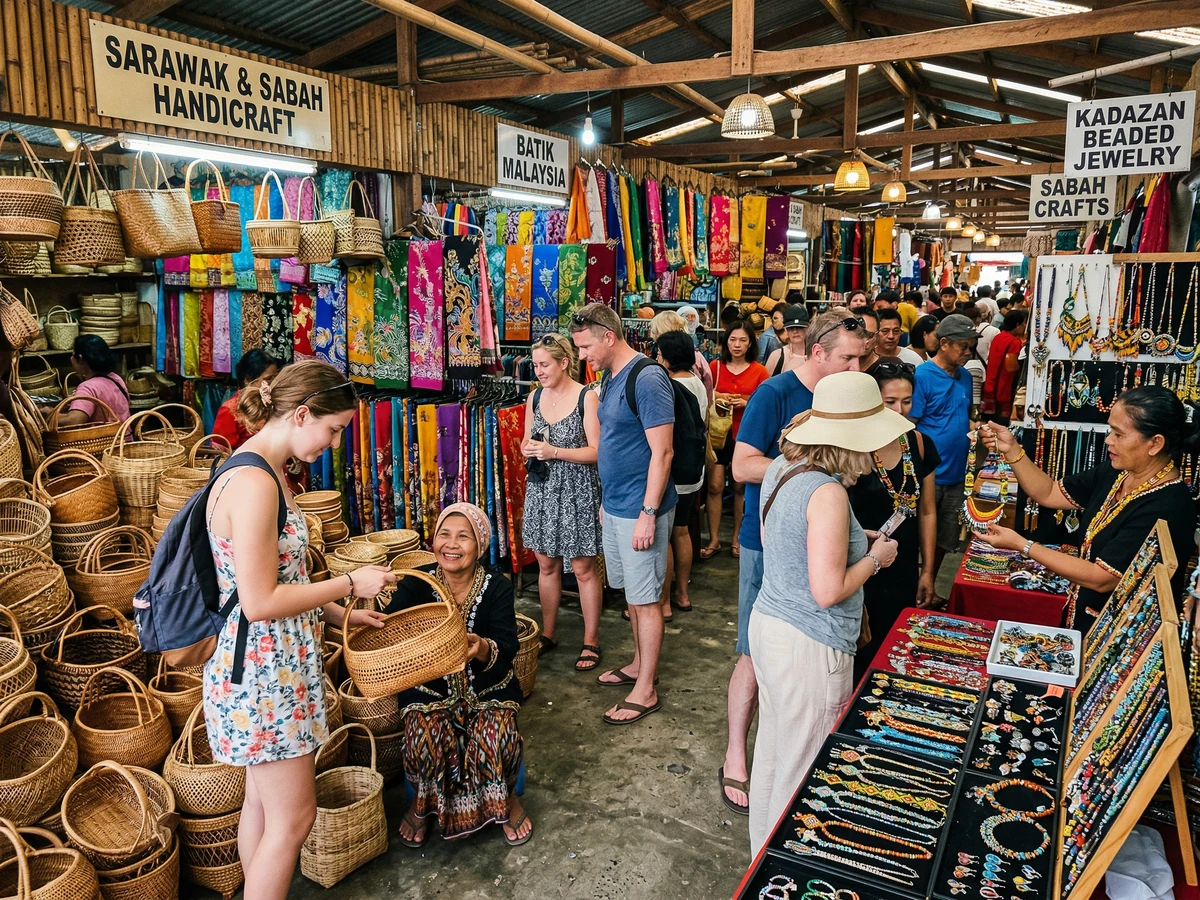
Shopping (13%, ~RM1.1B): Souvenirs, handicrafts, retail goods. Night markets and duty-free shops in KK drive volume; e-commerce is cannibalizing some retail.
Transport (10%, ~RM875M): Domestic flights, taxis, car rentals, boat charters. Local transport spending is often overlooked but provides steady income.
Revenue by Source Market
International visitors generate higher revenue per capita than domestic visitors, despite lower volume. This is because international travelers spend more on accommodation, dining, and premium activities. The top 5 source markets (China, Singapore, South Korea, Taiwan, Indonesia) generate approximately 45% of international tourism revenue.
Despite comprising only 40% of arrivals, international visitors account for 51% of revenue due to higher per-visitor spending (RM3,800 vs RM1,200).
Source: Sabah Tourism Board
Spending Patterns: International vs Domestic
International visitors (RM3,800 avg): Spend more on accommodation (40% of budget), premium dining (20%), activities (25%), and shopping (15%). They stay longer (5–7 nights average), book packages, and participate in high-cost adventures (diving, mountain climbing).
Domestic visitors (RM1,200 avg): Focus on budget accommodation (25% of budget), casual dining (30%), activities (30%), and shopping (15%). They stay shorter (2–3 nights), prefer day trips, and seek value experiences. Weekend getaway-focused.
By nationality: Chinese tourists spend highest (RM4,500–5,000 per trip, luxury resorts + high-end dining). Australian, British, and European tourists spend RM3,500–4,000 (adventure activities). Southeast Asian tourists spend RM2,000–2,500 (business + leisure mix).
Employment & Multiplier Effects
Tourism is a significant employment engine. The sector directly employed 387,600 people in 2024, up 6.9% from 362,700 in 2023. Employment growth outpaced visitor growth, indicating either sector expansion or wage pressures. Key job categories: accommodation and food services (largest), retail trade, transportation, and guides/tour operators.
On DOSM’s satellite account, tourism directly accounts for 22.6% of all employment in Sabah — roughly one working person in four or five. No official estimate of indirect (supply-chain) tourism employment is published for Sabah.
Frequently asked questions
Q How does Sabah's RM8.74B tourism revenue compare to Langkawi or Penang?
Q What are tourists spending most on in Sabah?
Q How can Sabah increase revenue per visitor?
Q What is MICE tourism and how much does it contribute?
Q Do eco-tourism and cultural tourism command premium pricing?
Q How much does heritage tourism contribute to Sabah revenue?
Q What employment does tourism generate in Sabah?
Sources & References 7 sources
Last verified: 17 August 2026