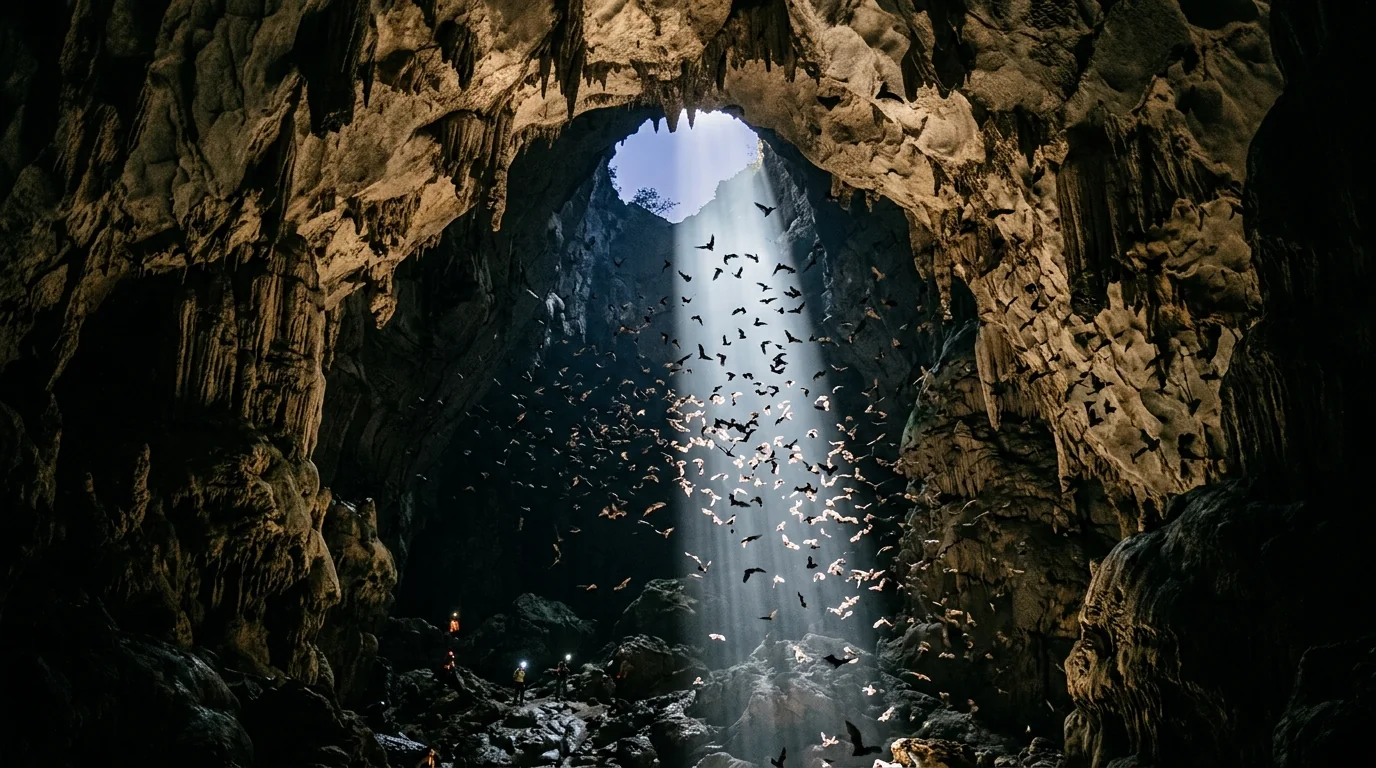
Gomantong Caves — Sabah's Largest Limestone Cave System and Bird Nest Harvesting Site
What are Gomantong Caves?
Gomantong Caves is the largest limestone cave system in Sabah, located within the Gomantong Forest Reserve near Kinabatangan in the East Coast Division. The cave system consists of two main chambers: Simud Hitam (the Black Cave) and Simud Putih (the White Cave). Together, they form a vast underground network that has been shaped by water erosion over millions of years.
The caves are famous for two reasons: they house one of Malaysia's most significant edible bird nest sites, and they are home to millions of bats. The caves have been a source of income and sustenance for the local Orang Sungai and other indigenous communities for centuries through the harvesting of swiftlet nests.
Today, Gomantong is managed as a protected wildlife reserve by the Sabah Forest Department and receives thousands of visitors annually from around the world. The main attraction is the wooden boardwalk that guides visitors safely through Simud Hitam, allowing close-up views of the cave geology, wildlife, and the bird nest harvesting platforms.
How did the limestone caves form?
The Gomantong caves are carved from limestone (calcium carbonate), a sedimentary rock that formed millions of years ago from the shells and skeletons of marine organisms. Over vast geological time, this limestone bedrock was exposed to water — rainwater and underground streams — which is slightly acidic due to carbon dioxide in the soil.
The acidic water slowly dissolved the limestone, creating hollow passages and chambers. As water continued to flow through these passages, the caves grew larger and larger. Some chambers eventually became so large that the ceilings collapsed, creating the openings visible today.
The Gomantong caves are estimated to be millions of years old. The exact age is difficult to determine, but the geological layers suggest that the cave system developed during the Tertiary period, when Sabah was largely underwater. The surrounding landscape shows evidence of karst topography — a terrain shaped by limestone dissolution, characterized by sinkholes, caves, and underground streams.
What is bird nest harvesting at Gomantong?
Bird nest harvesting at Gomantong is a centuries-old tradition that forms a crucial part of the local economy and cultural heritage. The nests being harvested are built by small birds called swiftlets, which are insectivorous birds that live in caves and use the caves for roosting and breeding.
There are two types of nests at Gomantong. The white nests (produced by the White-rumped Swiftlet) are the most valuable because they are built almost entirely from the bird saliva, with minimal feathers. These white nests are used in traditional Asian cuisine, particularly in soups, and are sold internationally at premium prices — up to several thousand ringgit per kilogram. The black nests (produced by other swiftlet species) contain more feathers and foreign material and are less valuable.
Harvesting occurs twice per year, during specific harvest seasons determined by the breeding cycles of the swiftlets. Licensed collectors use long bamboo poles to carefully remove the nests from the cave walls and ceilings. This practice requires skill and knowledge of the caves, and harvesters must be licensed by the Sabah Forest Department to ensure sustainable collection and protection of the bird populations.
The income from bird nest sales is significant for local communities. A single harvest season can generate substantial revenue for Kinabatangan-area families. The trade has attracted commercial interest, but strict regulations ensure that overharvesting does not deplete the bird populations or damage the cave ecosystem.
What wildlife lives inside the caves?
Gomantong Caves are home to one of the largest bat colonies in Southeast Asia. Millions of wrinkle-lipped bats (Tadarida plicata) roost in the caves, emerging in massive numbers at dusk to hunt for insects. The bat exodus is a spectacular natural phenomenon that occurs every evening, with clouds of bats streaming out of the cave entrance in search of food.
The cave ecosystem supports a complex food web beyond the bats. Cockroaches are abundant in the caves and serve as a primary food source for the bats. Cave racer snakes (Elaphe taeniura) hunt in the dark passages, preying on bats, insects, and other small animals. Swiftlets nest on the cave ceilings and cling to the walls, their saliva glands producing the valuable bird nest material.
The guano (bat droppings) that accumulates on the cave floor is decomposed by fungi and bacteria, creating a nutrient-rich layer that supports insects and other invertebrates. This waste also attracts predators such as scorpions and cave-adapted spiders. The entire ecosystem is adapted to near-total darkness and relies on the energy input from bat guano.
The cave walls also host various fungi, mosses, and bacteria. Some of these microorganisms play important roles in breaking down organic matter and cycling nutrients. The cave environment is fragile, and disturbances such as excessive collecting or careless visitor behavior can harm the delicate balance of this underground ecosystem.
What is the boardwalk experience like?
The boardwalk through Simud Hitam (the Black Cave) is the main visitor attraction at Gomantong. The wooden walkway is approximately 500 meters long and winds through the cave's interior, allowing visitors to experience the cave geology, wildlife, and harvesting platforms up close.
As you enter the cave, the darkness gradually envelops you. The air becomes noticeably cooler and damper. The smell is pungent — a mixture of bat guano, decomposing organic matter, and mineral-rich rock. This sensory experience is intense and unforgettable. Most visitors find the smell initially overwhelming, but many report that they adjust after a few minutes.
The boardwalk is lined with educational signs explaining the cave formation, the swiftlet nests, and the bat colonies. You will see the towering limestone formations, stalactites, and columns. In darker sections, your guide will likely turn off the lights to show you the absolute darkness of the cave, emphasizing how the bats and other cave creatures navigate without vision.
You will see the bamboo poles and platforms used by collectors to harvest nests. These platforms are set up on the cave walls where the swiftlets nest. The guide will explain the technique of collecting nests and the economic value of the trade.
The cave is home to millions of bats. Depending on the time of day, you may see bats hanging from the ceiling or clinging to the walls. The sound of bat calls and movements creates an almost otherworldly atmosphere. The experience is both awe-inspiring and humbling.
How do you visit Gomantong Caves?
Gomantong Caves are located approximately 30 kilometers from Sandakan, about 90 minutes by car from Kota Kinabalu (if driving from KK, expect 3-4 hours). The caves are accessible year-round, though the dry season (May-September) offers the best conditions.
Most visitors reach Gomantong as part of a guided tour package that often includes a Kinabatangan River cruise. Tour operators in Sandakan and Kota Kinabalu offer multi-day packages combining cave visits, river wildlife spotting, and accommodations at riverside lodges.
If traveling independently, you will need to hire a taxi or rent a car in Sandakan. The drive takes you through the interior toward Kinabatangan, passing through rural Sabah. The final access to the caves requires a guide — you cannot enter the cave system without paying the entrance fee and being accompanied by a cave guide.
The caves are open daily from 8:00am to 5:00pm, with the last entry at 4:30pm. Guides are available throughout the day. For the best experience, arrive early in the morning (8am-10am) to avoid crowds. If you want to witness the bat exodus at dusk, plan to stay until 5:30pm-6:00pm.
What should you know before visiting?
Physical fitness: The boardwalk is accessible to most people, but there are uneven surfaces, stairs, and sections where you need to duck under low-hanging rocks. Wear sturdy, closed-toe hiking boots or shoes. The cave floor can be slippery with bat guano.
Clothing: Bring a light jacket or sweater. The cave temperature is significantly cooler than the tropical outside air — typically around 24-26 degrees Celsius. Long pants and sleeves protect against rough rock surfaces and insect bites.
The smell: The strong smell of bat guano is intense. Take slow, deep breaths and adjust gradually. Most visitors adapt within 10-15 minutes. Some people find the smell less bothersome if they apply a small amount of mentholated ointment under their nose before entering.
Flashlights and cameras: The caves are dark. Your guide will provide lighting, but bringing a personal flashlight or headlamp is helpful. Photography is allowed. Low-light photography settings or a smartphone with night mode work best.
Respect the ecosystem: Do not touch the cave walls, limestone formations, or the nests. Do not disturb nesting birds or bats. Stay on the boardwalk at all times.
| Category | Details |
|---|---|
| Largest cave chamber height | Approximately 80-100 meters |
| Boardwalk length | Approximately 500 meters |
| Estimated bat population | Several million wrinkle-lipped bats |
| Harvesting seasons | Two cycles per year (January-March, July-September) |
| Value of white nests | Up to RM2,000-3,000+ per kilogram |
| Cave temperature | 24-26 degrees Celsius year-round |
| Distance from Sandakan | 30 kilometers (45 minutes by car) |
| Distance from Kota Kinabalu | 200+ kilometers (3-4 hours by car) |