How to Eat Like a Local in Sabah
Must-Try Dishes
Hinava is Sabah's signature dish — raw fish (usually tamban or mackerel) cured in lime juice with chili, shallots, and ginger. It is a Kadazan-Dusun staple and unlike anything else in Malaysia. Tuhau is a pungent wild ginger relish unique to Sabah — an acquired taste that locals love. Linopot is hill rice wrapped in doringin leaves, eaten by hand.
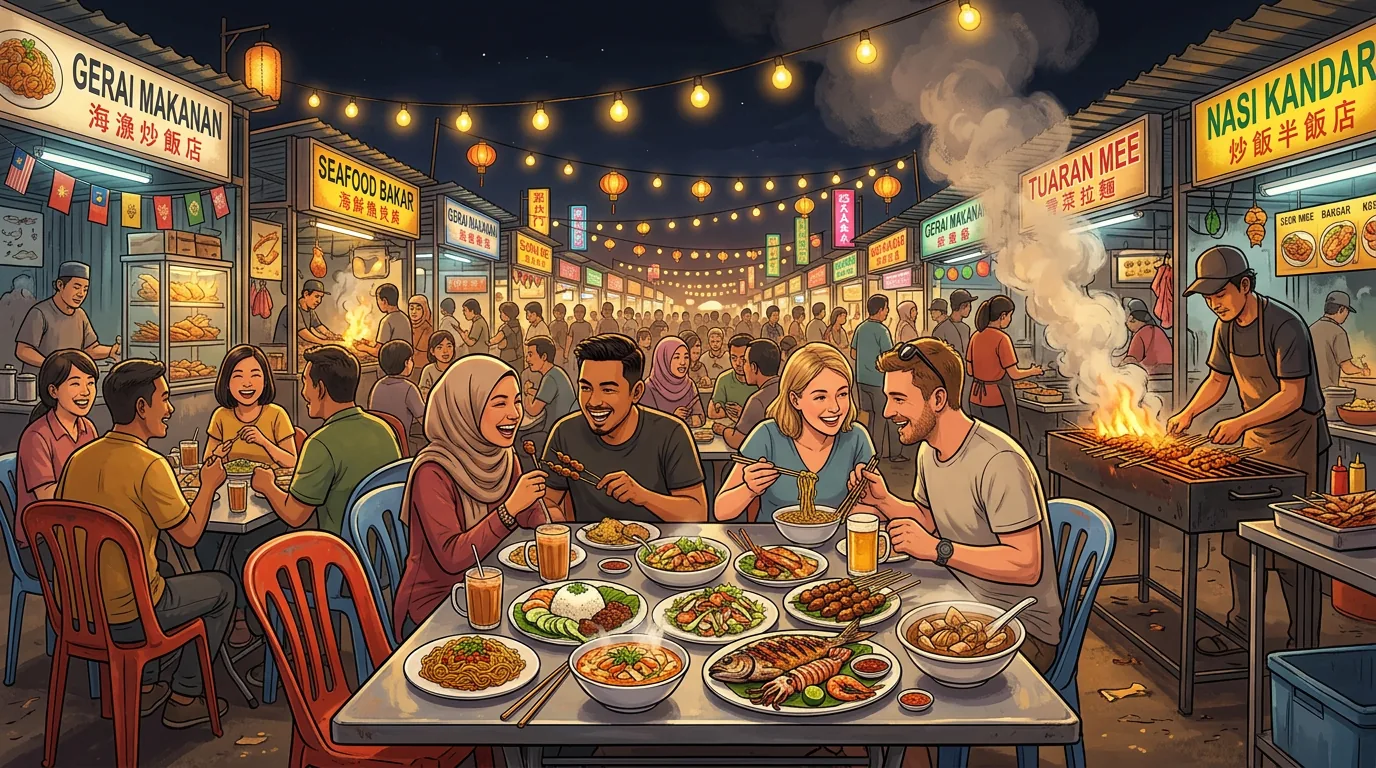
Sinalau bakas (smoked wild boar) is a non-halal Kadazan specialty barbecued over open fire. Beaufort mee features flat noodles in dark soy sauce (dry or soup). Tuaran mee is handmade egg noodles wok-fried with egg and char siu. Ngiu chap is a Hakka-style mixed beef noodle soup with offal and tendons. For seafood, KK is surrounded by ocean — grouper, prawns, squid, and crab are fresh daily.
Where to Eat by Budget
Budget (RM3-20)
Kopitiam (coffee shops) are the backbone of Sabah eating — mixed stalls serving RM3-10 meals. Kedai Kopi Yee Fung is famous for laksa (RM7-8). You Kee's Bak Kut Teh starts from RM4 (opens 4pm). Night market grilled seafood and satay runs RM5-20. Filipino Market (daily 4-10pm) has seafood BBQ. Central Market has authentic local food upstairs.
Mid-Range (RM20-60)
Chilli Vanilla offers modern Malaysian with a riverside setting. Little Italy on the Waterfront is popular for Italian. El Centro serves Mexican and Western food at KK Waterfront. Kohinoor is considered the best Indian restaurant in KK. Welcome Seafood is a KK institution — massive portions, book ahead on weekends.
Fine Dining (RM80+)
OITOM Heritage Fine Dining is featured in Malaysia's Top 100 — modern Sabahan cuisine using local ingredients in 9 and 12-course degustation menus. Nook at Le Meridien offers high-quality international buffets. Shang Palace at Shangri-La does Chinese fine dining.
Tipping is not customary in Malaysia. Restaurants may add 6% SST and sometimes a 10% service charge. At kopitiam and street stalls, there is no tipping. Do not feel obligated — this is a cultural norm, not a service issue.
Eating Culture & Etiquette
Halal food is widely available (about 60% Muslim population) — look for halal signage. Non-halal pork dishes (sinalau bakas, sang nyuk mee, bak kut teh) are available in Chinese and indigenous restaurants. Kopitiam culture means multi-cuisine stalls under one roof — walk around, point, order, and it all arrives at your table.
Eating with hands is acceptable in Malay and indigenous restaurants — use the right hand only. Tap water is not recommended for drinking; bottled water costs RM1-3. Drinks are worth exploring: lihing (traditional rice wine), Tenom coffee (grown in Sabah's highlands since the 1930s), and fresh coconut water (RM2-5 at markets).
Food by Region
Sandakan is known for the Sim-Sim seafood water village, bak kut teh, and UFO tarts. Semporna has the freshest and cheapest seafood in Sabah with Bajau cuisine influences. Kundasang offers highland vegetables, strawberries, and cool-climate produce. Tenom is Sabah's coffee heartland. Tuaran is where Tuaran mee was born — a mandatory noodle stop. Beaufort is the origin town for Beaufort mee's distinctive flat dark noodles.